
National Education Policy 2020
Tamilnadu's Battle for Linguistic Identity Amidst National Policy Shifts
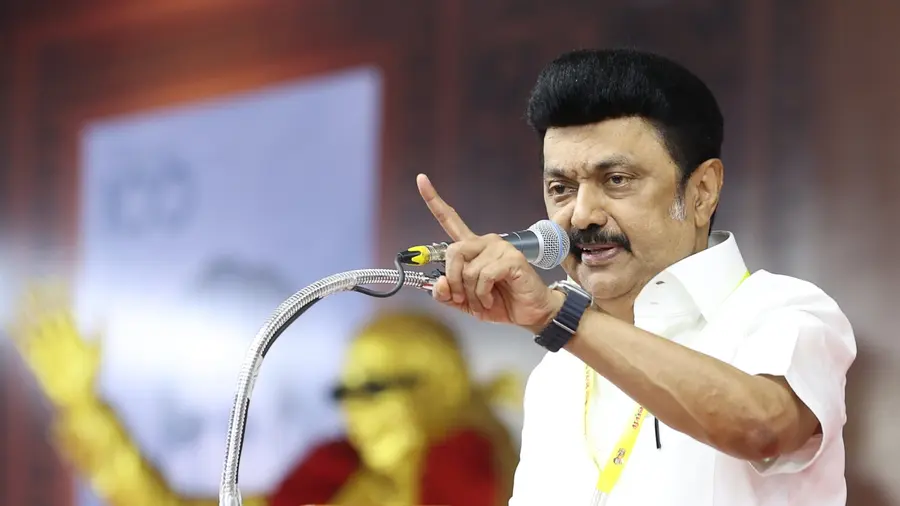
M K Stalin

Anjali Ganga
Published on Feb 27, 2025, 05:31 PM | 4 min read
Thiruvananthapuram: Tamilnadu pushed back firmly against the three-language policy recommended by National Education Policy 2020. The controversy was stirred up when Union Minister Dharmendra Pradhan asserted that if Tamilnadu does not implement NEP 2020, it will not receive funds under the Samagra Shiksha Abhiyan worth 2000 crore. Tamilnadu Chief Minister M K Stalin asserted that they are willing to risk the centre's allocation and will not implement NEP. Stalin pointed out that they suspected the centre's imposition of the three-language policy was a backdrop for imposing Hindi and Sanskrit in future. Tamilnadu puts forward the argument is the coexistence of languages and criticizes the lack of reciprocal language.
Resistance Formed in 1930s
Stalin asserted that Tamilnadu stood firm on its decision not to implement the three -language policy. "There will be no change in the two language policy of the state. The state will not oppose Hindi if the central government do not impose it.' -- Stalin added. Tamilnadu has a history of being a strong opponent of Hindi imposition throughout the history. Even from 1937 to 1940, there was a series of anti-Hindi movements in the state when the Congress government tried to impose Hindi as a compulsory language in schools. E V Periyar Ramaswamy and the Justice Party strongly opposed Hindi imposition. The imposition witnessed violent protests and mass gatherings. After India gained independence Hindi was adopted as the official language of the state. This decision also spread statewide protests in the state. In 1965, the central government tried to implement Hindi as the sole official language under the Official Languages Act of 1963. The state witnessed violent clashes, self-immolation and mass protests. Around 63 youngsters died during the protest. The state then adopted two language policies and has been continuing this for over past five decades.
Chief Minister Stalin's Call to Preserve Regional Languages
Chief Minister M K Stalin wrote on X(formerly known as Twitter) that many regional languages are the relics of the past because of Hindi imposition in the northern states. "My dear sisters and brothers from other states, Ever wondered how many Indian languages Hindi has swallowed? Bhojpuri, Maithili, Awadhi, Braj, Bundeli, Garhwali, Kumaoni, Magahi, Marwari, Malvi, Chhattisgarhi, Santhali, Angika, Ho, Kharia, Khortha, Kurmali, Kurukh, Mundari and many more are now gasping for survival. The push for a monolithic Hindi identity is what kills ancient mother tongues. UP and Bihar were never just "Hindi heartlands'. Their real languages are now relics of the past. Tamil Nadu resists because we know where this ends.' wrote M K Stalin.
He went on to add that the aggressive expansion of Hindi as a national language led to homogenisation, which resulted in the untimely disappearance of regional language across northern India. He added that Tamilnadu is ready for another language war if the centre forces the state to implement the policy.
"In many schools, we teach Telugu, Kannada and Malayalam. It is not that languages cannot co-exist. We have different people from different parts of the country speaking different languages. So co-existing is not a problem, only imposing is," Kanimozhi Karunanidhi MP responded.
Tamil Nadu's steadfast opposition to the National Education Policy 2020's three-language policy underscores its commitment to preserving its linguistic and cultural identity. The state's historical resistance to Hindi imposition, dating back to the 1930s, reflects a deep-seated belief in the importance of linguistic diversity and regional autonomy. Chief Minister M.K. Stalin and other leaders have articulated concerns that the policy could marginalise Tamil and other regional languages, echoing fears of cultural homogenisation seen in northern India. Tamil Nadu's willingness to forgo central funds rather than compromise on its two-language policy highlights the gravity of this issue. As the debate continues, the state's stance serves as a powerful reminder of the need for inclusive policies that respect and nurture India's rich linguistic heritage rather than imposing a one-size-fits-all approach. The question remains whether the central government will heed these concerns or risk further polarisation in its quest for educational reform.



Related News
Dont Miss it







0 comments