
Why ED’s Case on KIIFB Is Baseless and Politically Driven?


Web desk
Published on Dec 01, 2025, 06:18 PM | 4 min read
Thiruvananthapuram: The Enforcement Directorate’s latest move in Kerala has once again laid bare how the agency has been reduced to a political weapon rather than a lawful investigator.
Its freshly issued 466-crore rupees FEMA show cause notice to Chief Minister Pinarayi Vijayan, former finance minister Thomas Issac, and the CM’s chief principal secretary K M Abraham in the KIIFB Masala Bond case is yet another attempt to intimidate the state’s leadership under the guise of federal authority.
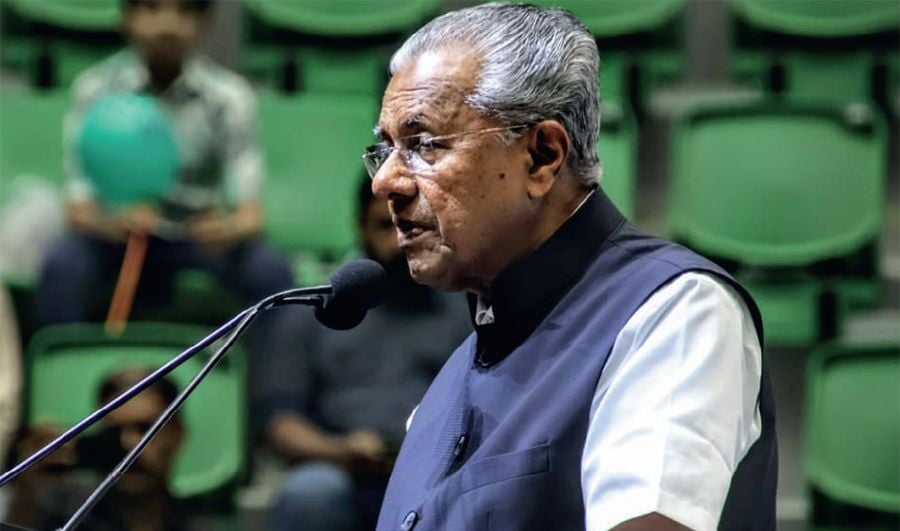
The notice, quietly served around a fortnight ago, does not even require personal appearance, an admission in itself that the exercise is more spectacle than substance. It merely indicates the formal end of the ED’s inquiry, with the so-called “quantified contravention” treated as a penalty, not a revelation of wrongdoing.
The investigation revolves around how KIIFB utilised the 2,000 crore rupees it raised in 2019 through Masala Bonds, part of a larger, transparent, publicly declared plan to mobilise 50,000 crore rupees for Kerala’s infrastructure. KIIFB’s mandate has always been to build the state’s future, reflected in its present portfolio of 1,190 projects worth 90,562 crore rupees.

But instead of recognising the scale of transformative work underway, the ED has landed in Kerala as though on an election assignment, hoping its presence alone would rattle the government. It may do well to descend from the political stratosphere and look at what KIIFB has tangibly delivered to the people of Kerala.
A core argument pushed by the ED is that KIIFB had no authority to raise Masala Bonds. But the facts speak otherwise. If nationally significant bodies like NTPC and NHAI can raise funds through Masala Bonds, there is no rational basis to claim that KIIFB cannot.
NTPC mobilised 2,000 crore rupees, and NHAI raised 5,000 crore rupees from the London Stock Exchange through the very same instrument. KIIFB, too, is a legally constituted body corporate. For such bodies, central government approval is not required; only an NOC from the Reserve Bank is needed.

KIIFB secured this approval, complied with every FEMA requirement, and conducted the bond issue precisely within the law. In other words, KIIFB did exactly what NTPC and NHAI did, nothing more, nothing less.
Moreover, the authority to interpret, enforce, or point out violations of FEMA lies with the Reserve Bank of India, not the Enforcement Directorate. The RBI reviewed the regulations, granted KIIFB its NOC, and has never once indicated that any violation occurred. If there were indeed a breach, it would be the RBI, not the ED, that would declare it. The ED’s insistence on playing the role of a financial regulator is not only inappropriate; it is institutionally unsound.
The agency has also attempted to manufacture controversy around how KIIFB used the bond proceeds, claiming that the money was utilised for “buying land” in violation of Masala Bond conditions. Here again, the ED appears uninformed or wilfully misleading. Buying land and acquiring land are entirely different legal processes. KIIFB has repeatedly clarified that it only acquired land for public infrastructure projects. In fact, by the time KIIFB used these funds, the RBI had already removed the restriction on utilising Masala Bond proceeds for land-related expenses. The ED’s allegation is therefore both factually incorrect and legally irrelevant.

What remains is the political intent. Much like the pattern seen across the country, where opposition voices, especially from the Congress, find themselves suddenly under ED scrutiny, the same script is now being enacted in Kerala. This time, however, the target is the Left, and the people of the state can clearly see through the strategy. Narendra Modi and Amit Shah have already altered the character of the ED, turning it from a professional investigative body into a blunt instrument of pressure.
Kerala’s development model has long prioritised public welfare and long-term infrastructure planning. KIIFB is central to that vision. Attempts to distort its role or undermine its credibility will not only fail but also expose the political motivations behind these interventions. The ED may have arrived imagining it would unsettle the elected government, but the people of Kerala recognise the difference between genuine financial oversight and politically driven theatrics.



Related News
Dont Miss it









0 comments