
Leh Protests Turn Deadly: 4 Dead, 30 Injured in Statehood Demand

Web desk
Published on Sep 24, 2025, 06:26 PM | 2 min read
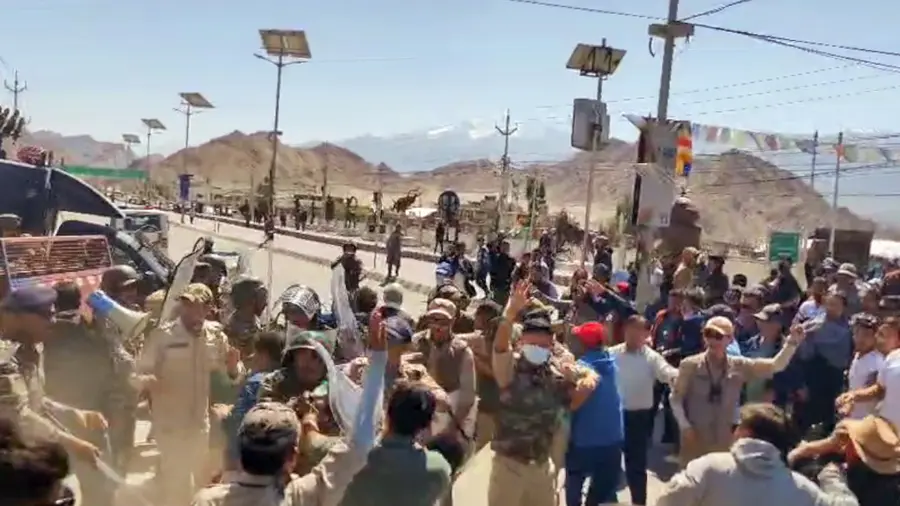
Leh: Tensions in Ladakh reached a tragic crescendo as protests demanding statehood and constitutional protections turned violent, resulting in the deaths of four individuals and injuries to at least 30 others. The fatalities mark a severe escalation in the ongoing agitation against the Central government's perceived indifference to the region's demands.
The protests, spearheaded by the Leh Apex Body (LAB) and the Kargil Democratic Alliance (KDA), saw demonstrators, including large numbers of youth, clashing with police forces. Police responded to the unrest with tear gas. The intensity of public anger was visible as protesters set a local BJP office ablaze.
This deadly confrontation follows a prolonged hunger strike initiated on September 10th by prominent activist Sonam Wangchuk and 14 others. The strike, demanding statehood and inclusion under the Sixth Schedule of the Constitution, gained momentum after the health of two participants severely deteriorated, requiring hospitalisation. This development prompted Wangchuk to join the larger street protests.
The current crisis stems from the breakdown of talks between Ladakhi leadership and the Central government. The Union Home Ministry, facing mounting pressure from the sustained agitation, has now scheduled a meeting with Ladakhi leaders for October 6th. This comes after the ministry had formed a high-level committee in January, a move that protesters say yielded no concrete results.
The political context of the unrest dates back to 2019, when Ladakh was separated from the former state of Jammu and Kashmir and made a Union Territory. This move was justified by the ruling BJP on the grounds of fostering development. However, residents and local leaders contend that the change has led to a democratic deficit and a loss of the political autonomy the region previously enjoyed. Instead of the promised empowerment, there are widespread allegations that the region has been made more vulnerable to external commercial interests without the promised safeguards.
The unified protest movement in Ladakh is anchored on four non- negotiable demands: full statehood, inclusion in the Sixth Schedule to protect tribal land and identity, two Lok Sabha seats to amplify its political voice, and job reservations for local youth. The significant casualties sustained in the protests are being seen as a direct consequence of the government's failure to engage meaningfully with these demands, deepening the political crisis in the high-altitude region.
Tags



Related News
Dont Miss it





0 comments