
National
Nuns Denied Bail in Chhattisgarh; Case Referred to NIA Amid Bajrang Dal Protests

Web desk
Published on Jul 30, 2025, 02:58 PM | 6 min read
Chattisgarh: The Durg Sessions Court in Chhattisgarh has denied bail to two Catholic nuns from Kerala—Sister Preethi Mary and Sister Vandana Francis—who were arrested on serious charges, including forced religious conversion, human trafficking, and anti-national activities. The court declined their bail plea and instead directed that the case be handed over to the National Investigation Agency (NIA) for further investigation, particularly under the human trafficking charges. This move followed aggressive legal arguments from a group of five lawyers representing the far right outfit Bajrang Dal, who insisted that the gravity of the human trafficking allegation precluded any bail consideration at the sessions level.
The courtroom drama unfolded amidst a charged atmosphere outside. Bajrang Dal workers had assembled early in the morning around the court premises, shouting provocative slogans and raising cries of “Jai Shri Ram.” As soon as the court's decision to reject the bail plea became public, Bajrang Dal supporters erupted in celebration. Their aggressive presence and demonstrations created an environment of intimidation, so much so that family members of the arrested nuns, who had travelled from Kerala, were reportedly too frightened to approach the court premises. The protesters were not only vocal but explicitly confrontational, using inflammatory chants and blocking access, effectively creating a hostile environment.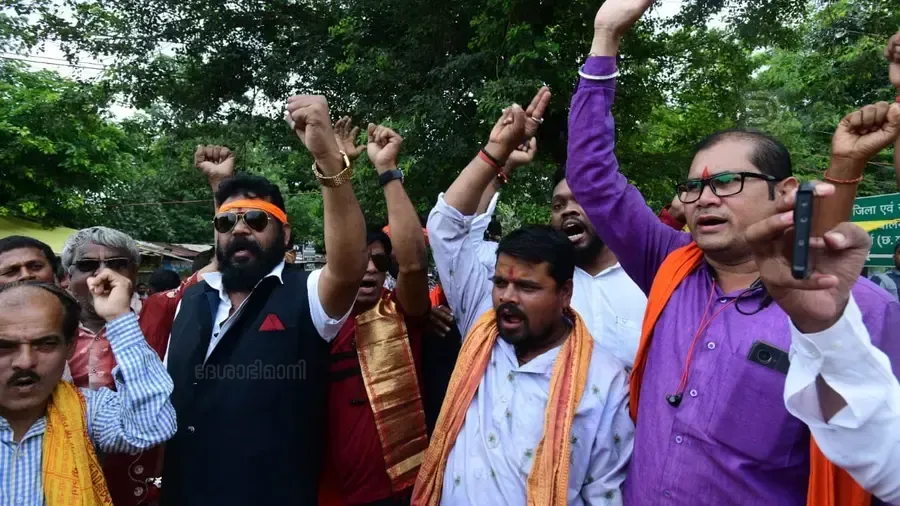 The events leading to the arrest of the two nuns began last Friday morning when they were accompanying two young tribal girls from Chhattisgarh, who were allegedly being taken for domestic work opportunities with full parental consent. The nuns had all the necessary documents, including signed letters from the girls’ families. Despite this, they were intercepted by Bajrang Dal workers at a railway station after a tip-off from a train ticket examiner. The workers accused the nuns of attempting to forcibly convert the girls to Christianity. They then conducted what many have described as a mob trial, ignoring the girls' and nuns’ repeated denials that any conversion was taking place. Despite the presence of valid documentation, the workers continued their confrontation and eventually took the nuns to the police station themselves, where the formal complaint was registered.
Initially, the police did not include any charge related to religious conversion in the First Information Report (FIR). However, this changed following sustained pressure from Bajrang Dal and affiliated Sangh Parivar organisations. Sections under the Chhattisgarh Freedom of Religion Act (Section 4), human trafficking under IPC Section 143, and anti-national activity under BNS Section 152 were later added to the FIR. The charges are serious enough to carry prison terms of up to ten years. Sister Preethi Mary was named the first accused, and Sister Vandana Francis the second.
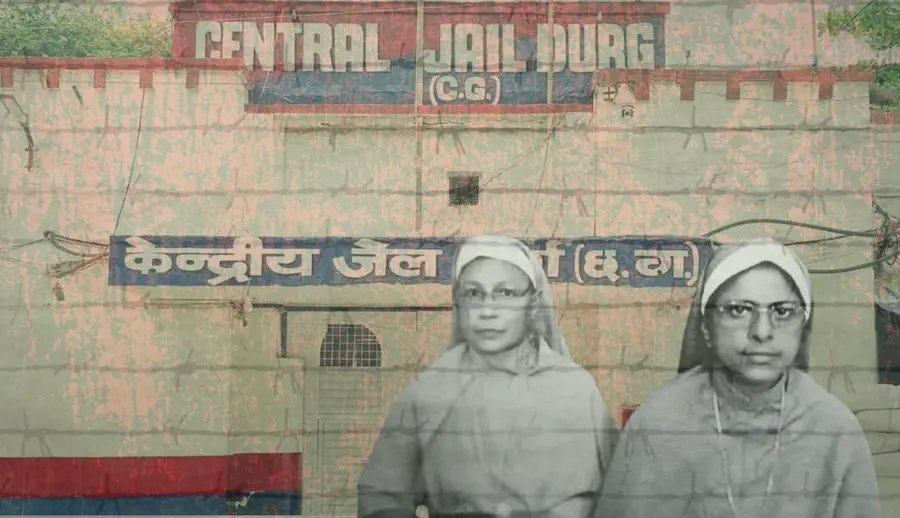
Following the arrest, the nuns were remanded to judicial custody and lodged in Durg Central Jail, where their physical condition has since deteriorated. According to leaders of a visiting Left-wing political delegation, the nuns are suffering from multiple health issues, including arthritis and other chronic conditions, but have not been provided with proper medical attention. Reports indicate they have not been given even basic facilities like bedding, and are being held alongside hardened criminals. Their regular medication has not been consistently supplied by prison authorities, causing further distress.
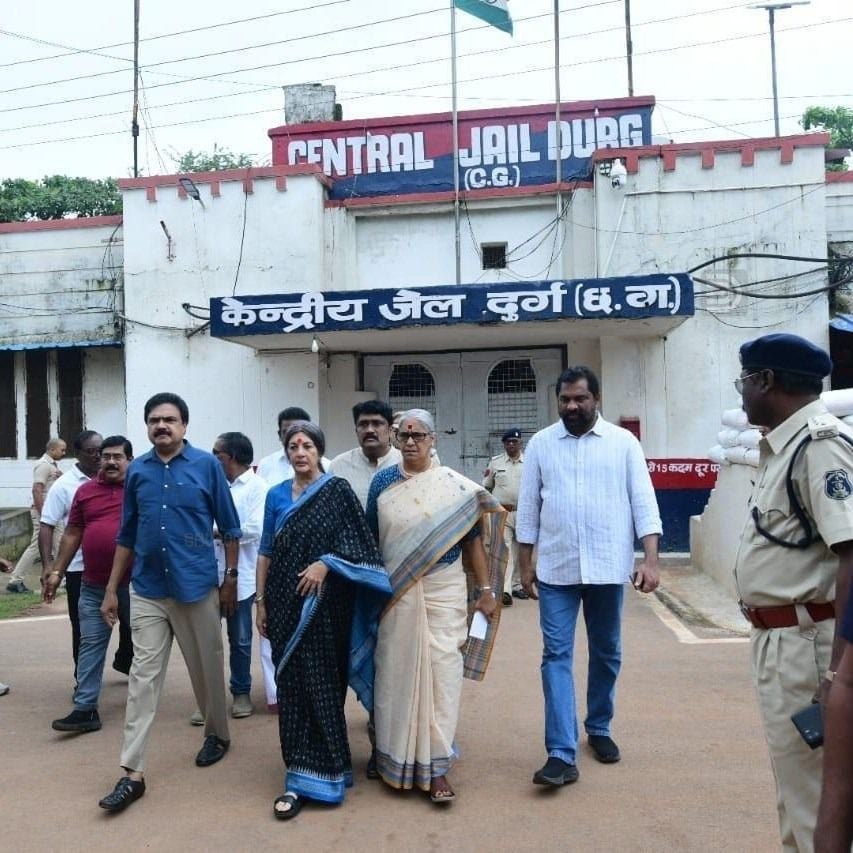
A delegation comprising senior Communist Party of India (Marxist) (CPI(M)) leader Brinda Karat, Members of Parliament K. Radhakrishnan, A. A. Rahim, P. P. Suneer, CPI leader Annie Raja, and Kerala Congress (M) MP Jose K. Mani visited the jail to meet the incarcerated nuns. Their visit was delayed after jail authorities initially denied them entry, citing expired visiting hours. The delegation was allowed access only after considerable protest. Speaking to the media afterward, Brinda Karat accused the BJP-led state government of orchestrating a politically motivated campaign targeting Christians under the guise of anti-conversion laws.
She said, "Completely innocent nuns have been falsely implicated and imprisoned in a fabricated case. These are nuns suffering from serious health issues, yet they have been thrown into jail. This is a deliberately constructed case. The BJP government is targeting Christian believers. The attack on the nuns was carried out with the claim that they are not citizens of India. We demand that the cases against them be immediately withdrawn and strict action be taken against those truly responsible."
Echoing her concerns, CPI leader Annie Raja revealed that the initial interrogation of the nuns at the railway station was not conducted by law enforcement officials, but by members of the Bajrang Dal. These individuals, she said, acted with impunity while railway police and officials looked on without intervening.
“The nuns were called 'foreigners' and were accused of living off the generosity of Hindus while working against the nation and the Hindu religion. The young girls who accompanied the nuns also confirmed that no conversion attempt had taken place and that their families were fully informed and consenting,” she added.
CPI(M) Lok Sabha MP K. Radhakrishnan also condemned the government's actions, saying,
"The BJP governments have adopted a stance that seeks to dismantle every existing social structure in the country. They have disregarded all the rights guaranteed by the Constitution. The BJP government is operating with a clear and deliberate agenda—an agenda to oppose anything and everything that does not align with their interests."
Kerala Congress (M) MP Jose K. Mani went further, describing the case as a “politically choreographed drama” aimed at advancing a divisive agenda. He argued that the nuns were verbally assaulted, deeply humiliated, and falsely accused—with the full knowledge of the authorities, who, instead of protecting them, colluded with their attackers.
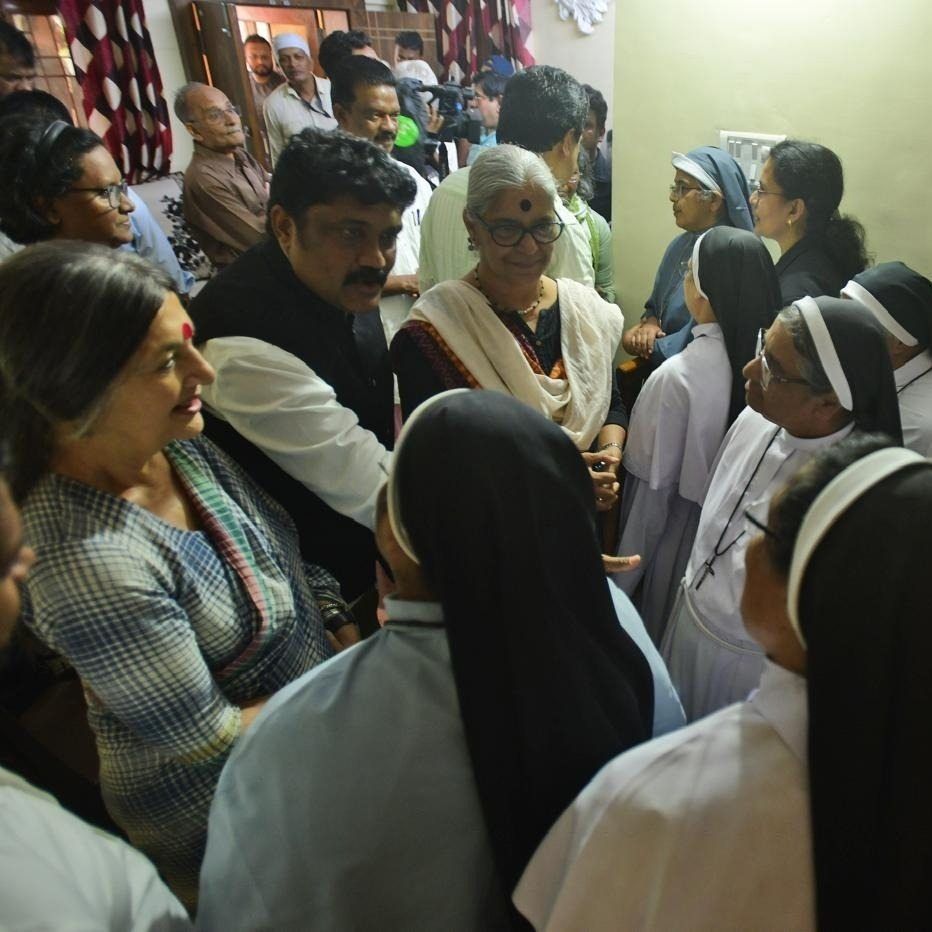
A. A. Rahim echoed these concerns in a Facebook post, describing the two women as "angels in holy robes" being subjected to the harshest prison conditions without justification. He highlighted how even basic medical needs were being ignored and condemned the use of communal rhetoric by Bajrang Dal workers during their harassment of the nuns.
The delegation has demanded the immediate withdrawal of all charges against the nuns, urgent medical attention for their ailments, and legal action against those responsible for their physical and psychological abuse. They also called for a public apology from the state for what they described as a deliberate miscarriage of justice and violation of constitutional rights.
As the case now moves under the jurisdiction of the National Investigation Agency, concerns continue to mount over the implications of this arrest for religious freedom and minority rights in India. However, opposition political parties remain hesitant—if not outright reluctant—to raise their voices forcefully, reflecting a climate of fear and political hostility that continues to suppress meaningful dissent.



Related News
Dont Miss it









0 comments