
National
RSS Calls for Removal of ‘Secularism’ and ‘Socialism’ from Indian Constitution

Anusha Paul
Published on Jun 27, 2025, 03:29 PM | 4 min read
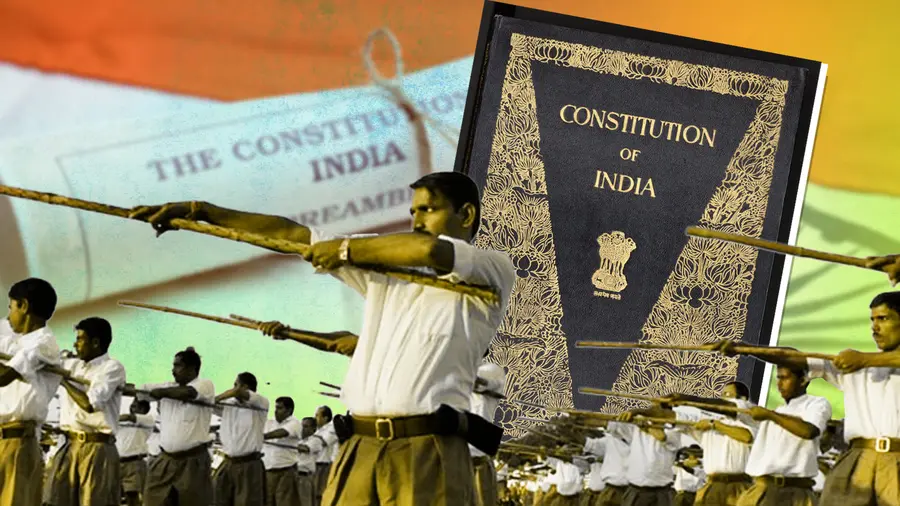
Marking the 50th anniversary of the Emergency, Rashtriya Swayamsevak Sangh (RSS) General Secretary Dattatreya Hosabale has called for a review of the words “secularism” and “socialism” in the Preamble to the Indian Constitution. Speaking at an event at the Ambedkar International Centre in New Delhi, Hosabale argued that these terms were inserted during a period of suspended democratic processes in 1976, through the 42nd Constitutional Amendment, and were not part of the original vision of the Constitution’s frames.
“These words were added at a time when citizens’ rights were suspended, when Parliament was ineffective, and when the judiciary was crippled,” Hosabale said. “So, should these words remain in the Preamble? This is something that deserves a review.”
The 42nd Amendment, enacted during the Emergency imposed by then Prime Minister Indira Gandhi from 1975 to 1977, introduced several significant changes to the Constitution, including the addition of the words “socialist” and “secular” to the Preamble and the extension of legislative terms.
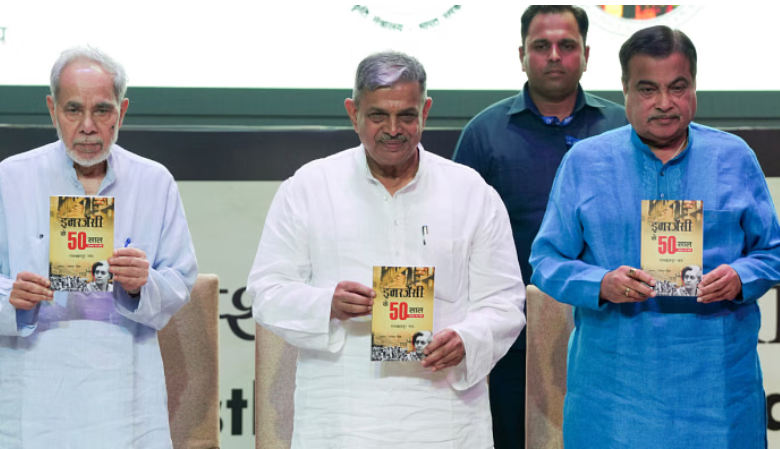
(Image courtesy: PTI)
Although “secular” was formally added in 1976, the concept was deeply rooted in the Constituent Assembly’s deliberations. On November 8, 1948, Prime Minister Jawaharlal Nehru clarified the secular character of the Indian state in the Assembly:
“Secular State… means in essence that no particular religion in the State will receive any State patronage whatsoever. … We must be very careful to see that in this land of ours we do not deny to anybody the right not only to profess or practise but also to propagate any particular religion.”
(Constituent Assembly Debates, Vol. VII, November 8, 1948)
This vision was codified in Article 25 of the Constitution, which guarantees freedom of conscience and the right to freely profess, practice, and propagate religion. In S.R. Bommai v. Union of India (1994), a nine-judge bench of the Supreme Court declared secularism to be a basic feature of the Constitution—making it immune to amendment by Parliament.
The RSS has long held critical views toward aspects of the Indian Constitution. M.S. Golwalkar, the organization’s second Sarsanghchalak, expressed dissatisfaction with its philosophical foundation in his 1966 book Bunch of Thoughts
“Our Constitution too is just a cumbersome and heterogeneous piecing together of various articles… There is nothing in it which we can call our own.”
Following the adoption of the Constitution, the RSS mouthpiece Organiser published an editorial on November 30, 1949, criticizing it for failing to mention "the unique constitutional development in ancient Bharat." The editorial lamented that the laws of Manu, as described in the Manusmriti, were ignored, despite being admired and followed across centuries.
Reinforcing this view, on February 6, 1950, Organiser published an article titled “Manu Rules Our Hearts” by retired High Court Judge Sankar Subba Aiyar. It endorsed the Manusmriti as the ultimate law-giving authority for Hindus, asserting that, contrary to Dr. B.R. Ambedkar’s declaration that “the days of Manu have ended,” the daily lives of Hindus were still governed by the tenets of the Smritis.
The RSS’s current critique of the Emergency period also involves historical contradictions. Archival records and memoirs from that time indicate that RSS leaders sent conciliatory messages to Prime Minister Indira Gandhi, expressing support for her efforts to restore discipline and national order. Although the organization was banned during the Emergency, it reportedly sought to avoid open confrontation with the state.
These historical nuances complicate the RSS’s present-day portrayal of itself as a principal ideological opponent of the Emergency and its constitutional consequences.As of now, no formal proposal to amend the Preamble has been tabled in Parliament. However, constitutional scholars have expressed concern that even suggesting such a review could pave the way for broader constitutional changes—potentially affecting the balance of power, minority rights, and federalism.
While Article 368 of the Indian Constitution provides the procedure for constitutional amendments, the Supreme Court's landmark judgment in Kesavananda Bharati v. State of Kerala (1973) established the basic structure doctrine, which prohibits Parliament from altering or destroying the fundamental features of the Constitution. Concepts such as “secularism” and “socialism” are part of this basic structure. Any attempt to remove them through a constitutional amendment is unconstitutional.
The RSS’s call for a reassessment of terms like “secularism” and “socialism” reflects its longstanding ideological position and a clear objective to reshape India’s constitutional identity. This is not rhetorical; it is a deliberate effort to replace the framework of constitutional pluralism with one grounded in cultural nationalism.



Related News
Dont Miss it










0 comments