
Indian Rupee Falls to Decade Low Amid Global Turmoil and Capital Outflows
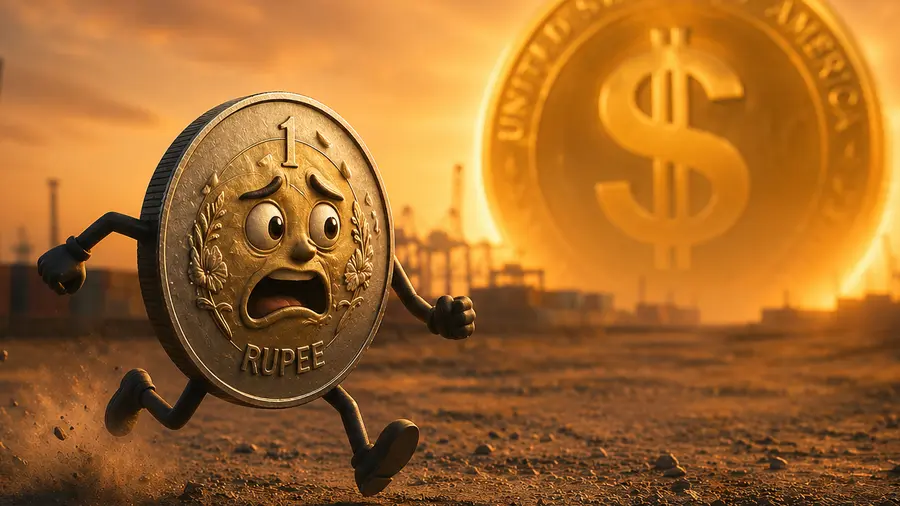
Representative image created using AI
Mumbai: The Indian rupee has plunged to its lowest level in a decade against major global currencies, according to the Reserve Bank of India (RBI). The sharp depreciation is being attributed to surging crude oil prices triggered by geopolitical tensions involving the United States–Israel alliance and Iran, along with significant capital outflows by foreign investors.
In its latest bulletin, the RBI noted that the rupee’s 40-currency Real Effective Exchange Rate (REER), which measures the currency’s value after adjusting for inflation differentials across trading partners, has declined to 92.72. This marks a substantial weakening in the rupee’s global standing.
Despite relatively lower inflation in India in recent months, the currency has depreciated by around 4.5 percent so far this year. By the end of March, it had slipped to a record low of ₹95.21 against the US dollar.
Economists point out that the rupee is unlikely to witness a near-term recovery. The rising demand for dollars to finance increased crude oil imports, coupled with persistent global uncertainty, has led to heavy withdrawals from Indian equity markets. These developments have further intensified pressure on the domestic currency.
The depreciation is expected to have a dual impact on the economy. On the one hand, a weaker rupee could make Indian exports more competitive in international markets and may attract foreign investors seeking lower entry costs. On the other hand, it increases the burden on investors already exposed to Indian assets, as returns diminish when converted into dollars. Additionally, higher import costs are likely to push up inflation, affecting the broader economy.
Further evidence of the rupee’s decline is seen in the six-currency REER index, which has dropped to 89.61 in March—its lowest level since April 2015. This represents a fall of nearly 15 points from the highs recorded in late 2024, making it one of the steepest declines in recent years.
India’s major trading partners, including the United States, China, United Arab Emirates, Russia, Saudi Arabia and Singapore, continue to play a crucial role in shaping the country’s external economic outlook.
Looking ahead, the RBI has projected an exchange rate of around ₹94 per US dollar for the 2026–27 financial year. However, it has cautioned that a further depreciation of about five percent could fuel inflation, even though it may provide a modest boost to economic growth of approximately 0.25 percent.
Amid an increasingly unstable global economic environment, the rupee’s continued weakness underscores the growing challenges facing India’s economy.



Related News
Dont Miss it








0 comments