
India Becomes World’s Second-Largest Beef Exporter Amid Cow Vigilante Violence

Web desk
Published on Jan 02, 2026, 05:44 PM | 4 min read
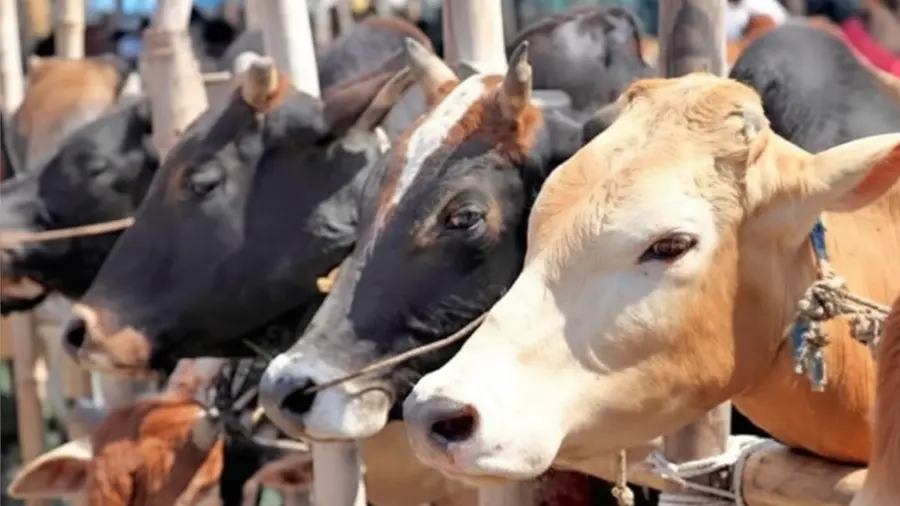
New Delhi: India has quietly emerged as a global beef powerhouse. The country now ranks as the world’s second- largest beef exporter, earning nearly 3.8 billion dollars, or around 34,177 crore rupees, annually. Its primary markets include Southeast Asia and the Middle East, with Indian buffalo meat, prized for its leanness and nutritional value, exported to Vietnam, Malaysia, the UAE, Saudi Arabia, Egypt, and Iraq.
Uttar Pradesh, Maharashtra, Punjab, and Andhra Pradesh account for the bulk of these exports, with Uttar Pradesh alone contributing nearly 60 per cent of India’s beef shipments. Leading companies such as Allanasans, Fair Exports India, and Al Faheem Meatex dominate the industry, supported by a growing network of slaughterhouses, processing plants, and logistics infrastructure.
Yet within India, beef remains a flashpoint for tension. Since the BJP came to power in 2014, cow-related vigilante violence has risen sharply, often justified by allegations of cattle transport for slaughter or export. Media and human rights reports indicate that between 2010 and 2017, at least 28 people were killed and 124 injured in such attacks, with the majority occurring after 2014. By 2023, fatalities linked to cow vigilante groups, disproportionately targeting Muslims and Dalits, had surpassed 50, with hundreds more injured.
The ideological backdrop is clear. Groups affiliated with the Sangh Parivar have weaponised cow protection to assert communal dominance. In states like Uttar Pradesh, buffalo meat is exported by the ton, yet local authorities and vigilantes have attacked those accused of consuming or transporting beef, often bypassing legal safeguards.
The 2015 lynching of Mohammad Akhlaq in Dadri epitomises the dangers of mob justice. Akhlaq, a 52-year -old resident of Bisahda village, was killed on 28 September 2015 after a rumour, broadcast via a temple loudspeaker, alleged that his family had slaughtered a cow and stored beef at home. A mob stormed his house, killing him and critically injuring his son Danish, while the rest of the family narrowly escaped. The family maintained that the meat was goat, not beef. The incident sparked nationwide outrage, exposing how communal tensions and cow protection rhetoric could be weaponised against minorities, and has since become a landmark in debates on intolerance, mob violence, and the erosion of the rule of law.
The Uttar Pradesh government’s attempt to withdraw charges in the case reflected a troubling abdication of responsibility, signalling how political expediency can override justice. By seeking to dilute accountability in one of India’s most infamous lynching cases, the state effectively legitimised vigilante violence under the guise of cow protection. This undermines the rule of law and highlights government complicity in shielding perpetrators rather than supporting victims.
The Surajpur court’s recent rejection of the plea, directing the case to be fast-tracked, underscores the judiciary’s role as a corrective force. Yet the very filing of such a plea illustrates how deeply state institutions have been compromised by ideological pressures, eroding public trust and emboldening those who thrive on communal violence. Akhlaq’s family, supported by rights groups, continues to demand justice, highlighting the stark contrast between India’s global economic ambitions and the domestic realities of communal policing.
This dual reality, thriving international beef trade alongside escalating domestic mob violence, reveals a stark contradiction. India promotes beef exports as an economic boon, yet criminalises its domestic consumption through vigilante campaigns. The rhetoric around cow protection, reinforced by selective state responses, emboldens mobs while leaving victims vulnerable.
The result is a paradox: India feeds the world while policing what its citizens eat at home, punishing the very communities that sustain its domestic meat economy. Economic pragmatism and communal ideology collide, leaving a trail of violence, legal battles, and social tension, casting a shadow over India’s global image as a rising economic power.



Related News
Dont Miss it







0 comments