
BJP Opens Power Sector to Private Players; Workers Launch Strike in Haryana
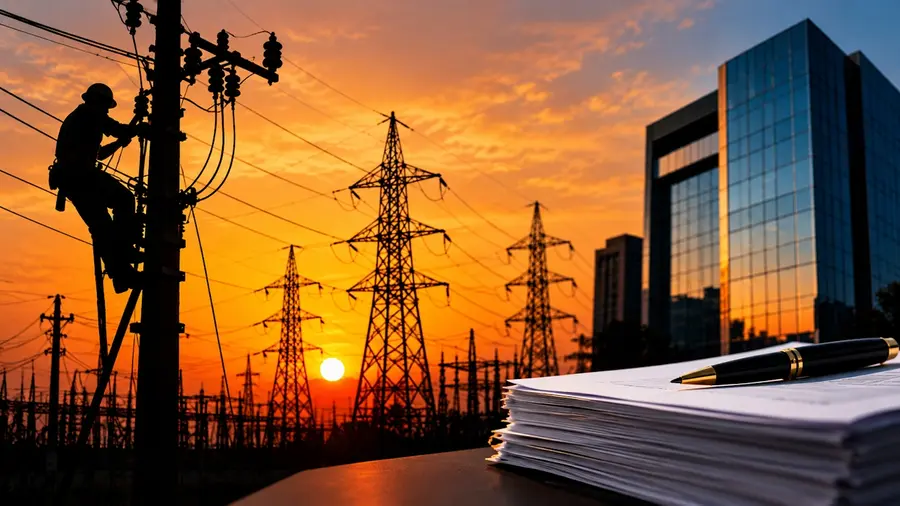
Image used for representation
Chandigarh: Power employees and engineers in Haryana have launched a massive three-day strike against the BJP government’s move to open up the lucrative electricity distribution sector to private companies. The statewide agitation is against the decision to grant Eleven Power Private Limited a 25-year licence to distribute electricity in Gurugram and Nuh districts. Workers are demanding the withdrawal of the decision, which they say could affect public-sector revenue and electricity benefits for ordinary consumers.
The strike, launched on Thursday under the banner of the Haryana Electricity Employees and Engineers Joint Action Front, will continue until Saturday. Ahead of the strike, workers held protest marches in several cities, including Hisar. Outside electricity offices, they burnt effigies of Union Power Minister Manohar Lal Khattar, Chief Minister Nayab Singh Saini and Electricity Regulatory Commission chairman Mukesh Garg, along with copies of the order granting the licence to the private company.
Under Haryana’s electricity distribution system, large industries and commercial establishments pay higher tariffs than ordinary households. The additional revenue generated from these consumers helps provide electricity to ordinary families and farmers at lower rates. Government subsidies also support the system.
However, if high-revenue industrial and commercial consumers shift to the private company, the public-sector utility could lose a significant source of income. At the same time, expenses for supplying electricity to villages and agricultural areas, maintaining existing power lines and transformers, and paying employees would continue. The public-sector utility and workers’ organisations have warned that declining revenue alongside continuing expenses could lead to higher electricity tariffs or require the government to provide additional subsidies.
The Haryana Electricity Regulatory Commission granted a licence to Eleven Power Private Limited on October 19. The company will be able to sell electricity alongside the public-sector Dakshin Haryana Bijli Vitran Nigam in Gurugram and Nuh districts, where the state-owned utility currently distributes power. The private company plans to invest Rs 4,717 crore over the next five years to establish its own distribution network.
Gurugram is a major industrial hub. Gurugram and Nuh together account for 35.23% of Dakshin Haryana Bijli Vitran Nigam’s total electricity sales and 42.98% of its revenue. The licence has been granted to a private company in areas that make a significant contribution to the public-sector utility’s earnings.
The public-sector utility has submitted figures to the regulatory commission outlining the potential financial impact of the private company’s entry. Its estimates suggest that if 2.5% of its existing electricity sales shift to the private company, it could lose Rs 424.12 crore in revenue in 2027–28. The estimated loss could rise to Rs 1,898.75 crore if 20% of sales are lost and Rs 4,272.19 crore if the share reaches 45%. These are projected losses based on different levels of customer migration to the private company.
Establishing a parallel electricity distribution network could also increase costs. In addition to the power lines, transformers and substations maintained by the public-sector utility, the private company would build its own infrastructure. Energy experts at IIT Kanpur have pointed out that constructing and maintaining two distribution networks in the same area could increase the overall cost of electricity distribution.
Public-sector utilities are responsible for supplying electricity to rural and remote areas, as well as to low-income households and farmers. The cost of distribution in such areas often exceeds the revenue generated. Workers’ organisations argue that losing high-revenue consumers would weaken the public sector’s financial capacity to sustain these services.
The joint action front said the licence was granted despite assurances made during a meeting with the state’s power minister on August 10. The Electricity Employees Federation of India, the All India Power Engineers Federation, and farmers’ and workers’ organisations have also announced their support for the strike.
Following the protests, the state government announced that it would appeal against the regulatory commission’s order. However, workers have said they will not withdraw the strike unless the licence is cancelled. Further protest programmes will be announced on October 24.
The decision to grant a parallel licence to the private company has raised concerns over public-sector revenue and employees’ job security, as well as the electricity benefits available to ordinary families and farmers and the possibility of future tariff increases. Workers’ organisations in Haryana are continuing their strike, demanding the cancellation of the licence and protection of the public-sector electricity distribution system.



Related News
Dont Miss it






0 comments