
Baba Budan Dargah: Congress Backs Hindutva in the "Ayodhya of the South''
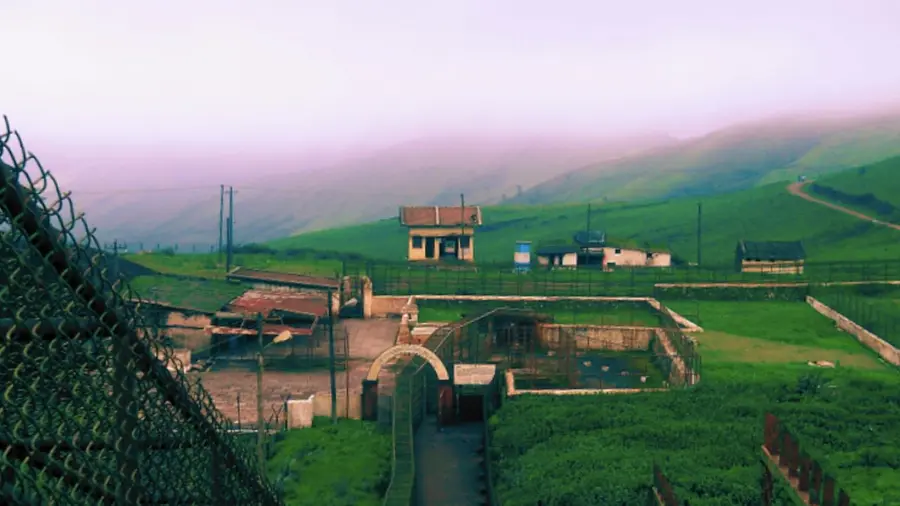
A view of the Bababudan Dargah

Web desk
Published on Apr 18, 2025, 01:46 PM | 4 min read
The media has hailed the Congress Party’s recent Ahmedabad AICC session as a sign of political ‘revival’. But if there’s a defining marker of this new phase, it came not in a speech or resolution—but in action. That action came from Karnataka Chief Minister Siddaramaiah, who, even before reaching Ahmedabad, had already backed the Sangh Parivar’s most communal campaign in the state. On March 26, 2025, Siddaramaiah’s government submitted an affidavit to the Supreme Court supporting the demand to declare the Baba Budan Dargah—a centuries-old Sufi shrine in Chikkamagaluru—a Hindu temple. In doing so, the Congress government didn’t just echo Hindutva talking points—it fully endorsed them. Even the RSS might not have expected such compliance.
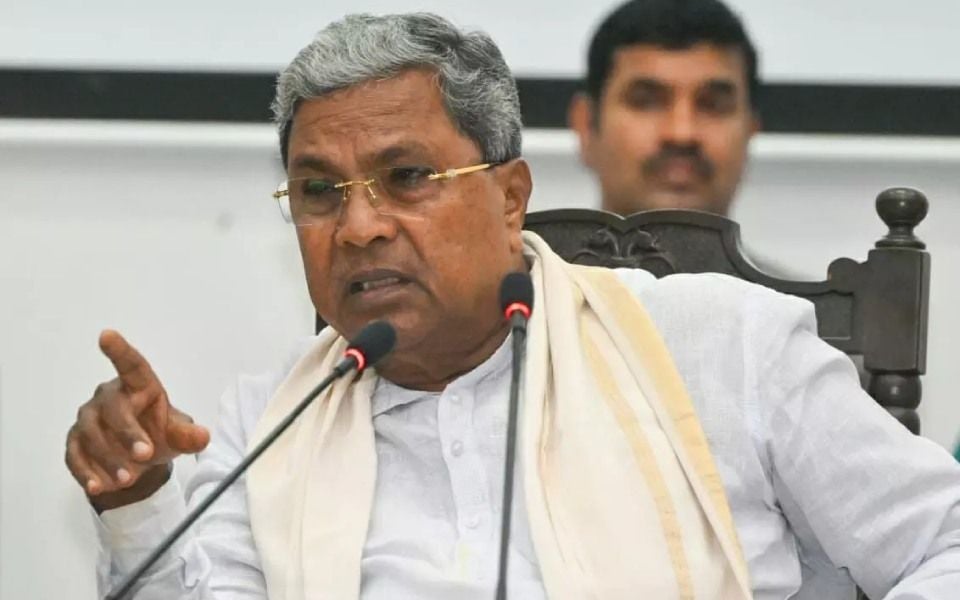 Karnataka Chief Minister Siddaramaiah
The Dargah, named after the 16th-century Sufi saint Baba Budan (Jamaluddin Maghribi), has long stood as a symbol of shared Hindu-Muslim devotion. Baba Budan is also credited with bringing coffee to India, and the shrine, nestled in the Baba Budan hills, has drawn people of all faiths for generations. That very pluralism, however, has long irritated the Sangh Parivar. Their campaign to “reclaim” the site dates back to the early 1990s, around the same time the Ram Janmabhoomi Rath Yatra was being launched in the north. The Sangh Parivar floated a fabricated narrative that the Dargah was built by destroying a Dattatreya temple during Hyder Ali’s reign. With this historically unfounded claim, they began to push for exclusive Hindu control over the site—demanding Muslim pilgrims be barred and Hindu priests appointed in their place.
Since then, the Dargah has been portrayed as the “Ayodhya of the South”, used as a political tool to stir communal sentiment and create polarisation. Dattatreya Jayanti celebrations were allowed for the first time at the site by a Congress government in 1992—an early concession that helped legitimise the Hindutva narrative. Over the years, these celebrations have become moments of heightened tension and provocation. Figures like C T Ravi (now BJP’s National General Secretary) and Shobha Karandlaje (now a Union Minister) rose to political prominence through the Datta Peetha Movement—an aggressive Hindutva campaign centred around the Dargah. In 2003, the Sangh Parivar escalated the campaign into a full-scale communal mobilisation. Backed by the VHP and Bajrang Dal, mobs attacked Muslim homes and shops near the Dargah, setting fire to property and deepening divides. In response, voices of peace like Girish Karnad, Gauri Lankesh, and leftist leaders arrived in Chikkamagaluru to try and counter the hate.
Fast forward to 2025, and the Congress government in Karnataka has taken the same position in court once held by the BJP—asking for the Dargah to be recognised as a Hindu temple. From a secular government, one would expect resistance to such sectarian demands, or at the very least, a commitment to preserving the site’s syncretic legacy. But instead, Siddaramaiah has delivered exactly what the RSS wanted. This move is not just political opportunism—it is a betrayal. A betrayal of Karnataka’s secular traditions, of Chikkamagaluru’s history, and of the very people who once gave Indira Gandhi political refuge after the Emergency by electing her in 1978. It’s yet another moment when the Congress has chosen soft Hindutva over secular resistance, electoral calculation over principle.
The story of the Baba Budan Dargah is not just about one shrine. It’s about the dangerous normalisation of Hindutva’s revisionist history and political agenda—enabled not only by the BJP but also by a Congress that increasingly refuses to challenge it. For Karnataka’s Muslim communities—and for anyone who values India’s pluralistic roots—this development sends a chilling message: no mainstream party can be trusted to protect their rights or heritage. Far from being a bulwark against Hindutva, Congress has become one of its most effective enablers, giving it the legal and political cover it needs to march forward.
The Congress’s stance on the Baba Budan Dargah is not an isolated misstep—it is a mirror reflecting the deep erosion of secular conviction within India’s mainstream politics. By aligning itself with the Sangh Parivar’s decades-old communal project, the Siddaramaiah -led government has signalled that electoral pragmatism now trumps constitutional principle. This is not just a capitulation—it is collaboration.
If the Congress’s latest betrayal is a wake-up call, then it is time to rise—not just in protest, but in defence of an inclusive future that neither forgets its past nor surrenders it to revisionist myths.
Tags



Related News
Dont Miss it










0 comments