
Labour
MGNREGA Demand Rises Amid Rural Job Crunch, Funding Remains Flat

Web desk
Published on May 20, 2025, 01:43 PM | 2 min read
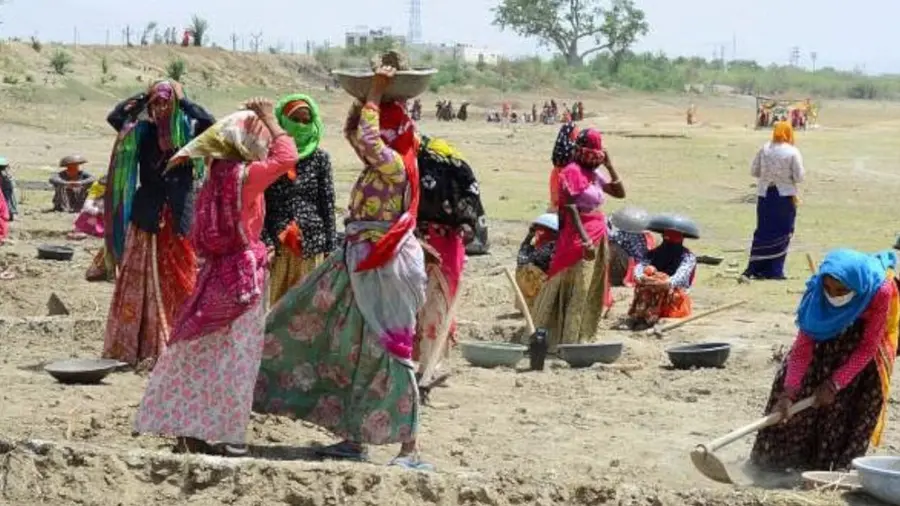
New Delhi: Fresh signs of economic strain in rural India have emerged as demand for work under the Mahatma Gandhi National Rural Employment Guarantee Act (MGNREGA) rose steadily through April and May. Data from the Ministry of Rural Development shows that 20.12 million households sought employment under the scheme in April 2025, with the number climbing to 20.37 million by May 18. The increase in demand is seen as an indicator of reduced job availability in both farm and non-farm sectors.
Despite the rise in participation, the Union government has not increased the scheme’s budget. The allocation for 2024–25 stands at rupees 86,000 crore—the same amount as the revised estimate for the previous year and the figure announced in the Union Budget presented in July 2024. This static funding comes at a time when ground reports suggest the scheme’s role as a lifeline is growing more critical.
A national review conducted by LibTech India, titled “The Missing Work: A National Review of MGNREGA Implementation (FY 2024–25),” highlights deeper issues. While the number of job cards and registered workers has risen—with 1.16 crore new job cards and 1.31 crore additional workers—actual employment generation has declined. The number of person-days dropped from 289 crore in 2023–24 to 268 crore in the current fiscal. Average days of employment per household also slipped from 52 to 50.
The study also points to a troubling trend in recent years: the deletion of 5.9 crore workers and 2.1 crore families from the scheme’s records across two financial years. Although a portion of these deletions were reversed, the reinstatement did not lead to proportional improvements in work availability, suggesting systemic inefficiencies.
Introduced during the UPA era as a flagship welfare programme, MGNREGA has been both politically contested and economically vital. Prime Minister Narendra Modi once described it as a “living monument” to the failures of past governments. However, during the COVID-19 pandemic, the scheme emerged as a crucial support mechanism for millions of rural families struggling with job losses and reverse migration. Even in 2023–24, when demand dipped from its pandemic-era peak, it remained about 15% higher than the average between 2014 and 2019.



Related News
Dont Miss it









0 comments