
Centre Withholds 15,000 Crore Meant for Kerala’s Public Education Sector Over PM SHRI Non -Compliance

Web desk
Published on May 04, 2025, 12:07 PM | 4 min read
Thiruvananthapuram: The Union Government has withheld ₹15,000.27 crore allocated to Kerala’s public education sector, citing the state’s non-implementation of the PM SHRI (Pradhan Mantri Schools for Rising India) programme. The withheld funds include allocations for the Samagra Shiksha Kerala (SSK) scheme and grants earmarked for the education of differently-abled students. In the financial year 2023–24, the last two installments of the SSK programme were withheld without prior notice. Kerala was expected to receive 513.54 crore under the scheme during that period, but the amount has not been released so far, despite the state having submitted all required documentation.
The Union Government is reportedly pressuring Kerala to convert 336 schools into PM SHRI model schools. It has suggested that two schools be brought under the PM SHRI umbrella in each Block Resource Centre (BRC). The Centre insists that a Memorandum of Understanding (MoU) must be signed before any funds can be disbursed. Although the PM SHRI scheme was introduced in 2020, Kerala has yet to implement it. The state government maintains that it is making every effort to secure its rightful share of the funds. State Education Minister V. Sivankutty has met with Union Education Minister Dharmendra Pradhan, urging immediate release of the pending amount.
The Centre’s withholding of funds is expected to have far-reaching consequences across Kerala’s public education landscape. Key initiatives such as free uniforms, free textbooks, composite school grants, school library grants, sports grants, grants and stipends for differently-abled children and girls, medical aid equipment and therapy services for children with disabilities, social inclusion schemes, home-based education, Samagra Shiksha, comprehensive quality education programmes, empowerment of girls, residential hostel operations, provision of books, workbooks and activity spaces for preschool children, teacher education, salaries for specialist teachers, special educators and education volunteers, parental education, teacher training and staff salaries are all likely to be adversely affected. The state argues that these essential services, directly linked to the quality and inclusivity of public education, are being unfairly held hostage to political pressure over programme alignment.
Why Kerala is not implementing PM SHRI?
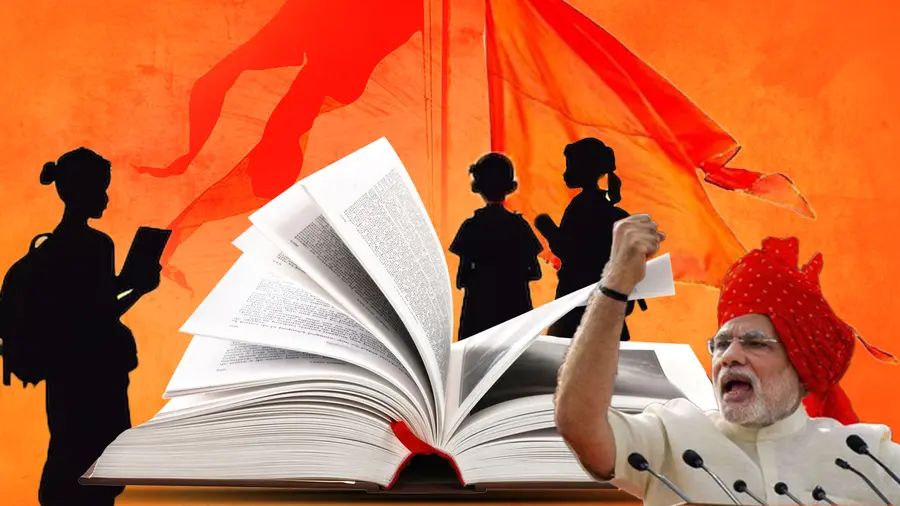
Kerala has opted not to implement the PM SHRI scheme primarily due to concerns over the Centre's increasing control over educational content. One of the main apprehensions is that the scheme, which selects only a limited number of schools for development, will introduce a curriculum aligned with the National Education Policy (NEP), thereby creating a divide between state syllabus and centrally mandated content. This move is seen as a step toward undermining the state’s autonomy in educational matters. There has been growing criticism of the Centre's role in reshaping the curriculum. Key topics such as Mughal history, the Gujarat riots, Maulana Abul Kalam Azad, Darwin’s theory of evolution, Jammu and Kashmir, and the assassination of Mahatma Gandhi have been removed from NCERT textbooks. These changes are viewed as part of a broader trend of ideological influence in education, often referred to as the saffronisation of the curriculum, which has been intensifying over the past decade.
Furthermore, there has been a noticeable clampdown on dissent within universities and a push to align central institutions with the ideology of the RSS-BJP combine. The inclusion of Hindu fundamentalist leaders and Hindutva- oriented narratives in academic content has sparked public uproar and raised concerns about the politicisation of education.
Critics argue that this centralisation threatens the federal structure of governance in India, especially the principle of cooperative federalism. The autonomy of states over their public education systems is gradually eroding. Moreover, the NEP includes provisions that encourage the privatisation of education, which could weaken the public education system relied upon by nearly three-fourths of the Indian population. The preferential treatment of selected PM SHRI schools with enhanced facilities may draw students away from regular public schools, thereby accelerating their decline.



Related News
Dont Miss it









0 comments