
US Strikes Iranian Nuclear Sites; Fears of Wider Conflict Rise in West Asia
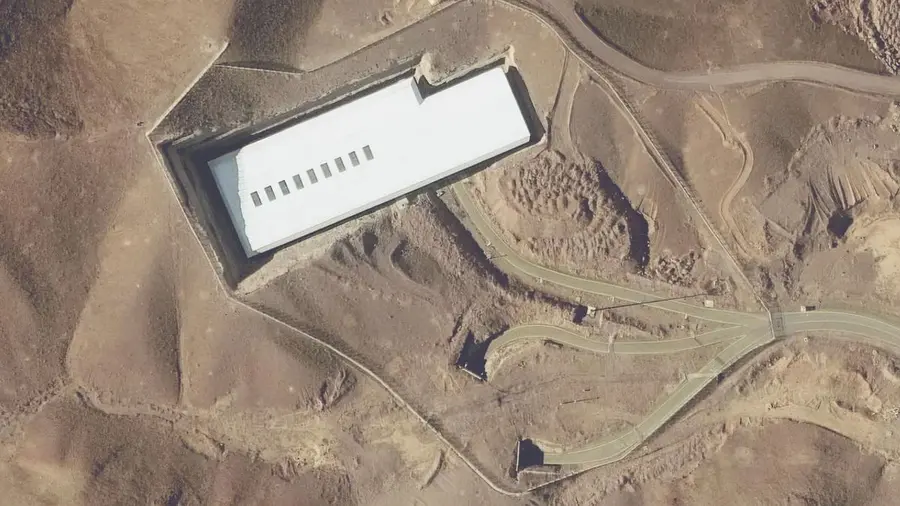
This satellite image provided by Maxar Technologies shows the Fordo enrichment facility in Iran on Jan. 24, 2025

Web desk
Published on Jun 22, 2025, 01:00 PM | 3 min read
Tel Aviv: The United States has launched direct military strikes on three nuclear sites inside Iran, escalating tensions in the already volatile region. The attack, which took place early Sunday, is being seen as Washington inserting itself fully into Israel’s ongoing conflict with Iran.
This latest move comes after over a week of Israeli airstrikes targeting Iran’s missile systems, air defence infrastructure, and nuclear enrichment facilities. The US strikes reportedly focused on Iran’s highly fortified nuclear facilities at Fordo, Isfahan, and Natanz—sites buried deep underground and protected by layers of rock and reinforced concrete.
The US deployed advanced stealth bombers equipped with 13,600 kg "bunker buster" bombs—specialised weapons that only the US possesses—to destroy these underground structures. The attack was announced by former US President Donald Trump, who is believed to have approved the operation in coordination with Israel.
Iran has confirmed that the sites were targeted and declared that it reserves the right to retaliate. The Iranian Foreign Minister, Abbas Araghchi, said the US crossed a dangerous red line by attacking nuclear sites and declared that “diplomacy is no longer an option.” He strongly condemned the US administration, calling it lawless and fully responsible for the consequences of its actions.
Araghchi also announced he will meet Russian President Vladimir Putin in Moscow on Sunday to discuss the crisis. Iran and Russia are strategic allies, and Araghchi said the two countries always coordinate their responses in such situations.
The International Committee of the Red Cross warned of the risks of this escalation. Its president, Mirjana Spoljaric, said the world cannot withstand endless war and that international humanitarian law must be respected.
Satellite images analysed by global agencies show signs of major structural damage at the Fordo nuclear site. Parts of the mountainside appear to have changed colour, indicating a powerful explosion, likely caused by bunker-buster bombs. Light smoke is visible in the area, and Iran is yet to release an official damage assessment.
Iranian authorities reportedly sealed the entrance tunnels to the Fordo site before the attack, suggesting they were preparing for possible strikes. Still, Iran has not confirmed how much damage the US operation caused to its nuclear program.
The British government has admitted it was informed in advance of the US strikes but said it did not take part in the operation. Meanwhile, Bahrain, home to the US Navy’s 5th Fleet, issued safety warnings asking people to avoid main roads and activated work-from-home rules for most government employees.
On the ground, over 80 Israelis were reportedly injured following Iranian attacks in response to earlier Israeli airstrikes. At the same time, Israel continued its bombardment of Gaza. Health officials in Gaza said an Israeli airstrike on the Nuseirat refugee camp killed four people, and 22 others were wounded in another attack on people waiting for aid trucks in Wadi Gaza.
Despite the violence, humanitarian organisation World Central Kitchen has resumed distribution of hot meals in Gaza after a six-week halt caused by Israeli attacks on aid convoys.
With both Iran and the US taking aggressive steps, and Israel continuing its operations in Gaza, the region is now on the brink of a much larger war. For countries like India, which have large diaspora populations across West Asia, the worsening crisis is being closely watched with concern.



Related News
Dont Miss it







0 comments