
Claudia Sheinbaum's Mexico Challenges the US Empire with a Bold Anti- Colonial Foreign Policy
Credit: AFP

Thomas Babychan
Published on Oct 06, 2025, 06:25 PM | 9 min read
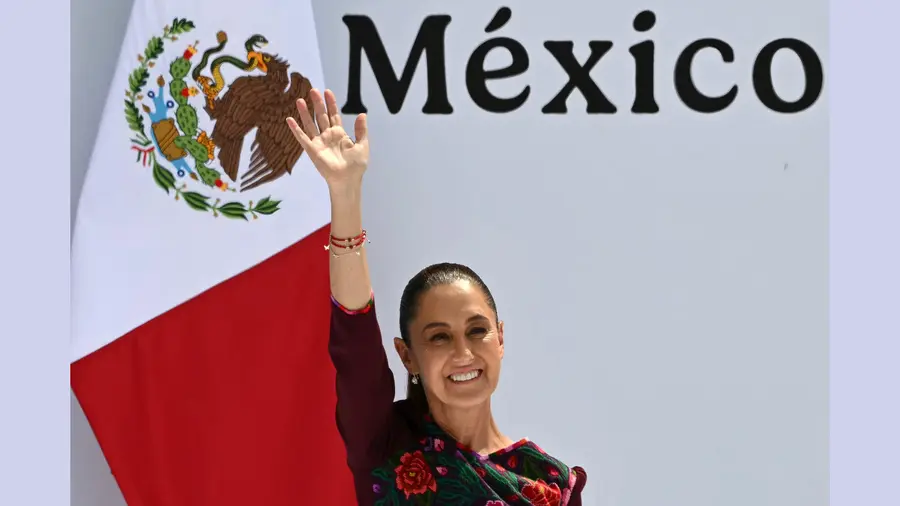
Mexico, under President Claudia Sheinbaum Pardo's leadership, has entered a new stage of confrontation with the empire to the north. The arrival of Mexico’s first woman president in October 2024 was not just a domestic event; it was a declaration in the global politics.
For decades, the United States has treated Mexico as a second -class neighbour, a resource pool, a dumping ground, and a border guard in service of Washington’s domestic politics. Under Sheinbaum, the mask of diplomacy is ripped away. She presents Mexico as David standing before Goliath: wounded by history, surrounded by imperial power, yet refusing to kneel. This foreign policy is not the technocratic tinkering of elites, but a conscious ideological fight against US domination.
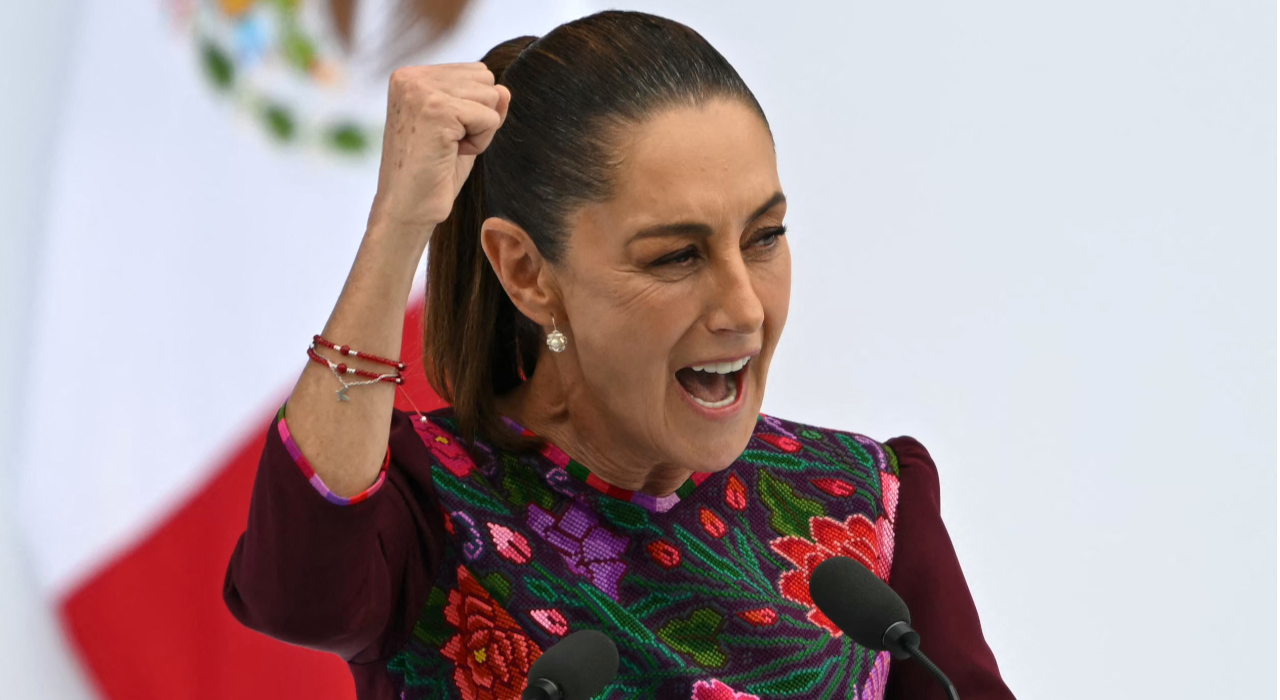
Sheinbaum’s intellectual formation explains the sharpness of her position. Unlike many career politicians, she is a scientist, an academic, and a thinker who grew up immersed in leftist traditions. Her work on climate change made her a global voice against capitalist destruction of the planet long before she became head of state. She writes and speaks with the conviction that neoliberalism is not simply policy but a system of exploitation, one that ties ecological devastation to social inequality.
 Credit: AFP
To inherit Mexico’s presidency after Andrés Manuel López Obrador (AMLO) was to inherit the “Fourth Transformation (The Fourth Transformation Cuarta Transformación or 4T is the national project initiated by former President Andrés Manuel López Obrador in 2018, focused on eradicating corruption, reducing inequality, and strengthening state sovereignty), but Sheinbaum has given it sharper ideological teeth. Obrador built the foundations of republican diplomacy, resisting foreign impositions, reviving sovereignty, and speaking against the Monroe Doctrine. Sheinbaum now takes this further, naming US practices for what they are: modern imperialism, economic colonialism, and political subjugation.
To grasp the intensity of Sheinbaum’s line, one must see how she interprets history. For her, the US, Mexico relationship is a catalogue of robbery and humiliation. The 1848 war that stole half of Mexico’s territory, the economic treaties that bled its industries, the interventions dressed as anti-drug cooperation, these are not distant episodes but the living memory of empire.
North American Free Trade Agreement (NAFTA) and the United States- Mexico- Canada Agreement (USMCA) are seen not as free trade but as chains fastening Mexico’s economy to Washington’s corporations. American firms flood Mexican markets while Mexican labourers cross the border to toil for low wages, criminalised when convenient, exploited when useful.
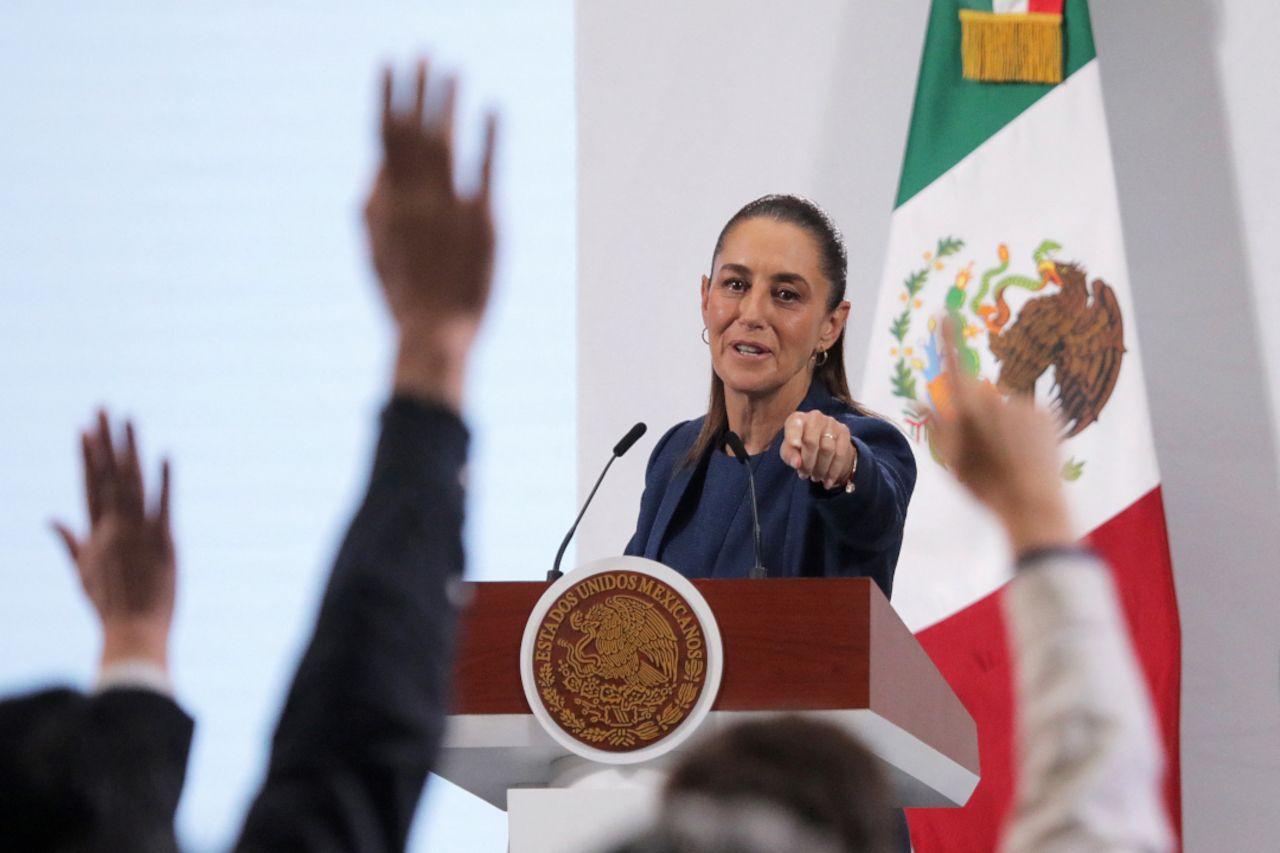
For Sheinbaum, every new demand from Washington is part of this same line: from Biden’s climate lectures while his country refuses to cut emissions, to Trump’s threats of tariffs and walls, all are reminders that the United States sees Mexico not as a sovereign state but as an appendage to be disciplined.
Against this history, Sheinbaum’s foreign policy is an act of recalcitrance. The Estrada Doctrine of non-intervention, once treated as a relic, becomes her shield and sword. Mexico will not allow Washington to dictate its energy policy, its judicial reforms, or its relations with other countries. When the United States demands open markets in oil and lithium, she calls it theft under the banner of neoliberalism. When it insists on harsher crackdowns on cartels, she replies that Mexico will not become a killing field to please Washington’s failed “war on drugs.” When it tells Mexico to contain Central American migrants, she replies that Mexico is not the empire’s border guard. Sovereignty, for Sheinbaum, is not negotiable.
Her vision extends beyond Mexico’s defence. She frames her presidency as part of a broader struggle of the South against the North. Within Latin America, she strengthens the Community of Latin American and Caribbean States (CELAC) as an alternative to the US -dominated Organisation of American States (OAS), which for decades has served as the empire’s diplomatic whip. By turning to CELAC, Sheinbaum pushes for Latin America to speak with its own voice, free of Washington’s veto.
Her support for Cuba, Venezuela, and Bolivia is not only solidarity but a rejection of the US narrative that labels their governments illegitimate. To embrace them is to declare that sovereignty does not require US approval. Her friendships with Brazil President Luiz Inácio Lula da Silva, known mononymously as Lula,
and Colombian President Gustavo Petro point to a revival of the a renewed left bloc in the region that can stand as a counterweight to Washington.

Beyond the continent, Sheinbaum sees opportunity in the multipolar world. The BRICS group, China’s investments, and Russia’s energy markets are paths to dilute the stranglehold of the United States. Mexico is still deeply dependent on US trade, with nearly 80 per cent of exports flowing north. But Sheinbaum treats every agreement with Beijing, every negotiation with Moscow, every pact with Brasília or Pretoria, as another stone for David’s sling. The point is not immediate escape but erosion of dependency, a gradual breaking of chains. The United States is strongest when it monopolises Mexico’s options. By diversifying partners, Sheinbaum ensures the empire no longer holds all the cards.
The fiercest struggle comes in the fields of migration and security. For Washington, Mexico has long been reduced to a wall, an outsourced policeman tasked with keeping the South from reaching the North. Central American families fleeing hunger and violence are treated as numbers in US electoral battles. Mexico is ordered to detain, deport, and discipline on command.
Sheinbaum rejects this. She insists that Mexico is not a subcontractor for US xenophobia. She exposes the hypocrisy: the same United States that fuels instability with interventions in Central America now demands Mexico clean up the consequences. By refusing to be the empire’s border guard, Sheinbaum reasserts sovereignty not only over territory but over dignity.
The “war on drugs” exposes the empire’s arrogance even more starkly. For decades, Washington has exported its failure southward, demanding that Mexico turn its towns into battlegrounds while refusing to control its own consumption. The Mérida Initiative brought US agents into Mexican soil under the pretext of “assistance.” In practice, it was an occupation by stealth, designed to keep Mexico militarised and dependent. Sheinbaum refuses to continue this humiliation. She has made it clear that the US will not run Mexican security policy, that extraditions will not serve as a trophy hunt for American prosecutors, and that Mexico will not turn its citizens into cannon fodder for a war invented in Washington. Her line is simple: Mexico fights crime on its own terms, not as a vassal of the empire.
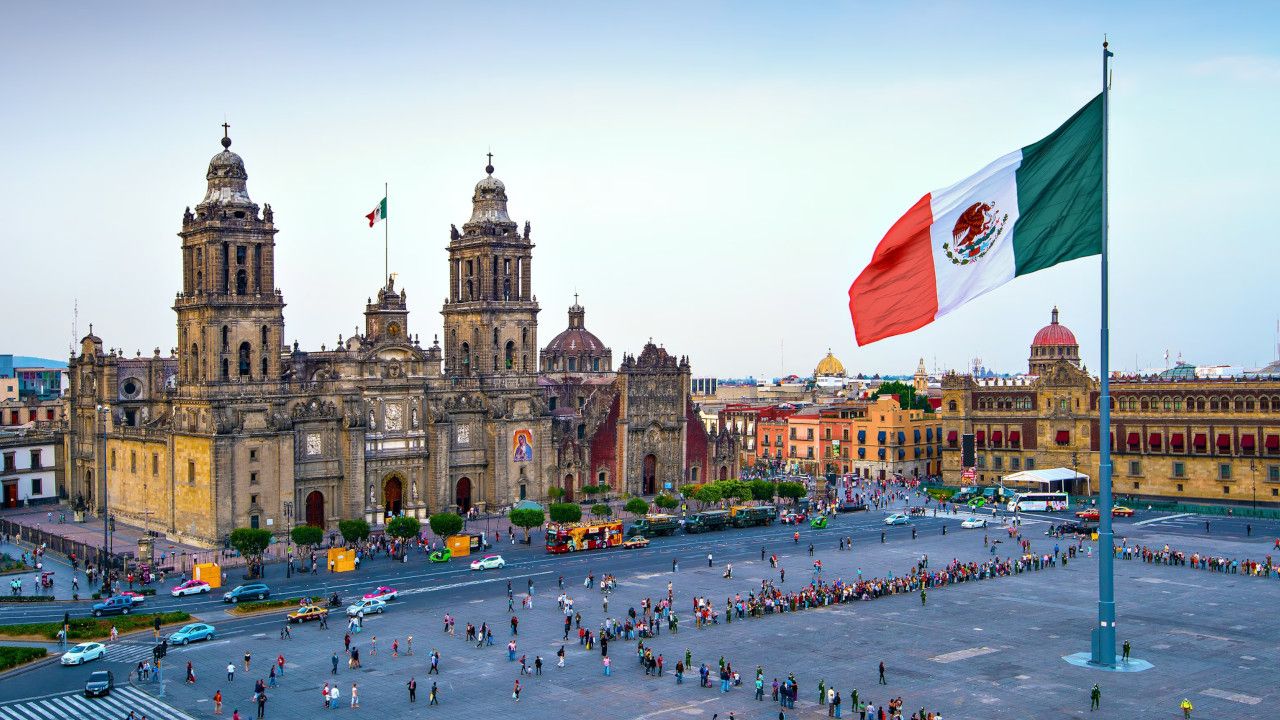
Imperialism does not act only through armies and trade. It acts through culture, through narrative, through the constant bombardment of US media and ideology. Sheinbaum recognises this too. To resist is not only to defend borders but to defend minds. Mexico’s cinema, music, literature, and art are themselves weapons in the fight for independence. Decolonisation is not only economic but cultural, a struggle for memory, identity, and narrative. In this, Sheinbaum signals that Mexico will not be reduced to a caricature drawn by American studios, but will tell its own story to the world.
The United States, of course, responds with threats. It matters little whether it is Trump or Biden in power; both see Mexico through the same imperial lens. Trump brandishes tariffs and walls, Biden deploys moral lectures and economic pressures, but both demand obedience. Sheinbaum calls their actions what they are: punishments meant to remind Mexico of its place. She refuses to dress them in polite language. A tariff is not a negotiation tactic; it is economic aggression. A lecture on corruption is not advice; it is a colonial reprimand. The task, as she frames it, is to expose these aggressions so that the world sees the giant’s cruelty.
The risks are undeniable. US sanctions could cripple Mexican industries. Retaliation could devastate workers who depend on northern markets. Mexican elites tied to US business may resist, undermining her policies from within. And yet Sheinbaum insists that surrender is worse. To accept subordination is to confirm Mexico’s status as a client state. To resist, even at a cost, is to affirm independence. Better a wounded David who fights than a docile servant who survives in chains.
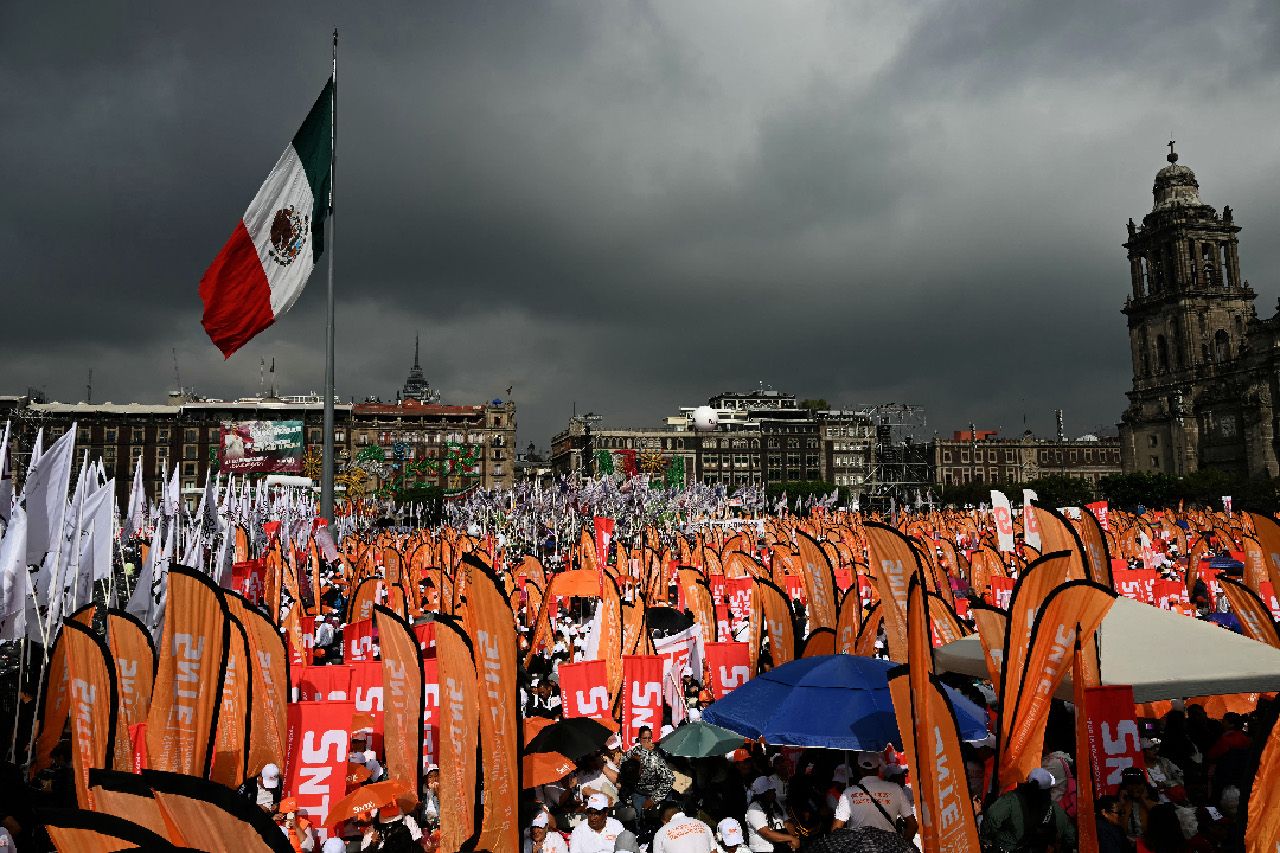
This foreign policy is not about polite diplomacy. It is about unmasking the empire. Sheinbaum insists that Mexico will not be pacified with promises or flattered with “partnership.” The United States is not Mexico’s partner; it is its jailer. Every treaty that weakens Mexican sovereignty, every agent that enters Mexican soil, every wall that rises along the border, is evidence of domination. By calling this out, she turns diplomacy into resistance, negotiations into battlegrounds, and foreign policy into ideological struggle.
What future lies ahead depends on whether Mexico can hold this line. In the best outcome, by 2028, Mexico will have diversified its trade, deepened CELAC as an independent voice, and positioned itself as a leader of the Global South. In this scenario, Sheinbaum’s defiance would not only weaken the US grip but also inspire others to follow. In the worst outcome, relentless US pressure could force retreats, co-opting Mexico back into its orbit and silencing its voice. Yet even if this occurs, history will remember Sheinbaum as the leader who refused to bow. She will be marked as the president who told the empire no, who named it as empire, and who tried to rally the South against it.
Mexico has lived too long in the shadow of its northern neighbour. Sheinbaum has raised her head and declared the shadow illegitimate. Her foreign policy is not about pleasing the United States but about resisting it, exposing it, and building alliances to weaken it. The empire towers still, but Mexico has lifted the sling. This is not diplomacy as usual. It is defiance in the face of Goliath.



Related News
Dont Miss it









0 comments