
Israel's Aggression against Iran and Nuclear Power Imbalance Debate in the Middle East

Web desk
Published on Jun 19, 2025, 04:52 PM | 3 min read
Jerusalem, Tehran: Tensions between Israel and Iran have escalated dramatically following Israel's targeted airstrikes on suspected Iranian nuclear and military facilities. The attacks, carried out during Operation Rising Lion from June 13 to 17, have brought the long-standing imbalance in nuclear capability in the Middle East into sharp global focus.
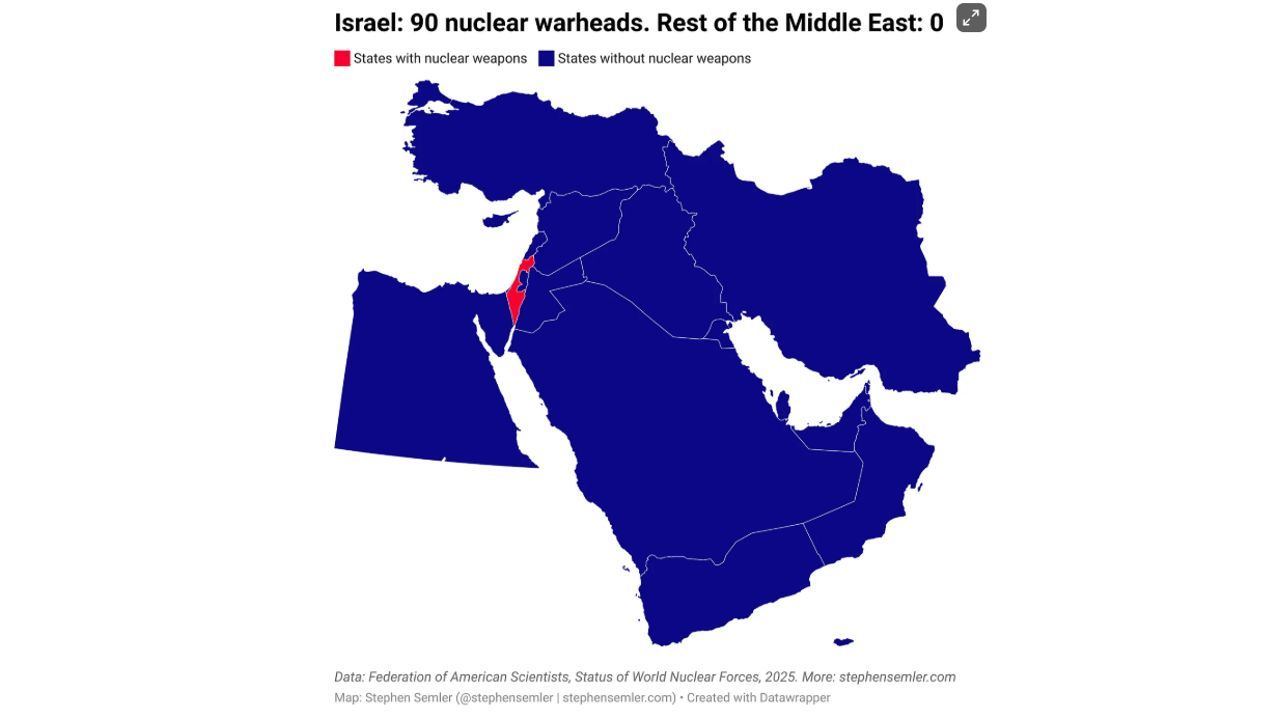
A map released by the Federation of American Scientists (FAS) and created by analyst Stephen Semler visually underscores this stark disparity: Israel is the only country in the Middle East with nuclear weapons, possessing an estimated 90 warheads, while all other countries in the region remain nuclear-free.
According to multiple human rights organisations, the recent Israeli airstrikes claimed the lives of at least 639 individuals, including over 260 civilians and more than 150 Iranian security personnel. Among the dead are several senior Iranian officials, including Major General Mohammad Bagheri, IRGC Commander-in-Chief Hossein Salami, Aerospace Force Commander Amir Ali Hajizadeh, and intelligence chief Mohammad Kazemi. Prominent nuclear scientists such as Fereydoon Abbasi and Mohammad Mehdi Tehranchi were also killed, with reports suggesting as many as 14 scientists were among the casualties.
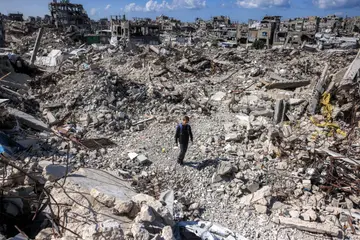
The strikes inflicted significant damage in central Tehran, including civilian areas like Tajrish, where women and children were killed, forcing thousands of residents into underground shelters. While Israeli sources described the operation as a precise decapitation strike on Iran’s military and nuclear leadership, the heavy civilian toll has sparked widespread fear and condemnation.
The deeper issue, however, is the glaring asymmetry in nuclear capability. Israel, which has never officially declared its nuclear weapons nor signed the Treaty on the Non-Proliferation of Nuclear Weapons (NPT), continues to enjoy Western protection and silence. In contrast, Iran, an NPT signatory, has faced relentless scrutiny and sanctions for its civilian nuclear program.
Iran maintains that its nuclear activities are entirely peaceful and aimed at addressing domestic energy needs. United States intelligence assessments have repeatedly confirmed that Iran is not pursuing nuclear weapons, especially after halting related experiments in 2003 following international pressure. Nevertheless, both the United States and its ally Israel continue to dismiss these assurances.
Despite widespread opposition from the American public, the US government has extended full support to Israel in this war. Analysts suggest this backing is less about shared defence and more about maintaining Israel’s regional supremacy. The conflict, they say, marks a shift in Israel’s global role, from regional defender to proactive military aggressor, reviving the politics of hard power.
As the conflict intensifies, international calls for restraint, diplomacy, and de-escalation grow louder. But in a region deeply entrenched in historical mistrust and geopolitical rivalry, the chances of immediate resolution remain uncertain.



Related News
Dont Miss it









0 comments