
Flood Death Toll in Southern China Rises to 39 as New Storm Threat Looms
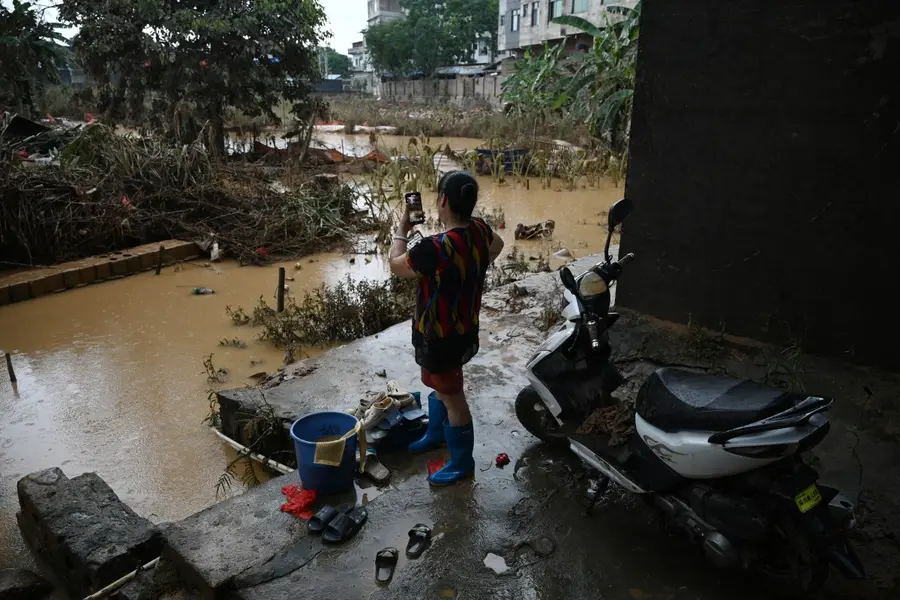
A woman films damage outside a row of houses which were flooded up to the second floor when a reservoir collapsed near Gantang, in China’s southwest Guangxi region, on July 9, 2026. (Photo | AFP)
Beijing: The death toll from flooding triggered by Tropical Storm Maysak in southern China has risen to 39, authorities said on Thursday, as Taiwan and China's eastern coast prepared for the arrival of another powerful storm expected to make landfall in the coming days.
Most of the fatalities were linked to the breach of a dam east of Nanning, the capital of Guangxi region, where 26 people were killed, Vice Mayor Ding Wei said at a news briefing. Nine people remain missing across Guangxi.
Maysak brought record-breaking rainfall to the region after making landfall on Saturday, causing reservoirs to overflow, flooding towns and leaving many residents stranded for days.
Authorities said parts of Guangxi received between 10 and 40 centimetres of rain, with some of the worst-hit areas recording more than 90 centimetres. The overflowing reservoirs unleashed torrents of water into nearby communities, causing widespread destruction.
A large-scale rescue operation involving drones and around 5,700 boats has been underway to reach stranded residents, with emergency teams navigating strong currents and debris. About 130,000 people have been evacuated from affected areas.
Although floodwaters have begun receding, officials warned that more rainfall is expected over the next two days. Cleanup operations are underway in hard-hit Hengzhou city, where crews are removing mud and debris, disinfecting affected neighbourhoods and repairing damaged roads.
Power has already been restored to more than 60,000 households, authorities said.
Meanwhile, forecasters warned that Typhoon Bavi is expected to pass north of Taiwan, bringing heavy rain before making landfall in either Zhejiang or Fujian province on China's east coast on Saturday, raising concerns of further flooding and disruption.
Tags



Related News
Dont Miss it










0 comments