
Nilambur By-Election Result on Monday; Left’s Development Legacy and Secular Commitment Define the Battle

Web desk
Published on Jun 22, 2025, 03:54 PM | 3 min read
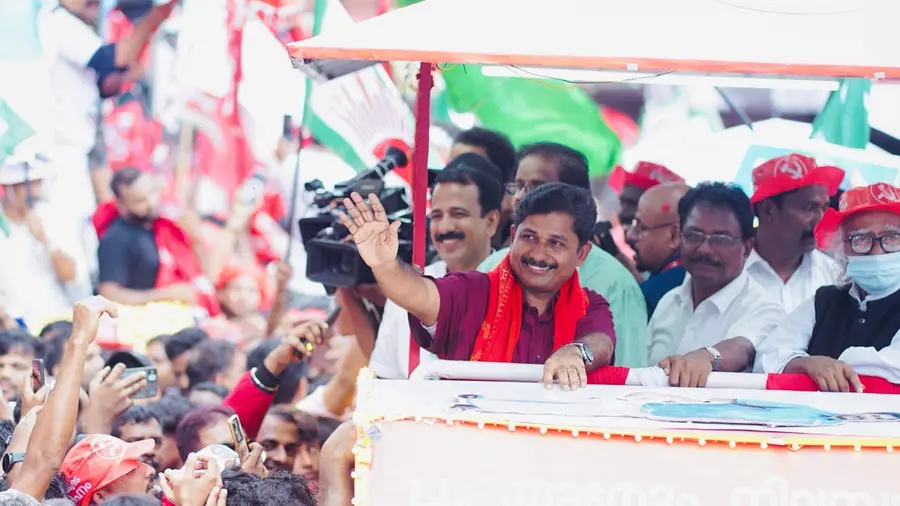
Nilambur: The result of the Nilambur assembly by-election will be declared on Monday, with vote counting scheduled to begin at 8 a.m. at Chungathara Marthoma Higher Secondary School. The strong room will be opened at 7:30 a.m., and counting will commence with the postal ballots.
There are 1,403 postal ballots to be counted, which include 163 through the Voter Facilitation Centre, 1,206 home votes (comprising 310 differently-abled citizens and 896 senior citizens), and 34 service votes. A total of 1,74,667 people cast their votes at the booths, resulting in a voter turnout of 75.87%.
To ensure transparency, VVPAT slips from five booths will be cross-verified with the corresponding EVM results. Counting of EVM votes will take place in 19 rounds—14 booths will be covered per round, except for the final round which includes 11. Altogether, there are 263 polling booths. M Swaraj was the LDF candidate in Nilambur. The UDF was represented by Aryadan Shoukath, the NDA by Adv. Mohan George, and former MLA P.V. Anvar contested as an independent.
Electoral history favours the Left in Nilambur. Since its establishment in 1965, the constituency has elected Left candidates to the Assembly seven times. The current election is also shaped by the strong public mandate for development achieved under the past nine years of LDF governance.
The constituency has witnessed transformative development projects worth over Rs 1,800 crore. A mini civil station became a reality with Rs 15.25 crore. Twenty-three government schools were upgraded at a cost of Rs 41.31 crore. Basic infrastructure reached remote tribal areas, including electrification projects worth Rs 4.92 crore. A mini stadium was built at Manaveda School, fulfilling long-standing aspirations of local sports lovers. Additional facilities were created at Nilambur ITI hostels and in the ophthalmology and dialysis units of the district hospital. A new blood bank building was completed, and 23 roads were developed at a cost of Rs 290 crore.
Under the Jal Jeevan Mission, Rs 699.34 crore was spent to ensure drinking water access for every household. Rs 81.80 crore was invested in building ten key bridges. The state’s pilot Malayora Highway project received Rs 165 crore in funding. Through the Life Mission, 2,323 families in Nilambur received housing support. Additionally, Rs 7.55 crore from the Chief Minister’s Distress Relief Fund was granted to 4,496 families.
For flood-affected citizens, Rs 154.76 crore was sanctioned. Rs 39.80 crore was spent on basic infrastructure improvements. Projects worth Rs 16 crore were implemented to reduce human-wildlife conflict in vulnerable zones. The first phase of the Canoli Bio Park tourism project was completed, with an overall allocation of Rs 2 crore. The Chathankunnu–Nedungayam road was completed to national standards using Rs 16 crore from the CRF fund. The Public Works Department office in Nilambur was fully renovated.
Over 800 families—including many from tribal areas—were granted land ownership. Administrative sanction for the Nilambur bypass was issued with an allocation of Rs 227.18 crore, advancing long-pending connectivity needs.



Related News
Dont Miss it








0 comments