
‘The Cooperative Movement in Kerala’ Study Report Released

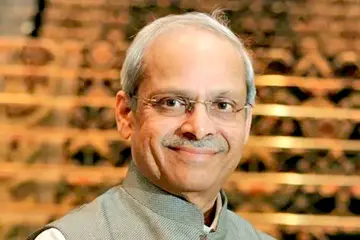
New Delhi: A study report titled The Cooperative Movement in Kerala, which examines the evolution and role of the cooperative sector in the state, was released here by noted economist Prabhat Patnaik. The report has been jointly prepared by the P. Sundarayya Memorial Trust and the Tricontinental Institute of Social Research.
The report was formally released by handing it over to Hanan Mollah, trustee of the P. Sundarayya Memorial Trust. Speaking at the event, Patnaik said India’s agricultural sector is passing through a prolonged crisis, driven by increasing corporate dominance, financialisation and a steady withdrawal of public support. In this context, he said, the cooperative sector offers one of the most effective ways to strengthen agriculture and rural livelihoods. Kerala’s cooperative system, including its cooperative banks, needs to be further reinforced to withstand mounting market pressures, he added.
Patnaik said the cooperative movement in Kerala did not emerge as a bureaucratic or administrative initiative, but as a product of sustained class struggles and social reform movements. He referred to cooperatives such as Dinesh and others as examples of institutions built through organised efforts by workers and peasants to resist exploitation and establish democratic control over production and credit. Kerala’s experience, he said, shows that cooperatives can function as viable alternatives to profit-driven capitalist enterprises.
The study places Kerala’s cooperative movement in a broader historical and political setting, tracing its roots to anti-caste struggles, peasant movements and the rise of Left politics in the state. It notes that the early influence of socialist ideas and the interventions of the Communist Party played a key role in shaping a cooperative culture based on collective ownership, democratic functioning and social responsibility.
According to the study, Kerala currently has more than 16,000 registered cooperative societies operating across a wide range of sectors, including agriculture, banking, construction, manufacturing, healthcare, retail, housing and services. Far from being marginal economic units, these cooperatives form an integral part of everyday life in the state, providing employment, affordable credit and essential services to millions of people.
The report observes that cooperatives in Kerala have not only survived but expanded while functioning within a market-driven economy. While acknowledging internal challenges and financial constraints, it points out that many cooperatives have shown the capacity to compete with private enterprises without diluting workers’ rights or social objectives. Unlike profit-oriented firms, these institutions prioritise livelihoods, dignity of labour and community welfare.
The study highlights the decisive role played by cooperatives in weakening the grip of landlords and moneylenders in rural Kerala. Peasant cooperatives, particularly in the northern districts, enabled farmers to escape usurious credit systems and gain access to inputs, markets and fair prices. This, the report notes, led to significant changes in rural power relations and strengthened collective confidence among small farmers and agricultural workers.
It also underlines the role of the first Communist government in Kerala (1957–1959) in providing institutional support to the cooperative movement by expanding rural credit, promoting worker-owned enterprises and ensuring accountability to members. Even during periods when non-Left governments were in office, the cooperative framework established earlier could not be dismantled, reflecting its deep social acceptance.
The study examines several major cooperative institutions. Among them is the Uralungal Labour Contract Cooperative Society (ULCCS), which has grown from a small collective of construction workers into Asia’s largest workers’ cooperative. ULCCS is cited as an example of how worker-owned enterprises can successfully execute large infrastructure projects while maintaining democratic control and social accountability.
Another key example discussed is the Kerala Dinesh Beedi Workers’ Central Cooperative Society. Formed in the late 1960s after private factory owners shut down units to resist labour laws, Dinesh Beedi protected workers’ livelihoods and later diversified into food processing, textiles, information technology and hospitality. This diversification, the study notes, enabled the cooperative to survive the decline of the beedi industry while continuing to provide employment and social security.
The Sahya Tea Cooperative in Idukki is cited as an instance of small farmers collectively challenging the dominance of large tea corporations. By processing and marketing tea on their own, small growers were able to secure better prices for green leaves and reduce dependence on exploitative intermediaries.
A substantial portion of the study is devoted to Kerala’s credit cooperatives, which existed even before the formation of the state. These institutions played a crucial role in supporting land reforms, preventing the reconcentration of land ownership and providing affordable credit to farmers, workers and marginalised communities. The report points out that cooperative banks have functioned as people-centred financial institutions, especially in rural areas where access to commercial banking remains uneven.
The study also gives special attention to Kudumbashree, Kerala’s women-led poverty eradication and livelihood network. Although not registered as cooperatives under law, Kudumbashree units function on cooperative principles and now have nearly five million women members. The report highlights Kudumbashree’s role in collective farming, microenterprises and decentralised planning, and notes its significant impact on women’s incomes, food security and participation in public life.
The study notes that while cooperatives function within the constraints of a market-driven economy, Kerala’s experience shows that democratically run, people-owned institutions can operate at scale and sustain themselves over time. It points out that the cooperative sector in the state continues to offer a model of economic organisation that prioritises livelihoods, social equity and collective control over profit maximisation.
The study has been authored by Vijoo Krishnan, Vijay Prashad, Nidheesh J. Villattu, Aswathi Rebecca Joseph, Ashiq Ali Thuppilikkattu, Najeeb V. R., Nitheesh Narayanan, Sarga T. K. and Subin Dennis. Trustees of the P. Sundarayya Memorial Trust Ashok Dhawale and Vijoo Krishnan, Trust Research Coordinator Nidheesh J. Villattu, and Tricontinental Institute of Social Research scholar Umesh Yadav also spoke at the release event.



Related News
Dont Miss it









0 comments