
India strikes 9 terror targets in Pakistan, PoK under 'Operation Sindoor'
India missile strike, Operation Sindoor, Pahalgam terror attack, Indian armed forces, Pakistan terror camps, PoK strike, Jaish-e-Mohammad, Lashkar-e-Taiba, Bahawalpur, Muridke, Kotli, Muzaffarabad, Indian Air Force, precision strike India, Modi terror response, India Pakistan tension, anti-terror operation, cross-border strike, India defence news, Indian military retaliation

Web desk
Published on May 07, 2025, 11:31 AM | 3 min read
New Delhi: In a swift and decisive retaliation to the Pahalgam terror attack, Indian armed forces launched precision missile strikes early Wednesday on nine terror infrastructure targets in Pakistan and Pakistan-Occupied Kashmir (PoK). The operation, codenamed "Operation Sindoor', targeted key strongholds of terror outfits including Jaish-e-Mohammad (JeM) in Bahawalpur and Lashkar-e-Taiba (LeT) in Muridke.
The strikes came two weeks after the April 22 terror assault in Pahalgam that killed 26 civilians, including one Nepali national. The Ministry of Defence announced the strikes at 1:44 a.m., stating: "A little while ago, the Indian Armed Forces launched Operation Sindoor, striking terrorist infrastructure in Pakistan and Pakistan- occupied Jammu and Kashmir from where attacks against India were being planned and directed." The ministry emphasised that no Pakistani military installations were targeted, underscoring that the operation was focused, measured, and non -escalatory. Sources said Prime Minister Narendra Modi monitored the mission closely.
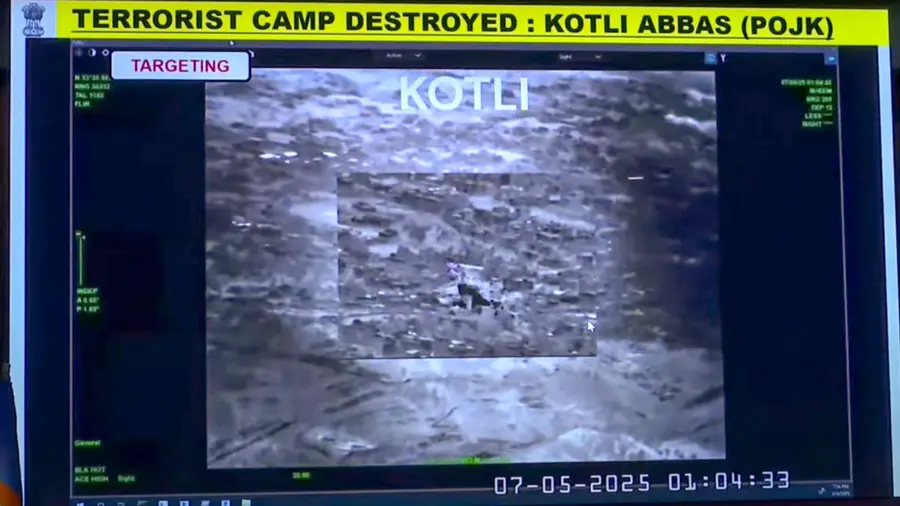
Indian forces employed stand-off weapons, drones, and precision- guided munitions to ensure accuracy and limit collateral damage. All nine designated targets were hit successfully, officials familiar with the mission confirmed. The attacks struck JeM’s primary stronghold in Bahawalpur and LeT’s base in Muridke, both in Pakistan’s Punjab province. Additional targets included areas in PoK long believed to harbor terror camps, such as Kotli and Muzaffarabad, along with Hizbul Mujahideen’s facility in Mehmoona Joya in Sialkot, LeT’s base in Markaz Ahle Hadith in Barnala, its camp in Muzaffarabad’s Shawai Nalla, and JeM’s Markaz Abbas facility in Kotli.
The name "Operation Sindoor' carries symbolic weight, referencing the red vermilion worn by married Hindu women as a tribute to the women widowed in the Pahalgam attack. The defence ministry said, “These steps come in the wake of the barbaric Pahalgam terrorist attack in which 25 Indians and one Nepali citizen were murdered. We are living up to the commitment that those responsible will be held accountable.”
In response to rising tensions, Indian air defence units along the Pakistan border were placed on high alert. Indian diplomatic channels were also activated following the strikes. Senior Indian officials reached out to counterparts in the United States, Russia, the United Kingdom, UAE, and Saudi Arabia to brief them on the operation and India’s rationale behind it. “Senior Indian officials have spoken to their counterparts in a number of countries to brief them on the steps taken by India,” a source said.
Defence Minister Rajnath Singh posted on X shortly after the strike, writing in Hindi, "Bharat Mata Ki Jai!" External Affairs Minister S. Jaishankar added that the world must show "zero tolerance for terrorism," while the Indian Army declared, "Justice is served."
The strike followed a high-level meeting chaired by Prime Minister Modi on April 29, where he granted the armed forces complete operational freedom to decide the mode, timing, and targets of the response. The Prime Minister underscored the national resolve to deliver a "crushing blow to terrorism."



Related News
Dont Miss it










0 comments