
Modi’s Selective Memory of the Freedom Struggle

Web desk
Published on Aug 15, 2025, 12:14 PM | 3 min read
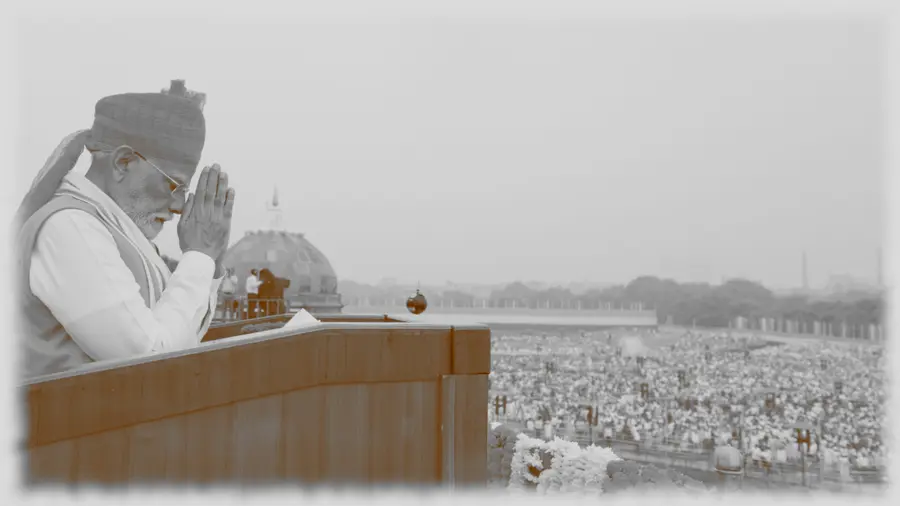
New Delhi: On India’s 79th Independence Day, Prime Minister Narendra Modi used the Red Fort address to mark the centenary of the Rashtriya Swayamsevak Sangh (RSS), calling its journey “very proud and glorious” and describing it as “the world’s biggest NGO.” Modi, a former RSS pracharak, lauded its discipline, voluntary service, and commitment to “vyakti nirman” (character building) and “rashtra nirman” (nation building).
By crediting the RSS alongside saints, scientists, teachers, farmers, soldiers, and labourers for shaping the country, Modi placed the organisation on par with contributors to the nation’s hard-won independence. This equation, however, is historically misleading.
The record of the RSS’s early years offers no evidence of participation in the defining struggles against British colonial rule. Founded in 1925 by K B Hedgewar, the RSS consciously avoided involvement in the Civil Disobedience Movement (1930–34), the Quit India Movement (1942), and the nationwide mobilisation of 1947. Archival documents and contemporary accounts confirm its absence from the frontlines of the anti-colonial fight.
This abstention was not an oversight but a matter of policy. The RSS leadership prioritised building its internal network, ideological training, and social consolidation within Hindu society, while steering clear of direct political confrontation with the colonial state. Under Hedgewar and his successor, it chose organisational growth over risking conflict with British authorities, a decision that left it detached from the sacrifices and mass movements that defined India’s independence.
The symbolic culmination of this detachment came on 15 August 1947, when the RSS did not hoist the national flag at its headquarters. This was not a minor omission but a telling reflection of its unwillingness to align itself with the newly independent nation’s public celebrations.
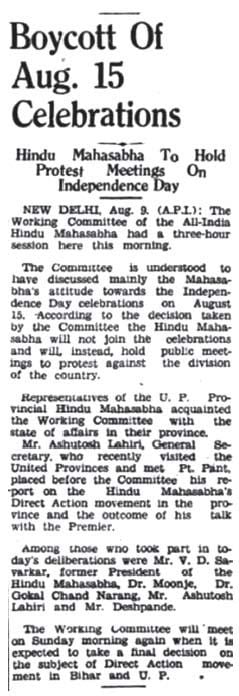
Modi’s portrayal of the RSS as a central pillar of “national service” is more than selective history; it is an active attempt to implant a constructed truth into the national consciousness. By omitting the organisation’s absence from the freedom struggle, he elevates a body that stood apart from the events that birthed the Republic, reframing it as a foundational force in nation-building. This manufactured narrative risks normalising the idea that a role in independence is not necessary to claim credit for shaping the nation.
The move is politically calculated. In present- day India, where the RSS is the ideological parent of the ruling Bharatiya Janata Party, such glorification consolidates its moral legitimacy and entrenches its influence. But it comes at a cost, eroding the historical integrity of the independence story and replacing it with a curated version designed to fit the ideological priorities of the present.
The centenary celebration is therefore not just a commemoration of an organisation’s longevity. It is a deliberate rewriting of the past, an assertion of a constructed truth meant to overwrite the historical record and condition public memory for political ends.



Related News
Dont Miss it






0 comments