
ISRO to Open Space Travel to Civilians; Second Astronaut Batch to Include Non-Military Specialists
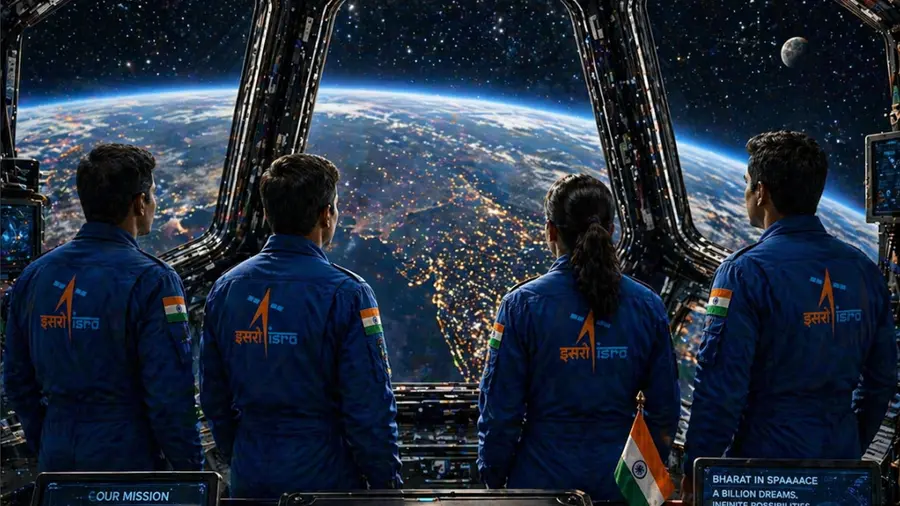
Representative image created using AI
Bengaluru: In a significant shift in India's human spaceflight program, ISRO is preparing to include civilians alongside military personnel in its second batch of astronaut selections. The agency's special committee overseeing astronaut selection and management has recommended that the second batch comprise both military officers and civilians, according to national media reports.
The proposed ten-member group is expected to include six mission pilots with military backgrounds and four civilians with expertise in Science, Technology, Engineering, and Mathematics (STEM). The first batch — selected for the Gaganyaan mission — consists entirely of Indian Air Force test pilots: Air Commodore Prashanth Nair and Group Captains Shubhanshu Shukla, Ajit Krishnan, and Angad Pratap.
For the second batch, ISRO also plans to expand military representation by including combat helicopter pilots in addition to test pilots, aiming to bring operationally experienced personnel into the astronaut corps.
The inclusion of civilians signals a shift in ISRO's long-term priorities — from establishing the foundational technologies needed for human spaceflight towards sustaining extended operations in space, including scientific research and long-duration missions aboard India's planned space station, the 'Bharatiya Antariksha Station'. However, civilians are unlikely to actually fly until after the fourth crewed Gaganyaan mission, with military-trained astronauts manning earlier flights until all technical and safety systems are fully operational.
ISRO plans to conduct two human spaceflight missions per year, with astronauts eligible to return to space after approximately two years. From the seventh mission onwards, modifications to the Gaganyaan crew module may allow the crew complement to be increased from two to three. The third batch is envisaged to include ten civilian specialists and just two mission pilots.
The full cycle from selection through training and mission preparation is estimated to take approximately four and a half years. ISRO is yet to establish a permanent astronaut training facility and currently relies on a temporary centre. Development of critical life support systems such as the Environment Control and Life Support System (ECLSS) also remains a work in progress.



Related News
Dont Miss it





0 comments