
27 Years On, Graham Staines Murder Remains a Haunting Symbol of Religious Intolerance

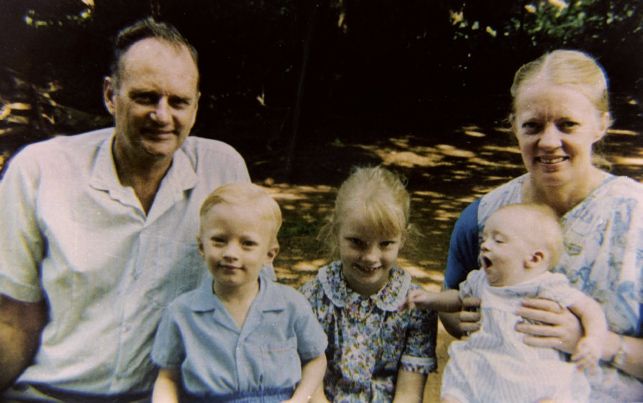
Graham Staines and Family. File Photo

Anjali Ganga
Published on Jan 22, 2026, 12:50 PM | 2 min read
Bhubaneswar: It has been 27 years since the brutal killing of Australian missionary Graham Staines and his two young sons, Philip and Timothy, in Manoharpur village, Keonjhar district, Odisha. On the night of 22 January 1999, while sleeping in their station wagon after attending a Christian gathering, the family was surrounded by a mob led by Dara Singh, a Bajrang Dal activist. The attackers locked the vehicle and set it ablaze, killing Staines, 58, and his sons, aged ten and seven. The charred remains of father and sons were found clinging together, a haunting image that seared itself into India’s conscience.
Graham Staines had arrived in India in 1965 and dedicated 35 years of his life to serving leprosy patients at the Mayurbhanj Leprosy Home in Odisha. Despite his decades of humanitarian work, he was accused by Hindu nationalist groups of engaging in forced religious conversions among tribal communities, a charge later disproven by the Justice Wadhwa Commission, which confirmed that Staines had no involvement in conversion activities. His wife, Gladys Staines, continued their mission in India for many years after his death and was honored with the Padma Shri in 2005.
The murder was widely condemned both nationally and internationally. The rise of Hindutva politics in the late 1990s, coupled with the emboldenment of groups like the Bajrang Dal, created a climate of intolerance and aggression toward minorities. The killings were part of this broader pattern of hostility, enabled by the silence or complicity of state institutions.
Dara Singh was initially sentenced to death, but the Orissa High Court later commuted his sentence to life imprisonment, a decision upheld by the Supreme Court. Several other convicts received lesser sentences. Recently, Mahendra Hembram, one of those released for good conduct was welcomed with flowers and reverence by Sangh Parivar groups, reigniting debate about the glorification of those involved in communal violence.
The Staines killings were more than a family tragedy. They were a stark reminder of the fragility of secular protections in India and the vulnerability of minorities under majoritarian politics. Gladys Staines’ choice to forgive the killers and continue her work in Odisha stood as a moral challenge to the nation, highlighting the contrast between compassion and the hate that had consumed her family. The incident remains a touchstone in discussions of religious freedom, communal violence, and the systemic weaknesses that allow organised hate to persist in India.
Related News



Related News
Dont Miss it










0 comments