
Study finds Ganga river drying faster than in 1,300 years

Web desk
Published on Sep 28, 2025, 04:28 PM | 2 min read
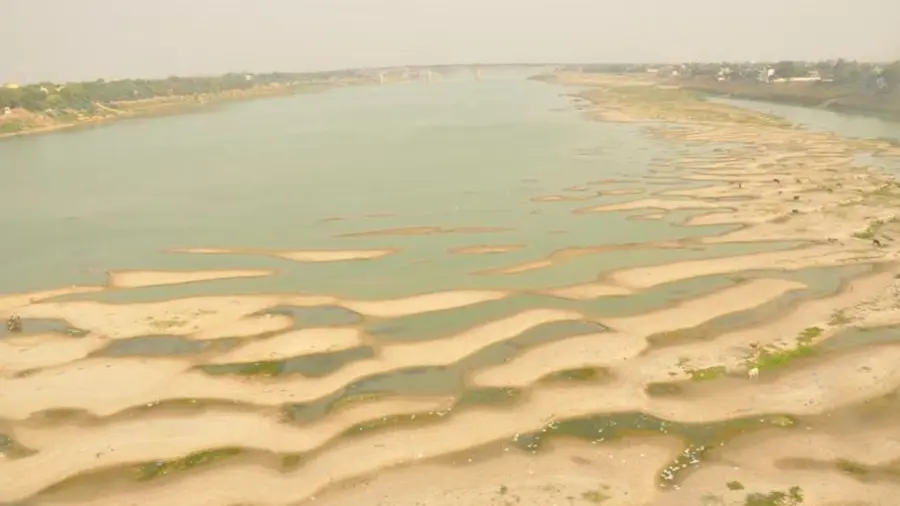
New Delhi: The Ganga river, lifeline to over 600 million people and central to South Asia’s economy and culture, is drying at a rate not seen in more than a millennium, according to a new study by researchers at IIT Gandhinagar and the University of Arizona.
By reconstructing streamflow using tree-ring records from the Monsoon Asia Drought Atlas and hydrological models, the researchers found that the decline in flow since the 1990s could be unprecedented. The drying is linked to a combination of weaker summer monsoons, human-driven land and water use changes, and broader climate shifts.
If confirmed by further studies, the Ganga may have entered a period of droughts more prolonged and severe than the arid episodes of the 14th and 16th centuries. The basin, which supports 40 per cent of India’s GDP, has already seen multiple four- to seven-year droughts between 1991 and 2020, far rarer than in the previous 1,300 years. The 2004–2010 drought was the most severe in the entire period, with overall post-1990s drying estimated to be 76 per cent more intense than the worst 16th century drought.
The findings were validated against historical droughts and famines, including the 18th century Bengal famine, and modern flow records. Statistical analyses suggest the drivers include weaker monsoons tied to rapid Indian Ocean warming and aerosol pollution, excessive groundwater pumping that reduces baseflow, and changes in land use.
Published in PNAS on September 23, the study also raises questions about the reliability of global climate models, most of which fail to capture the observed drying trend. While some models predict wetter conditions ahead, the authors warn that planning cannot rely on optimistic forecasts alone but must include adaptive water management that considers both natural and human factors.
Tags



Related News
Dont Miss it









0 comments