
Budget Focuses on Working Class; Another Step Towards a Revitalised Kerala: M V Govindan”

Web desk
Published on Jan 30, 2026, 04:15 PM | 4 min read
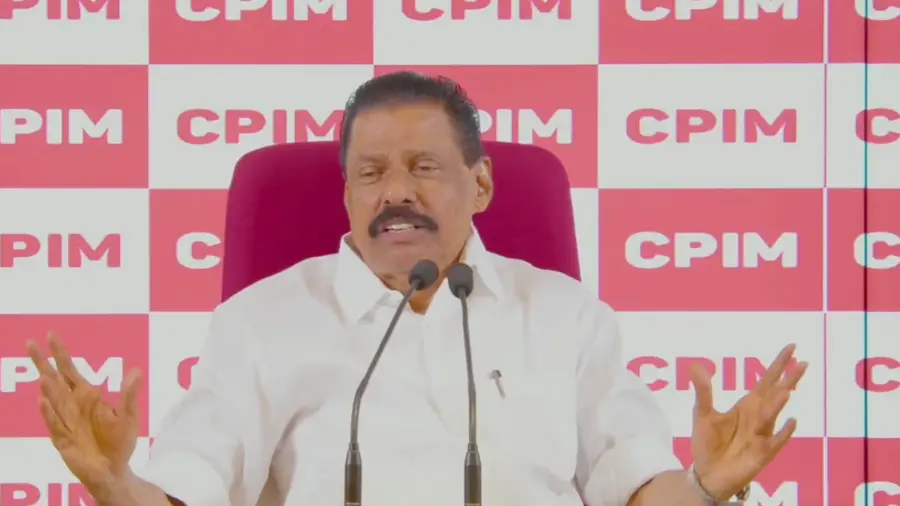
Thiruvananthapuram:“The budget presented by K N Balagopal in the legislative assembly is designed for the poor, not multimillionaires. Its commitment to the working class is reflected not in empty promises, but through concrete measures,” said M V Govindan at a media briefing at the AKG Centre in Thiruvananthapuram. He added that the Congress continues to favour the wealthy, while those claiming to represent the ‘real left’ are merely contradicting their claims with their own actions.
The new LDF government budget marks another step towards a revitalised Kerala. Even as financial constraints are imposed by the central government, this budget stands as a direct testament to Kerala’s determination to chart its own path. It outlines strategies to transition from addressing extreme poverty to tackling broader forms of deprivation. The LDF government is working in a context where roughly 30 percent of the population faces relative backwardness due to globalisation, and the budget includes measures to uplift these disadvantaged sections.
The government has reaffirmed its commitment to uninterrupted welfare pensions and support for ASHA workers, Anganwadi staff, pre-primary teachers, literacy promoters, school kitchen workers, gig workers, auto-rickshaw drivers, and Kudumbashree members. Social security mechanisms have been strengthened to safeguard the most vulnerable. Regarding the Wayanad Mundakkai disaster, despite the High Court approving bank loans for victims, the central government failed to act; the state government has pledged support, as outlined in the budget.
To promote a knowledge-based society, the Kerala government has introduced a programme making degree-level courses free for all students seeking higher education. In a state that has achieved universal literacy, schooling is already free; by making undergraduate studies free, the government aims to make higher education universally accessible. Scholarships for research students and pensions for media personnel have also been increased.
Commitments to state employees continue to be honoured, including full clearance of DA arrears and implementation of Assured pension and salary revisions. The central government’s obstructive approach towards Kerala had delayed the release of funds, which could otherwise have enabled earlier clearance of DA arrears.
The budget also introduces the “Life Saver” scheme, providing the first five days of treatment free for road accident victims. Health and education remain priorities, alongside significant infrastructure development. Adequate funds have been allocated for roads and bridges.
Construction of the Wayanad tunnel road has begun at a cost of 2,269 crore rupees, with preliminary works on the Kattappana-Theni tunnel road also funded. The budget further supports growth in agriculture, industry, and IT-related sectors, reflecting its potential to transform Kerala.
Opposition Continues to Obstruct Development
The opposition in Kerala, have, however, questioned the practicality of these measures, echoing arguments faced by the previous LDF government budget.
The Congress has labelled the budget impractical, repeating criticisms voiced against the previous government’s proposals. While the opposition has the right to present its views, it appears to adopt an anti -development stance on nearly every project. Initiatives are frequently met with corruption allegations, yet no formal complaints have been filed in the legislative assembly by opposition leader V D Satheeshan, and no verified evidence of wrongdoing exists.
Courts have repeatedly deemed such cases baseless. The government has been vindicated in multiple instances, including KIIFB, K-Fone, Thottappally sand mining, brewery allegations, nepotistic appointments, dam-related flood claims, mismanagement of the Chief Minister’s relief fund, and PPE kit issues during COVID-19. Verdicts consistently favoured the government, highlighting the UDF’s tendency to obstruct developmental initiatives. Media coverage, however, often overlooks these rulings, focusing instead on controversy.
Those Who Misled People Should Apologise to the same
Even the Chief Minister has been vindicated, with claims by Mathew Kuzhalnadan, the sprinkler allegations, and data outsourcing issues all dismissed by courts. Leaders including V D Satheeshan, Ramesh Chennithala, and K Surendran are yet to explain or apologise to the public for spreading misleading information. Media outlets largely failed to report these court dismissals, instead highlighting unverified claims and obstructing the smooth implementation of government projects, showing disregard for society’s downtrodden.
"Even on Gandhi Martyrs’ Day, BJP alliance emerges"
A similar pattern of political manoeuvring was evident during Gandhi Martyrs’ Day events. In Mattathur, the Congress candidate for the vice-presidential post won with BJP support, reflecting a North Indian-style alliance. The assembly composition was 11 LDF, 8 Congress, 4 BJP, and 1 Independent, with two Congress-elected members abstaining. In subsequent voting, LDF’s Bindu Manoj and UDF’s Minimul Saji, backed by the BJP, received 11 votes each. The UDF candidate eventually won through a draw, illustrating the party’s alignment with the BJP even on Gandhi Martyrs’ Day.
Tags



Related News
Dont Miss it




0 comments