
Mainstream Media Acting as Corporate Mouthpieces, Says CM Pinarayi Vijayan
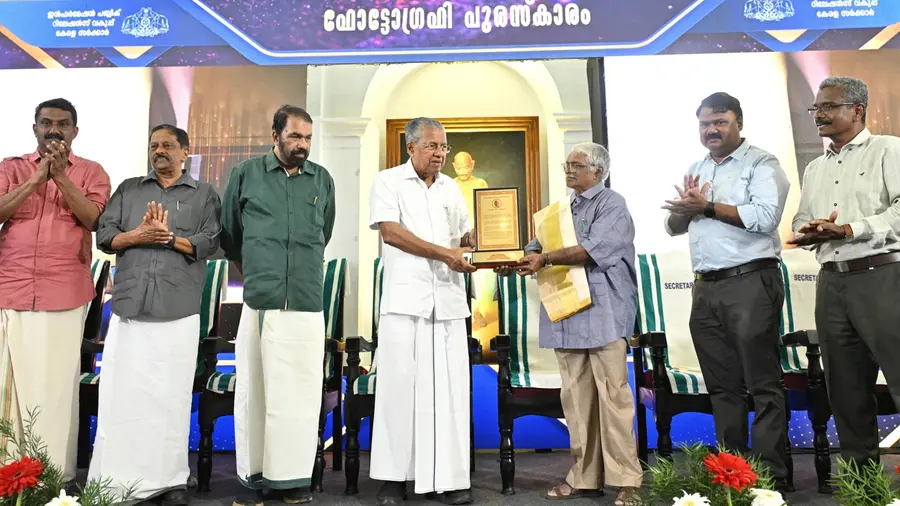
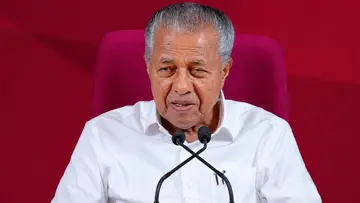
Thiruvananthapuram: Chief Minister Pinarayi Vijayan on Tuesday said that mainstream media have largely turned into spokespersons for corporate agendas. He reminded journalists that they also carry the responsibility of informing the public about what people need to know. He was speaking after presenting the Swadeshabhimani–Kesari Award to senior journalist Malayinkeezh Gopalakrishnan.
The Chief Minister said Swadeshabhimani K. Ramakrishna Pillai and Kesari E. Balakrishna Pillai were towering figures in the history of journalism. It was by recognising the timeless relevance of their contributions that the government instituted an award for comprehensive contributions to journalism and named it the Swadeshabhimani–Kesari Award, he said.
Both Swadeshabhimani and Kesari worked nearly a century ago, in a vastly different social context. Kerala as a state did not exist then, nor did modern concepts such as freedom, democracy, or civil rights. It was in such a period that they practised journalism, which naturally meant a direct confrontation with authoritarian power, the Chief Minister noted.
Swadeshabhimani relentlessly opposed the misdeeds of the princely rule in Travancore and sought to reform and improve social life. His exile was the result of his uncompromising stand against corruption and abuse of power by the royal authority and its officials—an exile that ultimately earned him national recognition. He was the first to transform Malayalam newspapers into platforms for political and social critique, thereby opening the path for democratisation and the creation of a public sphere. His role in shaping democratic consciousness, beginning with the Malayali Memorial of 1891, was historic, the Chief Minister said.
Kesari’s journey, he added, can be seen as a continuation of Swadeshabhimani’s legacy. Like his predecessor, Kesari fought against the excesses of royal authority, even when it pushed his own life into hardship. He offered fearless and impartial critiques of world affairs, exposed the brutality of the caste system, and strongly supported movements such as the Vaikom Satyagraha. His backing of struggles for backward class representation eventually led to the closure of his newspaper. Later, his contributions to historical research and literary criticism played a major role in modernising Malayalam literature.
Reflecting on the present, the Chief Minister said that today’s media landscape—encompassing print, radio, television, and social media—is far more expansive. Journalism, he said, has the power to reshape society by disseminating transformative ideas, which is precisely what Swadeshabhimani and Kesari had achieved.
However, post-Independence changes in the media system altered its character. Newspaper owners became profit-driven proprietors, and value-based journalism suffered. Practices once challenged and defeated by reformist journalism began to be promoted by the media itself, including superstition and regressive customs. With globalisation, media ownership shifted from proprietors to corporate entities, which act as advocates of global capitalism and maintain close ties with those in power. This corporate–state nexus, he said, now protects both economic and political interests, leading to the media’s transformation from a watchdog into a lapdog.
The first step, he stressed, is recognising this reality and abandoning the belief that everything seen or heard in the media represents absolute truth.
The Chief Minister alleged that along with acting as corporate mouthpieces, sections of the media are also advocates fro anti-left stance. He cited what he described as the circulation of baseless falsehoods against the LDF government over the past decade as evidence. Even when opposition allegations are proven false in court, most media outlets, he said, are unwilling to correct the narrative or present the truth. He also pointed out that certain commentators repeatedly featured in television debates appear to be selectively chosen to attack the government.
Against this backdrop, Pinarayi Vijayan said, the Kerala government continues to honour journalists—even those who are sharp critics of the government—because it does not fear criticism and firmly believes in independent journalism. The government does not politically interfere in the award selection process, he said, insisting that merit alone must be the criterion.
Journalism, he added, is not only about criticism but also about public awareness. Journalists have a duty to inform people about matters they need to know. Deliberately ignoring development initiatives or criticising them without basis, while preventing the public from accessing complete information, goes against the legacy of Swadeshabhimani and Kesari, the Chief Minister concluded.



Related News
Dont Miss it





0 comments