
Criticism Grows Over Election Commission’s Handling of Kerala Voter List Hearings
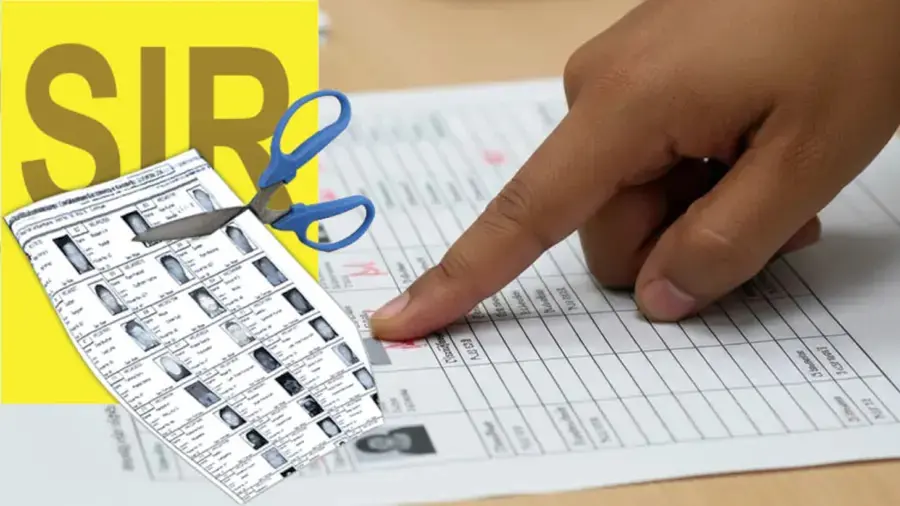
Thiruvananthapuram: There is widespread criticism over the Election Commission’s decision to place full responsibility for the hearings related to the intensive revision of the voter list on Electoral Registration Officers (EROs) in each constituency. Of the 25.4 crore voters included in the draft list, 19.32 lakh voters could not be linked with the 2002 Special Intensive Revision (SIR). However, the Commission has not published booth-level details of these voters nor shared them with political parties. Many voters come to know about their status only after receiving notices.
There is also a strict directive that voters must appear for hearings with documents within one week of receiving notice. The hearings will be conducted by various officials under the leadership of the ERO. Strong criticism has emerged that conducting the process without the presence or oversight of party representatives could lead to complaints and irregularities.
Earlier, voters had been instructed to upload maximum supporting documents through the BLO app before the hearing. Even in such cases—along with cases involving Non-Resident Indians—the final decision regarding hearings has been left to the discretion of the EROs, which is seen as another flaw. Similar uncertainty exists for bedridden patients and those undergoing hospital treatment. In the absence of centralized guidelines, EROs in different constituencies may adopt varying approaches.
It was only after continuous pressure from CPI(M) and other parties that booth-level information of voters excluded from the draft list was made available. This revealed the serious flaws in the SIR process in Kerala, including the fact that lakhs of eligible voters had been excluded. The Commission is accused of withholding hearing-related details out of fear that similar lapses would become public again.
What to do during the hearing
Kerala is currently in the hearing phase of the intensive voter list revision. This process aims to include voters who are in the draft list but could not be mapped to the 2002 voter list (around 19 lakh voters) by verifying documents. The period for this process is December 23 to February 14.
EROs will issue constituency-wise notices for hearings. Sealed notices will be delivered through BLOs, along with a list of required documents. If documents are not readily available, applications must be submitted to the relevant offices. The state government has instructed that no fees be charged for such certificates and that they be issued without delay.
Voters must appear at the hearing center on the date and time printed on the notice. If unable to attend on that date, the ERO must be informed in advance through the BLO. The ERO will then decide whether to allow a representative, conduct the hearing online, or carry out physical verification at the voter’s residence.
If the hearing cannot be completed, voters should confirm with the ERO on the same day whether another opportunity will be provided. If a voter is excluded from the list despite producing documents, an appeal can be filed with the District Collector and the Chief Electoral Officer (CEO).
Documents required based on year of birth
Under the SIR, the Election Commission has categorized voters into three groups: born before 1987, born between 1987 and 2004, and born after 2004
Each category requires different sets of documents. For those born outside India, proof of birth registration issued by an Indian Mission abroad is required. Those who acquired Indian citizenship through registration must submit a citizenship registration certificate.
Born before July 1, 1987:
Any document (from a list of 12 accepted documents) clearly showing date and place of birth
Born between July 1, 1987 and December 2, 2004:
Proof of voter’s date and place of birth, and proof of either parent’s date and place of birth
Born after December 2, 2004:
Proof of voter’s date and place of birth, proof of father’s date and place of birth, proof of mother’s date and place of birth; if either parent is not an Indian citizen, copies of the passport and visa held at the time of the voter’s birth



Related News
Dont Miss it





0 comments