
Nepal Demands Compensation from India, China and US for Devastating Floods, Citing Their Role in Climate Change
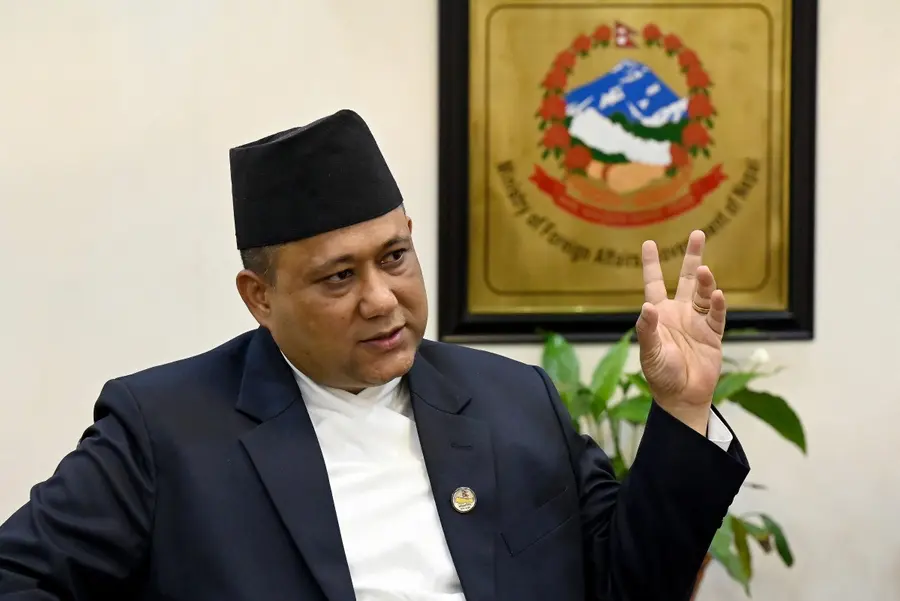
Nepal's Foreign Minister Shisir Khanal speaks during an interview with AFP in Kathmandu on September 1, 2026 in the aftermath of flash floods. (Photo | AFP)
Kathmandu: In a major shift in diplomatic strategy, Nepal’s government has demanded climate compensation from the world’s largest greenhouse gas emitters—India, China, and the United States—following a catastrophic series of flash floods that struck the Himalayan nation last week.
The disaster, which unfolded along the Bhotekoshi river basin and heavily impacted districts such as Rasuwa, Nuwakot, and Dhading, has resulted in a staggering death toll exceeding 1,000, with thousands more reported missing.
Nepali officials warned that rebuilding the widespread destruction of homes, roads, bridges, and hydropower infrastructure could cost between $4 billion and $5 billion—amounting to roughly 10% of the nation's total economy.
In a hard-hitting interview with Kantipur TV, Nepalese Foreign Minister Shisir Khanal asserted that financial support for post-disaster recovery should not be viewed as humanitarian charity, but rather as a fundamental legal and moral liability. "We are paying the ultimate price for a global crisis we did not create. The rapid melting of glaciers and these catastrophic mountain tsunamis are direct consequences of global climate change," Foreign Minister Khanal stated.
"We are shifting our diplomatic framework from aid to justice and compensation." Khanal explicitly named China, the United States, and India as the top global emitters, arguing that these nations carry a historical responsibility to support vulnerable countries bearing the brunt of a warming planet.
Climate experts note that Nepal contributes less than 0.1% of global greenhouse gas emissions, yet it remains intensely vulnerable to extreme cryosphere shifts and glacial melt.
Alongside bilateral pressure directed at major industrial powers, Kathmandu has taken formal steps within international financial architectures. Nepal's Ministries of Finance and Agriculture have jointly dispatched an urgent appeal to the UN-backed Fund for Responding to Loss and Damage, requesting immediate, direct financial intervention without waiting for the board's standard December cycle. Furthermore, political pressure is mounting within Kathmandu for Prime Minister Balendra "Balen" Shah to personally lead Nepal’s delegation to the upcoming United Nations General Assembly (UNGA) in New York. Officials hope to use the global stage to amplify demands for climate justice and secure long-term rehabilitation frameworks.
While international climate experts and organizations like the International Centre for Integrated Mountain Development (ICIMOD) have backed Nepal's calls for accountability, major emitter nations have historically complex stances. India, for instance, has continually emphasized climate equity, pointing to its low per-capita historical emissions and arguing that Western nations—which industrialized first—occupy the vast majority of the global carbon budget.
As rescue workers continue to sift through deep debris and mud across damaged sites, Nepal's unprecedented climate bill marks a turning point in how developing frontline states intend to hold major powers accountable for climate-induced disasters.
Tags



Related News
Dont Miss it







0 comments