
Kerala
Kattakada Cuts Carbon Emissions by 47% in Five Years, Study Reveals
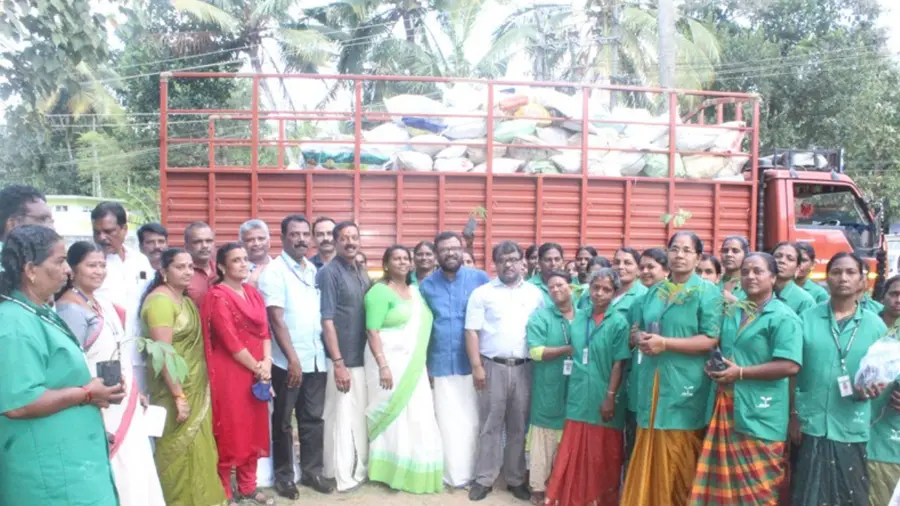
(Carbon Neutral Kattakkada – 1st Phase Collection, File Picture)

Web desk
Published on Aug 09, 2025, 04:50 PM | 4 min read
Thiruvananthapuram: Carbon emissions in Kattakada Assembly constituency have dropped by nearly 47% over five years according to the second carbon audit conducted by the Centre for Water Resources Development and Management (CWRDM) shows that emissions have dropped by 46.75% between 2019 and 2024.
The audit, conducted under the ‘Carbon Neutral Kattakada’ initiative, reveals that the constituency's total annual emissions fell from 2,67,292.01 tonnes of carbon dioxide equivalent (tCO₂e) in 2019–2020 to 1,42,318.71 tCO₂e in 2020–2024. This significant drop is because of the adoption of renewable energy, better waste management practices, and improvements in land use across the region.
Carbon sequestration — the process by which forests and soil absorb carbon dioxide from the atmosphere — played a major role in the reductions. Natural sinks accounted for 1,12,340.79 tCO₂e, or 16.1% of the total emission offset. Initiatives such as solar energy adoption, waste processing, and water conservation added a further 15,250.19 tCO₂e, or 2.2%. Programs like the Soura solar project, Malinya Muktham Kattakada waste management scheme, and Jalasamrudhi water conservation effort have been central to this progress.
The audit was conducted in six grama panchayats — Kattakada, Malayinkeezhu, Maranalloor, Pallichal, Vilappil, and Vilavoorkal. Among these, Malayinkeezhu emerged as the highest emitter, accounting for 1,95,277.24 tCO₂e or 34.3% of total emissions. Vilappil followed with 1,11,065.49 tCO₂e (19.5%), while Kattakada itself reported 1,02,402.98 tCO₂e (17.9%). Despite these figures, each of the six panchayats recorded measurable improvement in carbon sequestration, with Maranalloor leading the list, followed by Kattakada and Malayinkeezhu.
The energy sector remains the constituency’s largest source of emissions, largely due to continued reliance on fossil fuels. Transport emissions have also increased, suggesting a growing use of private vehicles and other fuel-based mobility options. In contrast, emissions from agriculture and waste management have seen a notable decline, pointing towards the impact of targeted community programmes and improved public infrastructure.
To build on current progress, the report recommends several measures. One immediate priority is expanding the reach of the Soura solar project to include more households and public institutions. Currently, solar installations remain concentrated in certain zones; wider coverage could significantly lower dependence on conventional electricity sources.
Another focus is enhancing the Malinya Muktham Kattakada initiative to move the region closer to zero emissions in the waste sector. This includes improving waste segregation at the source, increasing composting units, and ensuring efficient collection and processing systems in all panchayats.
The report also calls for a shift in public and municipal transportation. It recommends the procurement of zero-emission buses, taxis, and service vehicles to replace existing fossil-fuel fleets. Along with this, the expansion of electric vehicle (EV) charging infrastructure is essential. The study suggests installing charging stations across all six panchayats to support a future transition to electric mobility.
The report suggests that in addition to infrastructure upgrades, behavioural change is key, awareness campaigns and digital platforms to promote the use of e-bikes, carpooling, and other forms of shared and non-motorised transport. Incentives and mobile applications backed by local government support could encourage more people to adopt sustainable commuting practices.
The study also advocates for the introduction and promotion of alternative fuels such as biofuels and hydrogen, which could significantly reduce emissions in both transport and energy sectors. It also calls for a structural shift in the power grid by integrating a larger share of renewable energy sources. By leveraging the purchasing capacity of local municipalities, the constituency could encourage wider use of clean energy in public institutions and community facilities.
Investment in public transport infrastructure is another key recommendation. Upgrading and expanding the public transit network would provide accessible alternatives to private vehicle use, easing congestion and cutting down emissions in the long term.



Related News
Dont Miss it






0 comments