
International: Venezuela
Maduro Calls for Unified Resistance as U.S. Escalates Military and Economic Pressure on Venezuela

Anusha Paul
Published on Oct 24, 2025, 07:24 PM | 5 min read
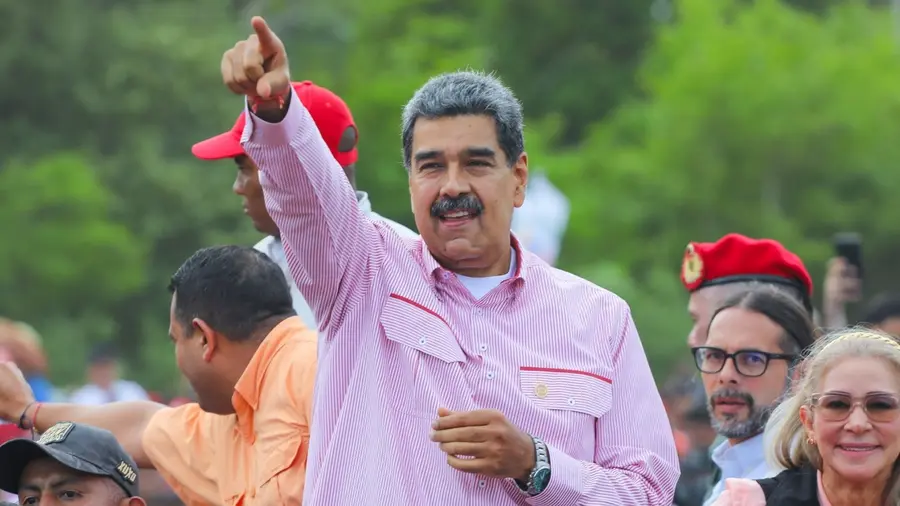
Caracas: Venezuelan President Nicolás Maduro delivered a powerful speech at the Workers' Constitutional Assembly in Caracas, urging the Venezuelan people to stand firm against the relentless assault on their sovereignty by U.S. imperialism. With the Venezuelan working class at the forefront of the nation’s defense, Maduro reiterated that the struggle for the country’s independence and dignity would continue, no matter how fierce the external pressures.
“The greatest shield of this country is the working class. Once they rise up, not a single needle will move in this nation. They will see a parade of thousands of men and women, rifles in hand, ready to defend our land. We are not speaking in mere words; we are fully prepared and ready,” Maduro said, reiterating that the strength of the Venezuelan people, especially its workers, is what will keep the imperialist forces at bay.
The U.S. has relentlessly tried to destabilise the Bolivarian Revolution since its inception, using both covert and overt means to bring about regime change. From crippling economic sanctions to military provocations, Washington’s goal has always been clear: to crush Venezuela’s independence and subjugate its resources to the interests of corporate imperialism.
The latest U.S. actions, including the deployment of B-1 bombers near Venezuela’s coast and an increased naval presence in the Caribbean, are part of a broader strategy by the U.S. to impose its will on the Venezuelan government. While the U.S. claims to be fighting the “war on drugs,” these military maneuvers are widely seen as a direct provocation aimed at intimidating Venezuela and undermining its sovereignty.
The U.S. has long sought to overthrow Venezuela’s democratically elected government. Under the leadership of President Maduro and his predecessor, Hugo Chávez, Venezuela has remained a staunch opponent of U.S. imperialism, particularly in Latin America, where U.S. has historically imposed its influence through economic coercion and military intervention.
Since 2019, the U.S. has escalated its efforts to bring down the Venezuelan government, recognising opposition leader Juan Guaidó as the "interim president" and imposing crippling sanctions that have devastated the country’s economy. These sanctions, which block access to vital resources like food, medicine, and fuel, have been part of a broader strategy to force regime change through economic warfare. The U.S. government has also been accused of supporting violent opposition movements and even backing covert operations aimed at destabilising the country.
Despite these pressures, Venezuela’s government has remained resolute, rejecting foreign interference and continuing to assert its right to self-determination. President Maduro’s government has emphasised that the U.S.’s actions are not only an attack on Venezuela’s sovereignty but an attack on the very idea that any country, especially in Latin America, can chart its own course without the intervention of imperial powers.
Venezuela’s working class has been instrumental not only in the defence of the country against foreign imperialism but in building a more just society. Since the rise of the Bolivarian government in 1999, under Hugo Chávez, Venezuela has invested heavily in social programs aimed at reducing inequality and empowering the poor. Nationalised industries, increased access to education and healthcare, and the establishment of worker-controlled cooperatives have been central to this transformation. As the U.S. continues its campaign of economic and military aggression, the solidarity and unity of the Venezuelan people will be crucial to withstanding external pressures.
While U.S. frames its actions as efforts to “promote democracy” or combat the “drug trade,” the true motivations behind U.S. intervention are far more cynical. Venezuela, with its vast oil reserves — the largest in the world — represents a critical prize for imperial powers seeking to control the region’s natural resources. The U.S. has long sought to maintain its dominance over Latin American resources, and Venezuela’s refusal to submit to Washington’s agenda has made it a target.
This is not the first time the U.S. has tried to overthrow a government in Latin America that it considers to be outside its sphere of influence. From the CIA-backed coup against Chile’s Salvador Allende in 1973 to the destabilisation efforts in Nicaragua, Cuba, and elsewhere, U.S. imperialism has a long history of intervening in the region to ensure that governments remain aligned with U.S. corporate and geopolitical interests.
In Venezuela, the U.S. has been particularly hostile, attempting to impose sanctions, fund opposition groups, and even orchestrate violent coups. By destabilising the country, the U.S. hopes to create the conditions for a more pliant government, one that would open up Venezuela’s oil resources to foreign exploitation.
However, the Venezuelan government and people have shown time and again that they will not allow their country to fall into the hands of imperialist forces. Maduro’s call for unity and resistance is a message that resonates not just in Venezuela, but across Latin America and beyond.
As the U.S. continues its campaign of aggression against Venezuela, the country has found support from various international movements and governments. In Latin America, solidarity with Venezuela remains strong, with countries like Cuba, Bolivia, and Nicaragua firmly backing the Bolivarian Revolution. Across the world, anti-imperialist movements and organisations have condemned U.S. actions, calling for an end to the illegal sanctions and military provocations.



Related News
Dont Miss it







0 comments