
US Launches Fresh Airstrikes on Iran After Deadly Jordan Attack; Conflict Around Hormuz Escalates
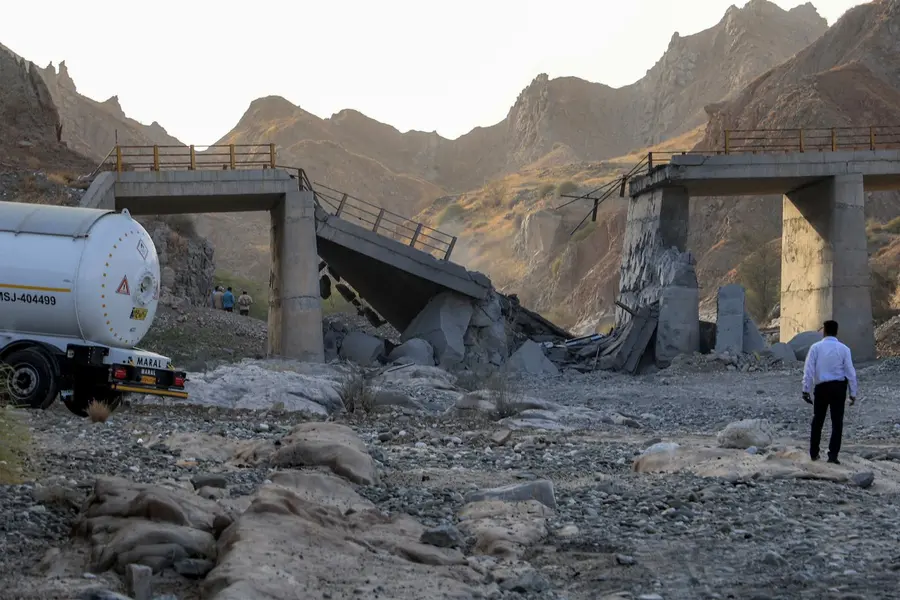
A heavily-damaged bridge which was hit by a US strike is pictured along the road connecting Roudan and Bandar Abbas in southern Iran on July 18, 2026. (Photo | AFP)
Tehran: The United States launched fresh airstrikes against Iran early Sunday, saying the operation was aimed at "swiftly punishing" the country's Revolutionary Guard following an Iranian attack on a US base in Jordan that killed two American soldiers, left one missing and injured four others.
US Central Command (CENTCOM) said the strikes targeted locations in Iran's southern Hormozgan province, including areas near Sirik, Hajiabad, Bandar Abbas and Qeshm Island along the Strait of Hormuz. The military said the operation was intended to further weaken Iran's ability to threaten commercial shipping through the strategic waterway, which handled about 20% of global oil supplies before the conflict.
The latest strikes came after the US confirmed its first troop deaths from direct Iranian fire since the early days of the war. Since fighting began on February 28, 16 US service members have been killed and more than 430 wounded.
Iranian state media reported explosions in several locations but did not immediately provide casualty figures. In a separate incident, a drone strike hit a base of the Kurdistan Freedom Party near Irbil in Iraq, injuring eight members. No group claimed responsibility yet.
Tensions escalated further after Iran's Supreme Leader Mojtaba Khamenei warned the US of "unforgettable lessons" if attacks continued and declared Tehran was suspending its commitments under the interim agreement intended to end the conflict. Iranian Deputy Foreign Minister Kazem Gharibabadi confirmed the move, accusing Washington of violating the deal.
The widening conflict has increasingly focused on control of the Strait of Hormuz. Recent US strikes have damaged Iranian infrastructure, including bridges, power facilities and desalination plants, while Iranian attacks have targeted Gulf infrastructure and shipping.
The continued escalation has raised fears of a broader regional conflict, with mediation efforts showing little progress as both sides intensify military operations and global concerns grow over the security of one of the world's most important maritime trade routes.



Related News
Dont Miss it








0 comments