
US-Iran Peace Deal Expires With Strait of Hormuz Still at Centre of Conflict; What Lies Ahead?
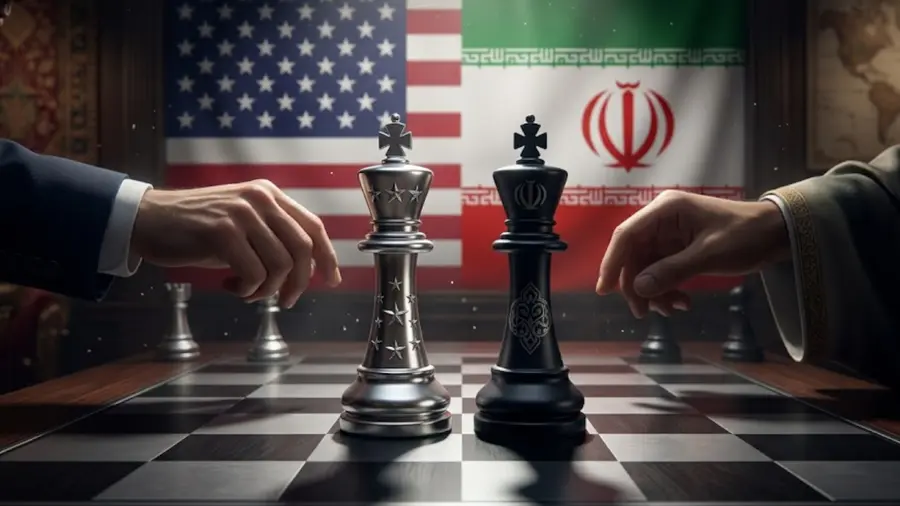
Image used for representation

Rahna Mariyam
Published on Aug 18, 2026, 11:31 AM | 6 min read
Two months after the United States and Iran signed an interim agreement aimed at halting their war and creating a path towards a permanent settlement, the 60-day negotiating period has expired with the two sides still deeply divided.
The memorandum of understanding (MoU), signed on June 17 at the Palace of Versailles, was intended to immediately halt military operations, reopen the Strait of Hormuz, ease the US blockade of Iranian ports and provide a framework for negotiations on Iran's nuclear programme. Instead, most of its key provisions have either collapsed or remain unimplemented.
The failure of the agreement has left Washington and Tehran further apart, with the Strait of Hormuz emerging as the central point of confrontation. The waterway, through which roughly one-fifth of global oil supplies normally pass, has remained severely disrupted, adding pressure to global energy markets.
For US President Donald Trump, the breakdown presents a difficult political and strategic problem. The administration must decide whether to intensify a war that has already consumed significant military resources or seek another diplomatic opening with Tehran. The issue assumes added significance as the US heads towards midterm elections in November.
What was the US-Iran agreement?
The 14-point MoU was designed as a temporary framework rather than a final peace treaty. It provided for an immediate and permanent cessation of military operations and opened a 60-day period for negotiations on a comprehensive agreement.
Among its most important provisions, Iran agreed to make arrangements for the safe passage of commercial vessels through the Strait of Hormuz. The United States, meanwhile, agreed to begin removing its naval blockade of Iranian ports immediately and complete the process within 30 days. The agreement also agreed upon the easing of sanctions on Iranian oil exports and further negotiations over Tehran's nuclear programme.
The agreement therefore rested on reciprocal concessions: Iran would facilitate shipping through Hormuz, while Washington would ease economic and maritime pressure on Tehran.
That arrangement fell apart very quickly.
What happened since signing the MoU?
Within weeks, disagreements over the interpretation of the Hormuz provisions had turned into a new source of conflict. Iran maintained that it retained control over the waterway and insisted that commercial vessels use routes approved by Tehran. Oman subsequently announced an alternative shipping corridor coordinated with the International Maritime Organization and backed by the United States, which Iran viewed as contrary to the understanding reached in June.
The situation deteriorated further after Iran attacked commercial vessels using a route along the coast of Oman. The United States accused Iran of violating the MoU and demanded that Tehran publicly acknowledge that Hormuz was open and stop attacking commercial shipping. Washington subsequently launched strikes against Iranian targets, while Iran retaliated against US military positions in Gulf countries, including Jordan, Kuwait and Bahrain.
Trump declared on July 8 that, in his view, the agreement was effectively over.
"I don't want to deal with them anymore. They're scum," Trump said of Iran's leadership while speaking in Ankara during the annual NATO summit.
The United States also revoked a waiver that had allowed the sale of Iranian oil, adding another blow to an agreement that had envisaged sanctions relief.
Hormuz becomes the biggest obstacle
The Strait of Hormuz has now become the clearest symbol of the agreement's failure.
For Iran, control over the strategic waterway is both an economic asset and a major bargaining tool. Tehran has argued that it must retain authority over shipping arrangements in the strait. Washington, on the other hand, has demanded unrestricted commercial navigation.
The disagreement has economic consequences far beyond Iran and the US. Any prolonged disruption to Hormuz threatens oil and gas supplies and can push up energy prices globally. Oil prices have already risen as uncertainty over the reopening of the waterway has persisted.
The latest dispute between US and Iran has also drawn Oman deeper into the crisis. Oman has been recently working with Iran on a possible arrangement to manage commercial shipping through the Strait of Homuz and stabilize the strategic waterway. Tehran says it is close to finalising such an arrangement, although details have not been made public.
Trump has reacted angrily to Oman's involvement. On August 17, he warned that the US could bomb Oman if it interfered with US efforts, dramatically escalating tensions with a country that has long played an important mediating role between the United States and Iran.
Trump faces a difficult choice
With the 60-day deadline now expired, Trump has rejected extending the framework agreement. He has maintained that Iran must agree to terms that prevent it from acquiring a nuclear weapon and has urged Tehran to surrender rather than expecting Washington to make further concessions.
For Trump, accepting Iran's latest demands could be portrayed domestically as a retreat, particularly after the administration entered the conflict promising to neutralise the Iranian nuclear threat. Yet continuing the war carries its own costs.
The conflict has placed additional demands on US military resources, particularly advanced missile-defence interceptors and other precision weapons. A prolonged confrontation could also increase pressure on the US economy by driving up oil and gas prices.
The political timing is equally significant. The United States is entering the final months before the midterm elections in November. Republicans must defend their congressional majorities while the administration faces questions over the duration, cost and objectives of the Iran war.
Trump has denied that electoral considerations are influencing his Iran policy, insisting that his principal objective is preventing Tehran from obtaining a nuclear weapon.
Iran has little incentive to give in
Tehran's stand is different as they hold an important card: Strait of Hormuz. Iran is demanding an end to the US blockade, the withdrawal of American forces and compensation for wartime damage, while Washington has shown little willingness to accept those terms.
The Iranian leadership also faces pressure from hardliners who remain deeply suspicious of negotiations with Washington. The rapid collapse of the June arrangement has strengthened the argument within Iran that US commitments cannot be trusted.
That leaves both governments calculating that the other side will eventually be forced to compromise.
So far, neither has.
What happens next?
The expiration of the 60-day framework does not necessarily mean diplomacy is permanently dead. Mediators, including Pakistan and other governments in West Asia, continue to explore ways of bringing US and Iran back to negotiations.
For Washington, the challenge is to extract concessions without becoming trapped in a prolonged regional war. For Tehran, the priority is survival and preserving leverage while resisting demands it considers an attempt at surrender.
The June agreement was supposed to use 60 days of calm to build trust and create the foundation for a permanent settlement. Instead, disagreements over its first major provisions helped revive the conflict. With the deadline now gone, the next phase will depend on whether the two sides can find a way back to diplomacy—or whether the Strait of Hormuz becomes the trigger for another escalation.



Related News
Dont Miss it






0 comments