
Netanyahu's Gaza Gambit: Playing Politics With Trump's Peace Plan
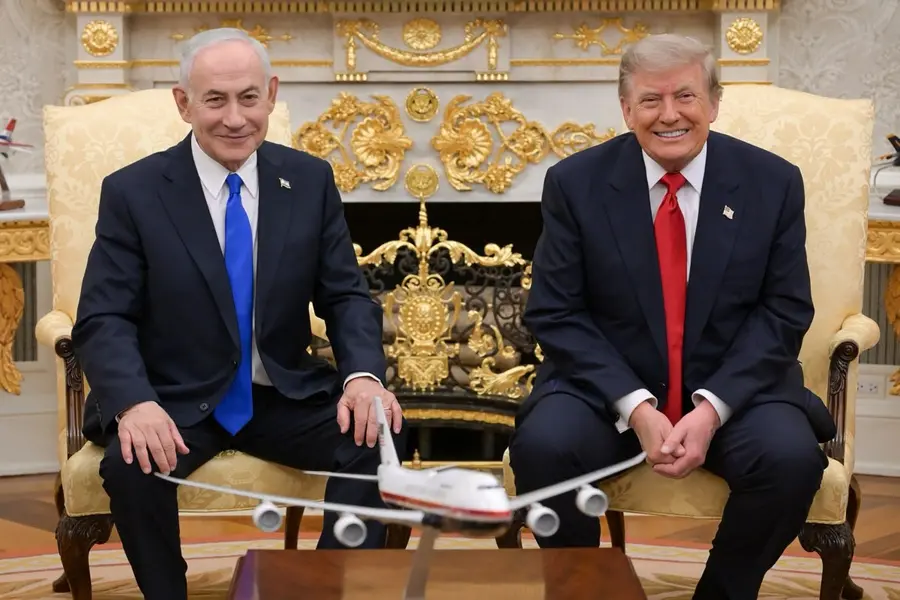
This handout picture released by the Israeli Government Press Office (GPO) Shows Israel's Prime Minister Benjamin Netanyahu (L) posing for a picture with US President Donald Trump in the Oval Office of the White House in Washington DC. (Photo | AFP)

Rahna Mariyam
Published on Aug 10, 2026, 11:28 AM | 4 min read
Washington DC/Tel Aviv: On Sunday, Benjamin Netanyahu, who has spent decades cultivating an image as Israel's indispensable strategist, made a strikingly blunt move by rejecting the US-backed 15 point Gaza peace plan. While addressing his cabinet, the Israeli Prime Minister said, "Israel does not accept the 15-point document". While reiterating his stance, he added that the IDF will not carry out any withdrawal until Hamas is disarmed.
It was not the language of a leader hedging his options. It was the language of a leader who has made a calculation — and that calculation has almost nothing to do with Gaza and everything to do with the ballot box.
Israel goes to the polls on October 27. Netanyahu's coalition is trailing in the polls and his popularity is waning. Since the Gaza war started, Netanyahu is without any clear victory to show his people. Adding to the disdain, Israel has started another attack against Iran with US, and an attack on Lebanon, which are not sitting well with the public who are dragged to wars that is affecting their economy and peace.
In addition, his far-right partners have made it clear that any concession to Hamas — even a face-saving one dressed up as "disarmament under international supervision" — would be treated as betrayal. Finance Minister Bezalel Smotrich, who has openly demanded that the military not retreat "a millimetre" from Gaza, praised Netanyahu's announcement within hours. National Security Minister Itamar Ben Gvir had already dismissed the draft plan as unacceptable. For a prime minister whose political survival depends on keeping this coalition intact, rejecting Washington's terms was not a diplomatic misstep. It was the price of staying in office.
Related News
That is precisely what makes this moment so uncomfortable for the man in the White House, who has repeatedly called himself as Israel's greatest friend in the Oval office. Trump has spent months building his "Board of Peace" into a signature foreign policy achievement, announcing what he called a historic breakthrough after Hamas reportedly agreed to lay down its weapons. He described it as a monumental step toward lasting peace. Netanyahu's public repudiation undercuts that narrative as Trump needs a win just as much as Netanyahu.
Trump is in the same situation as Netanyahu. His administration is heading into midterm elections in November and the Republican leader also need to show his voters that his foreign policy interventions have paid off, especially after throwing them into economic despair.
That case has already been complicated by the aftermath of the US and Israeli strikes on Iran earlier this year, a campaign that disrupted Gulf energy markets and fed into the inflation pressures Trump had promised to tame. A collapsed Gaza deal, layered on top of that, threatens to reopen a war that Trump had wanted to point to as evidence he could deliver peace. Instead, he risks heading into the midterms with an unresolved West Asian conflict, a rattled oil market and a longtime ally publicly defying him.
The bind for Trump is that his usual instruments of pressure won't exactly work on Israel as Trump has been reluctant to actually use them before. He has, at various points, expressed open irritation with Netanyahu. He publicly expressed his anger over an unauthorized strike in Lebanon earlier this year by Israel after reaching a peace deal with Iran. But he has also shielded Netanyahu politically, even when he broke all international laws. Sometimes, even at the expense of his constituents' approval. That mix of frustration and loyalty gives Netanyahu room to maneuver: he can defy the plan's terms while still calling the disagreement a matter of ideas Washington and Israel are working through together, as he put it on Sunday, rather than a break between the countries.
While both Trump and Netanyahu are kicking the can down the road, they are treating it less as a Gaza policy shift and more like a campaign strategy. That is ultimately the uncomfortable truth sitting underneath this story. A ceasefire framework that determines the fate of a devastated territory and the security of hostages, soldiers and civilians on both sides is being shaped, in this moment, by the electoral strategy of two leaders, who caused more destruction then anyone else.
Netanyahu needs his coalition's far-right group to survive October. Trump needs a deliverable win to show Americans before November. Meanwhile, Gaza's twenty lakh residents remain powerless as others decide their fate based on voting numbers.
Whether Trump chooses to publicly rebuke his closest ally, or quietly absorb the rejection and let his envoys keep negotiating behind the scenes, will say a great deal about how much political capital either leader is actually willing to spend on peace.



Related News
Dont Miss it









0 comments