
Israel Election Yields No Clear Winner; Netanyahu’s Bloc Slumps as Arab Parties Surge in Exit Polls
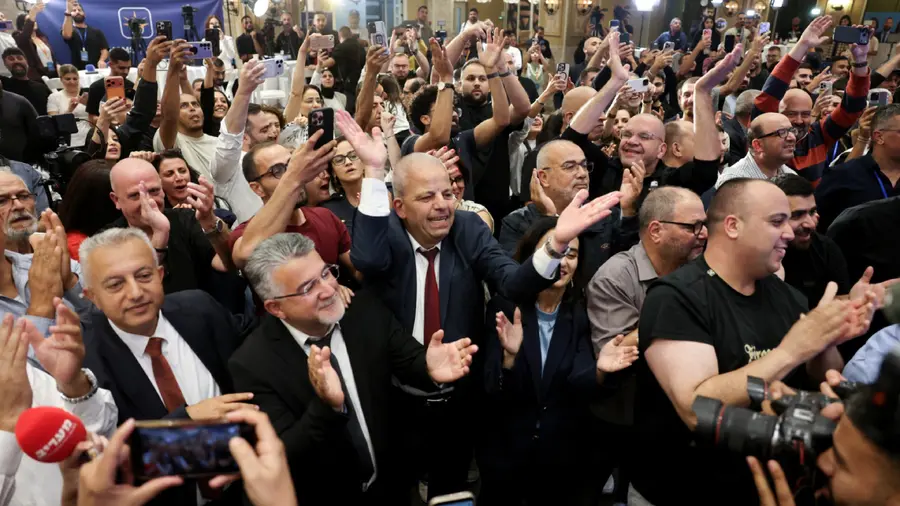
Yousef Jabareen, leader of Israel's Arab-led Joint List political alliance, (Centre-L) and other members cheer at the alliance's campaign headquarters in the northern Israeli city of Nazareth on October 27, 2026, as the first exit polls are announced on television during Israel's legislative election. (Photo | AFP)
Tel Aviv: Israel’s election on Tuesday produced no clear winner, with exit polls suggesting neither Prime Minister Benjamin Netanyahu nor his main challenger, former military chief Gadi Eisenkot, has a path to an outright majority in the 120-seat Knesset. The vote drew the highest turnout in decades, with participation reported at 77.1 per cent by 6 pm on Tuesday, up about 9 points on the previous election.
Channel 12 projected Netanyahu’s bloc falling from 68 seats in the last Knesset to 52, while Eisenkot’s bloc was projected at 49. Arab parties, including the Joint List and Raam, were projected to win a record 18 or 19 seats, positioning them as potential kingmakers. Eisenkot ruled out a government with them before the vote, though he could in theory assemble a majority with their support.
Opposition leaders called the results a defeat for Netanyahu. Former prime minister Yair Lapid described it as a total collapse of Netanyahu’s bloc, while Eisenkot called it a vote of no confidence in the prime minister and promised to work quickly to change the government.
The campaign was bitter. Netanyahu and his far-right allies were criticised for a scare campaign that warned of high Arab turnout, and Likud alleged irregularities at hundreds of polling stations in Arab communities. Netanyahu suggested the left and Arabs were trying to steal the election, and the Central Elections Committee rejected his request to keep polls open past 10 pm, saying it had seen no evidence of systematic tampering. Eisenkot accused Netanyahu of laying the ground to challenge the result. Netanyahu also posted an AI image of a nuclear blast over Tel Aviv on the eve of the vote to create fear among the voters in order to vote for his party.
The election was widely seen as a referendum on nearly 17 years of Netanyahu’s rule. Netanyahu is also on trial for corruption.
Final results are expected within 48 hours, but coalition talks could take weeks. Each party will recommend a candidate to the president, who will choose the person with the best chance of building a coalition. Eisenkot is the likelier pick, with four to six weeks to try, though Netanyahu could get a turn if he fails. A deadlock, minority or unity government, or a fresh election all remain possible, and Netanyahu could stay on as caretaker in the meantime.



Related News
Dont Miss it







0 comments