
Genocide Report
India’s Complicity in Israel’s Genocidal War on Palestine: Capital, Capitalism, and Colonisation

Anusha Paul
Published on Sep 30, 2025, 06:00 PM | 5 min read
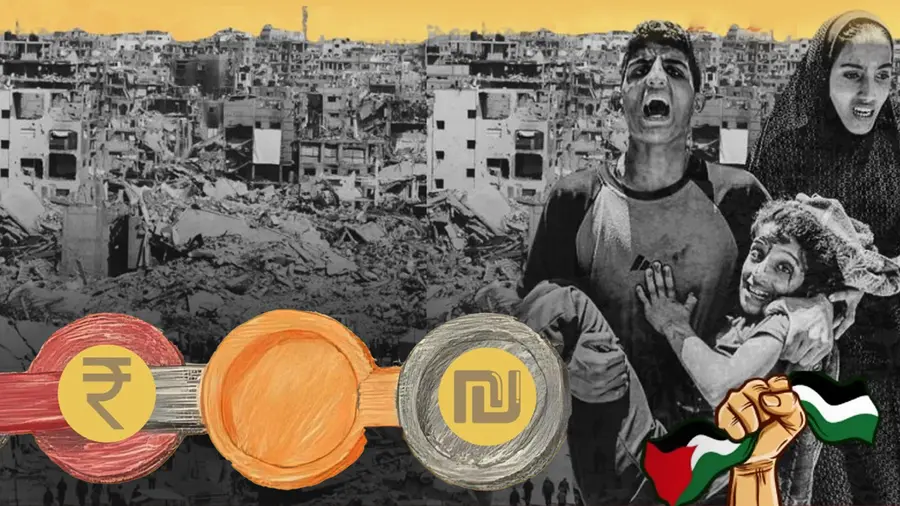
In a few days, the latest phase of Israel’s assault on Palestine will mark its second anniversary — a massacre of a scale unseen since October 7, 2023. According to the Palestinian Ministry of Health, more than 65,502 Palestinians have been killed, including over 19,424 children, and more than 167,000 injured. The systematic destruction of Gaza’s hospitals, water infrastructure and food supply has pushed the population to the brink of famine, creating a humanitarian catastrophe of unprecedented proportions.
This devastation is not a tragic accident, but a calculated project of settler‑colonial genocide, enforced through advanced military‑industrial complexes and global capital networks. India, far from being a neutral or supportive observer, is deeply entangled in this matrix of destruction — economically, technologically and ideologically.
A recent report by the Centre for Financial Accountability (CFA), titled Profit & Genocide, reveals how Indian corporations, state‑owned enterprises, financial institutions and academic bodies are not passive investors, but active participants in sustaining the machinery of Israeli apartheid and war crimes in Palestine.
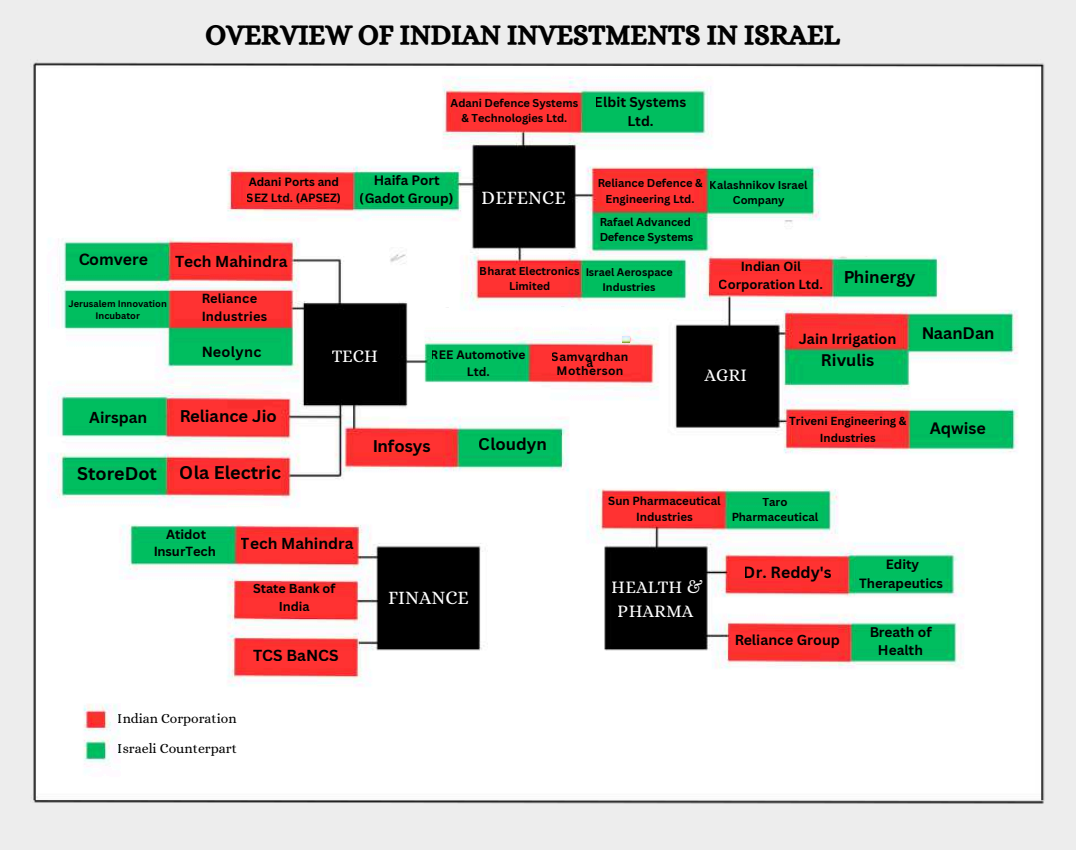 Chart: Centre For Financial Accountability (CFA)
Arms, Drones, Ports: Indian Capital Builds the Instruments of War
The Indian state and its corporate giants have moved beyond buyer‑seller relationships into joint ventures and strategic partnerships with Israeli defence firms. Adani Group’s collaboration with Israel’s Elbit Systems to manufacture Hermes 900 MALE drones in India directly fuels Israel’s military operations. These drones—used for surveillance, reconnaissance and lethal strikes in Gaza—embody the deadly fusion of Indian capital and Israeli violence.
In 2022, Adani Ports & SEZ Ltd. acquired a controlling stake in Haifa Port for USD 1.18 billion, with the State Bank of India (SBI) acting as co‑lender. Haifa Port is not merely a commercial hub; it is a vital node in Israel’s military logistics, supporting the transport of weapons and supplies for ongoing operations.
Tata Consultancy Services (TCS), through “Project Nimbus,” supplies cloud infrastructure implicated in state surveillance and repression of Palestinians.
Public sector companies such as Bharat Electronics Ltd (BEL), Hindustan Aeronautics Ltd (HAL) and Indian Oil Corporation (IOC) are also entwined with Israel’s defence apparatus, supplying missile systems, aerial refuelling and military vehicles.
Pharmaceuticals, Agritech, Water: The Capitalist Logic of Dual‑Use “Development”
Indian corporations have also extended their reach into Israeli healthcare and agritech sectors. Israeli healthcare firms generated USD 36.6 billion in revenue in 2023, drawing investments from Sun Pharma, Dr. Reddy’s, Lupin and Aurobindo Pharma. Sun Pharma’s acquisition of Taro Pharmaceuticals secured its foothold in Israel’s dermatology and generics markets.
In agriculture, Jain Irrigation’s acquisition of Israeli NaanDan and its merger with Rivulis — backed by Israeli private equity — directly link Indian capital to technology deployed in illegal Israeli settlements across the West Bank and Golan Heights. Water technologies developed by Indian firms in collaboration with Israeli companies like Mekorot — a key instrument of Palestinian water denial — demonstrate how “innovation” is repurposed toward occupation. Mekorot’s monopoly over Palestinian water is part of the slow violence that sustains settler colonialism.
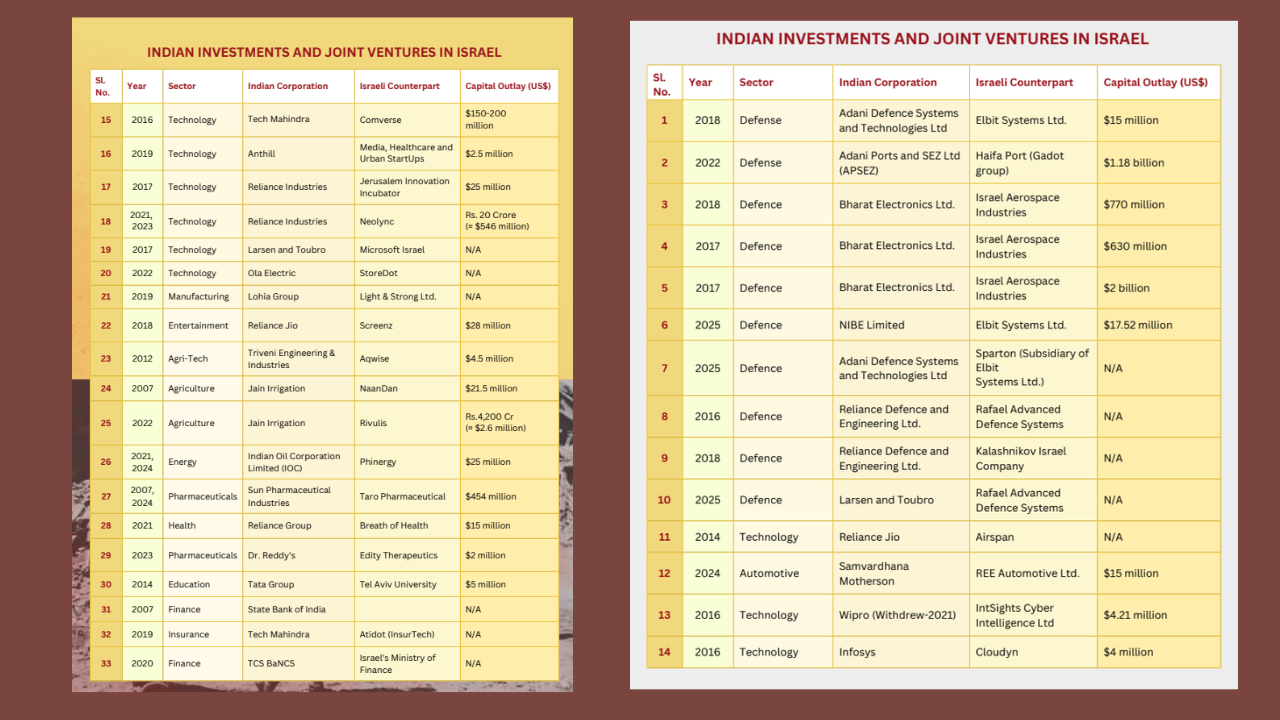 Table: Centre For Financial Accountability (CFA)
Finance, Insurance, Banking: Enabling Capital Flows for Occupation
The war machine runs on finance. SBI’s Tel Aviv branch facilitates trade and credit for Indian entities operating in Israel’s defence and infrastructure sectors. TCS’s BANCS platform digitises Israeli banking operations, smoothing capital flows in contested sectors. Insurance firms — including those affiliated with Reliance and Tech Mahindra — underwrite and de‑risk investments in occupied territories, making the occupation economically viable.
These financial institutions provide critical support without which the machinery of war would stall. The UN’s Special Rapporteur describes how such “de‑risking” insures and legitimises companies complicit in human rights abuses — in direct violation of international humanitarian law.
Academia and Ideology: Normalising Occupation and Silencing Resistance
Beyond capital and arms, Indian academia and institutions furnish the ideological infrastructure of occupation. Partnerships with Israeli universities such as Technion, Tel Aviv University and Hebrew University support dual‑use research with military applications. The Jindal Centre for Israel Studies (JCIS) is accused of effacing settler colonial realities and legitimising Israeli narratives — even amidst student protests at Jamia Millia Islamia, JNU and Kolkata University.
The Legal and Ethical Reckoning: From Anti‑Colonial Rhetoric to Capitalist Complicity
India’s historic support for Palestine — from Nehru’s opposition to the 1947 partition of Palestine to decades of diplomatic backing — now stands contradicted by deep economic ties to Israeli apartheid. This is not accidental but symptomatic: the capitalist state’s logic elevates commercial interests and strategic alignments over anti‑colonial solidarity.
The Fourth Geneva Convention prohibits transferring civilian populations into occupied territories. The International Court of Justice (ICJ) reiterated in 2004 and 2024 that no state should assist or recognise illegal occupation. The UN Guiding Principles on Business and Human Rights demand corporate due diligence to prevent complicity in abuses.
Yet Indian firms invest billions in Israeli companies such as Elbit Systems, Israel Aerospace Industries and Mekorot — all listed in the UN database of firms operating in occupied territories and implicated in war crimes. Public sector firms like BEL, HAL and IOC participate with minimal transparency or accountability. This positions India in a morally ambiguous space, risking legal and reputation fallout.
Capital, Colonialism and the Global Struggle for Justice
India’s capitalist ruling class profits from the settler‑colonial destruction of Palestine while invoking a legacy of anti‑colonialism. This contradiction starkly illustrates how global capitalism enmeshes formerly colonised nations into new imperial structures, perpetuating cycles of violence and dispossession.
The genocidal war on Gaza is not a localised conflict; it is a front-line in the global struggle against imperialism, settler colonialism and capitalist exploitation. Indian workers, students and activists opposing this betrayal must demand an end to all corporate complicity, state partnerships and financial flows that enable Israel’s apartheid regime.



Related News
Dont Miss it









0 comments