
A Verdict, Thirty Years Late: Tupac Shakur and the Life That Outlived Him
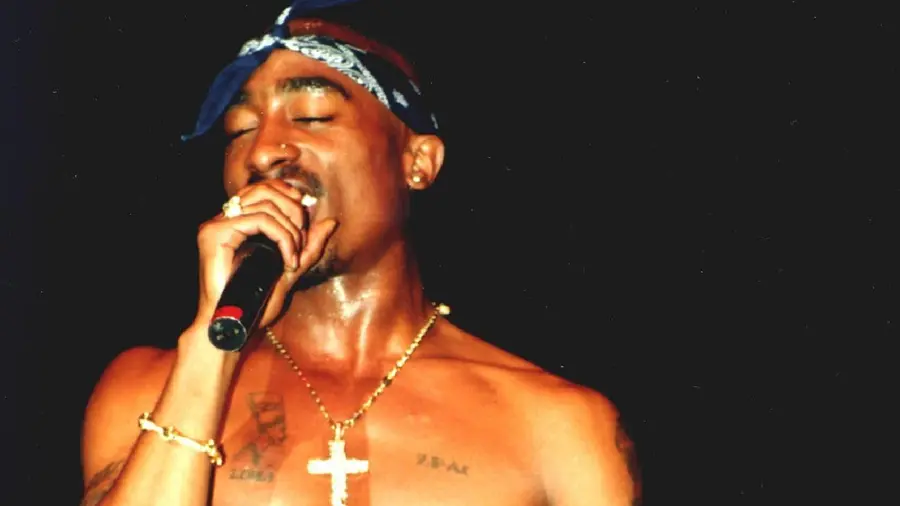
Tupac Shakur (Photo | IMDB)

Rahna Mariyam
Published on Sep 01, 2026, 09:23 PM | 7 min read
On September 1, 2026—just six days before the thirtieth anniversary of Tupac Shakur’s death—the first person charged in his murder was found guilty, bringing a measure of closure to his family and to generations of fans who have kept his legacy alive.
Tupac Shakur, or “2Pac,” as family and friends called him, was defined by a complex persona. On one side, he projected a tough, rough‑around‑the‑edges street image; on the other, he was an activist in his own right, questioning society and weaving sharp social commentary into songs built on consciously political themes.
He was only 19 when he began working on his debut album, 2Pacalypse Now, and just 25 when he was shot dead at the peak of his career. Yet, despite his short life, 2Pac left a lasting impression on millions across generations through his musical journey.
A Legacy That Began Before Birth
Tupac’s legacy began even before his birth. His mother, Afeni Shakur—a Black Panther veteran who fought for the rights of African Americans in the late 1960s and ’70s—was pregnant with him while on trial for her activism. Afeni, a Black woman in America at the time, won her famous "21 Panther" case without a lawyer and with only a high school education.
Afeni’s activism gave Tupac a vocabulary for injustice before he ever wrote a verse. He was always proud to call Afeni his mother. In interviews, he was eager to talk about the woman who taught him to analyze society and to speak when something was wrong—lessons he traced directly to her Panther background. He was often called “a child of the Black Panther Party,” noting how his childhood among activists, and community organizers shaped his sense of purpose and his urge to turn pain into political speech.
But as much as he loved his mother, he had complicated feelings about her as she fell into drug abuse later in her life. While he was proud of her and what she did for the community, he was also heartbroken about how her life turned out, and who she ended up becoming. In his song “Dear Mama,” an all‑time iconic track, Tupac explains this complex relationship well. He sings about how much he appreciates her for everything she did for him, but is also candid about her drug abuse.
When Tupac was 13, he, his mother, and his younger sister moved from New York to Baltimore, where he enrolled at the Baltimore School for the Arts. The school offered free tuition, rigorous academics, and training in multiple disciplines; there, Tupac studied acting, poetry, jazz, and ballet, and even read Shakespeare. It was in this environment that he first began to write seriously—poems, journals, and eventually rhymes—drawn to the musicality of language and the power of carefully chosen words.
There, he gave his first rap performance at the school, worked on an anti‑gun campaign, became involved with the Young Communist League, and organized a rally to support Baltimore’s first Black mayoral candidate.
California, Mentorship, and the Door Opens
A pivotal moment came when Tupac and his family moved to California. While living there, he connected with Leila Steinberg, a poet and teacher who became one of his earliest mentors. Under her influence, he read widely, wrote constantly, and started performing his poetry and rhymes at local events.
By 1989, he was recording under the name “MC New York” and performing with a small rap group called Strictly Dope. Steinberg helped organize a concert for the group and, crucially, introduced Tupac to Atron Gregory, the manager of the Oakland‑based hip‑hop collective Digital Underground. That connection would prove decisive.
Tupac’s entry into the professional music world was far from glamorous. When he joined Digital Underground in 1990, he started as a roadie—essentially a do‑everything tour assistant—before becoming a backup dancer and, eventually, an MC. Members of the group have described those early days as a mix of chaos and opportunity: Tupac was hungry, talented, and willing to do whatever it took to stay close to the music.
That exposure—touring with acts like Big Daddy Kane, appearing on record, and being on camera—gave him a foothold in the industry. Soon after, he began working on his own material, leading to his solo debut, 2Pacalypse Now, later in 1991.
Gangsta Image, Real‑Life Trouble, and the Making of an Icon
Since the release of his debut album, Tupac tried to maintain a gangsta image, and it often overlapped with his real‑life persona, which eventually landed him in a lot of trouble—and was pivotal in framing his growth as a cultural icon and the circumstances of his death.
Between 1991 and 1995, Tupac stood trial for sexual abuse, was shot multiple times while entering a recording studio, and saw his third studio album, Me Against the World (1995), released while he was still in jail.
While in jail, Tupac worked on All Eyez on Me for Marion “Suge” Knight’s Death Row Records. The album was a great success. Tupac never let the listener forget the world that made him. Even at his most reflective—mapping out the poverty, policing, and neglect that shaped his community—he still leaned into hip‑hop’s combative spirit, calling out enemies and promising retribution. That duality became impossible to separate from the man himself after November 30, 1994, when he was robbed and shot five times in the lobby of Quad Studios in Times Square. From that night on, he was convinced that people close to his former friend, the Notorious B.I.G., knew what was coming—and that Biggie’s boss, Sean “Diddy” Combs, had a hand in setting it up. He said as much on the record, most famously in a 1995 interview with Vibe.
What followed was less a personal feud than a cultural fracture. Tupac’s accusations helped turn a friendship into a symbol: Bad Boy versus Death Row, Brooklyn versus Los Angeles, East Coast versus West Coast. The music got sharper, the interviews more hostile, and the narrative tighter—two kings on a collision course. In hindsight, many have argued that the rivalry’s escalating venom helped create the conditions that led to both rappers’ deaths, even if no direct causal line has ever been proven.
The first of those deaths came in Las Vegas. On September 7, 1996, Tupac rode with Marion “Suge” Knight from the Mike Tyson–Bruce Seldon fight at the MGM Grand when a car pulled alongside theirs on Flamingo Road and opened fire. He was hit multiple times and died in a hospital six days later, on September 13. On March 9, 1997, the Notorious B.I.G. was killed in another drive‑by shooting in Los Angeles; unlike Tupac’s case, no one has ever been charged in Biggie’s murder.
Long after the bodies fell, the theories kept rising. Tupac’s death became a canvas for speculation, with one thread running through it all: the idea that Sean “Diddy” Combs ordered or facilitated the hit. That narrative gained fresh oxygen during the 2026 trial of Duane “Keffe D” Davis, who was convicted of orchestrating Tupac’s killing. Davis told investigators that Combs had offered $1 million to have Tupac and Knight killed—an allegation Combs has repeatedly denied and for which he has never faced charges.
A Global Voice, A Complicated Afterlife
Tupac’s global reach comes from the way his local story resonates elsewhere. A young Black man growing up under surveillance, poverty, and police violence in 1990s America speaks, unexpectedly, to marginalized youth in South Africa, Brazil, India, and beyond. His Panther‑inflected language of self‑defense, community care, and revolutionary love translates across borders because the underlying conditions—inequality, state brutality, racialized punishment—do too.
At the same time, his image has been commercialized, meme‑ified, and turned into merchandise, which complicates the politics he embodied. Yet even in that commodification, the core messages survive: the insistence that Black life matters, that women deserve dignity and protection, and that art can be a weapon and a shelter at once.
Tags



Related News
Dont Miss it






0 comments