
Sreenivasan and the Politics of Everyday Life in Malayalam Cinema

Rahna Mariyam
Published on Dec 20, 2025, 11:13 AM | 3 min read
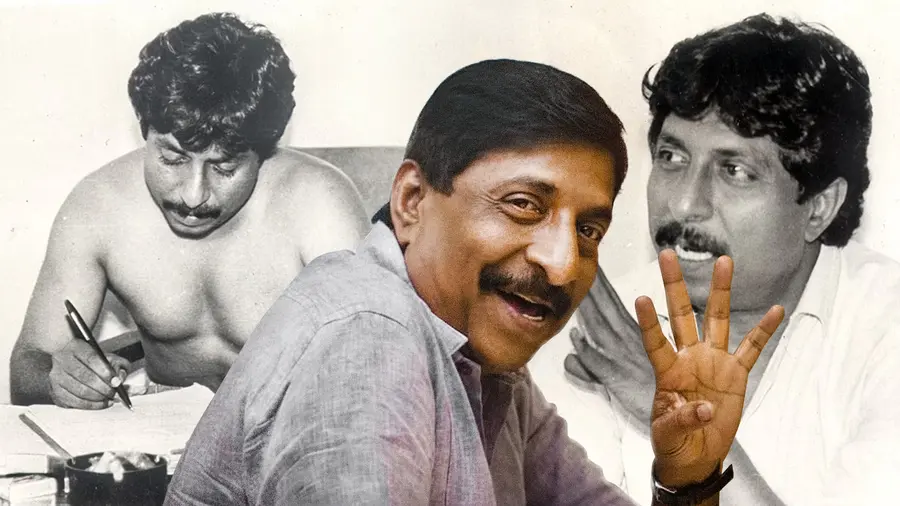
Malayalam cinema has long been admired for its realism and social awareness, but few individuals had political voice as decisively as Sreenivasan. Through his scripts, performances, and public interventions, he altered not just the themes of films, but the very way cinema engaged with society. He did not introduce politics as slogans or propaganda, instead, he embedded it into everyday life—into kitchens, classrooms, hospitals, government offices, and the moral dilemmas of ordinary people.
Before Sreenivasan’s rise as a screenwriter in the 1980s, political ideas in Malayalam films were often external—visible in grand narratives, historical struggles, or ideological speeches. Sreenivasan changed this approach. His politics were intimate, lived, and deeply personal. Even when he knew the satire and the plots of his movies opened doors to criticism against him, he was unbothered and were able to express the humour in it through his movies.
In his films like Nadodikkattu and Akkare Akkare Akkare, migration, unemployment, and economic desperation became political realities wrapped in humour. In Chinthavishtayaaya Shyamala, his directorial venture, Sreenivasan critique fragile male ego realistically. He made this movie as a mirror to the society, portraying the story of people who constantly seeks shortcuts to success-- ranging from failed business ventures to sudden religious obsession-- as a way to escape his responsibilities.
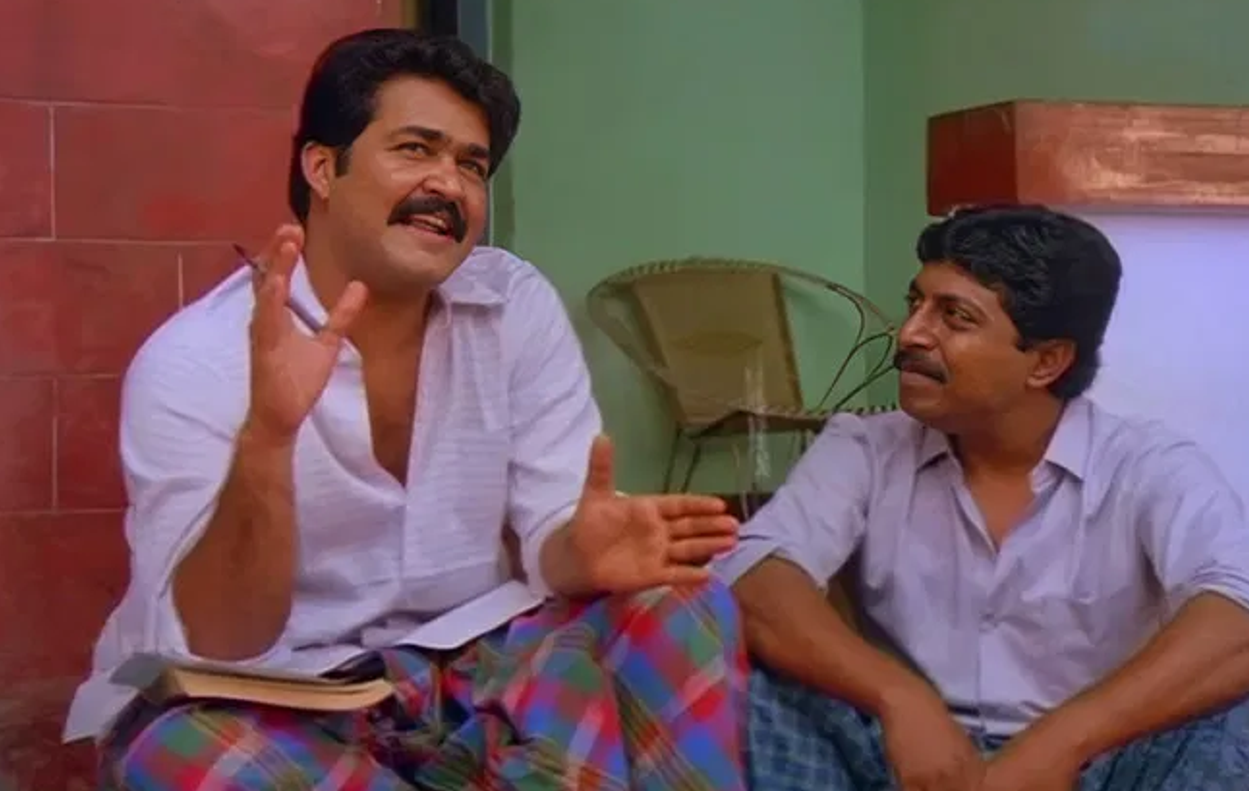
In Vellanakalude naadu, Sreenivasan's script highlighted reality of that time -- how ordinary people are often forced to become part of a corrupt system to survive--while mocking the inefficiency of government officials.
His genius lay in including intricate political plots in his movies in a way understandable for all. Viewers laughed, empathized, and reflected--often realizing only later that they had been confronted with uncomfortable truths.
Sreenivasan revived and refined satire as a serious cinematic tool. His humour was not escapist, it was diagnostic. He exposed hypocrisy across different areas in society--politicians, bureaucrats, religious leaders, the educated elite, and even the so-called progressives.
In his films, Sreenivasan dismantled ideological rigidity itself. His films refused to take sides, instead questioning blind loyalty, inherited beliefs, and the transformation of politics into a substitute for personal responsibility. This neutrality was itself radical.
Through satire in his films, Sreenivasan proved that political cinema did not need anger to be effective--clarity and honesty were enough.
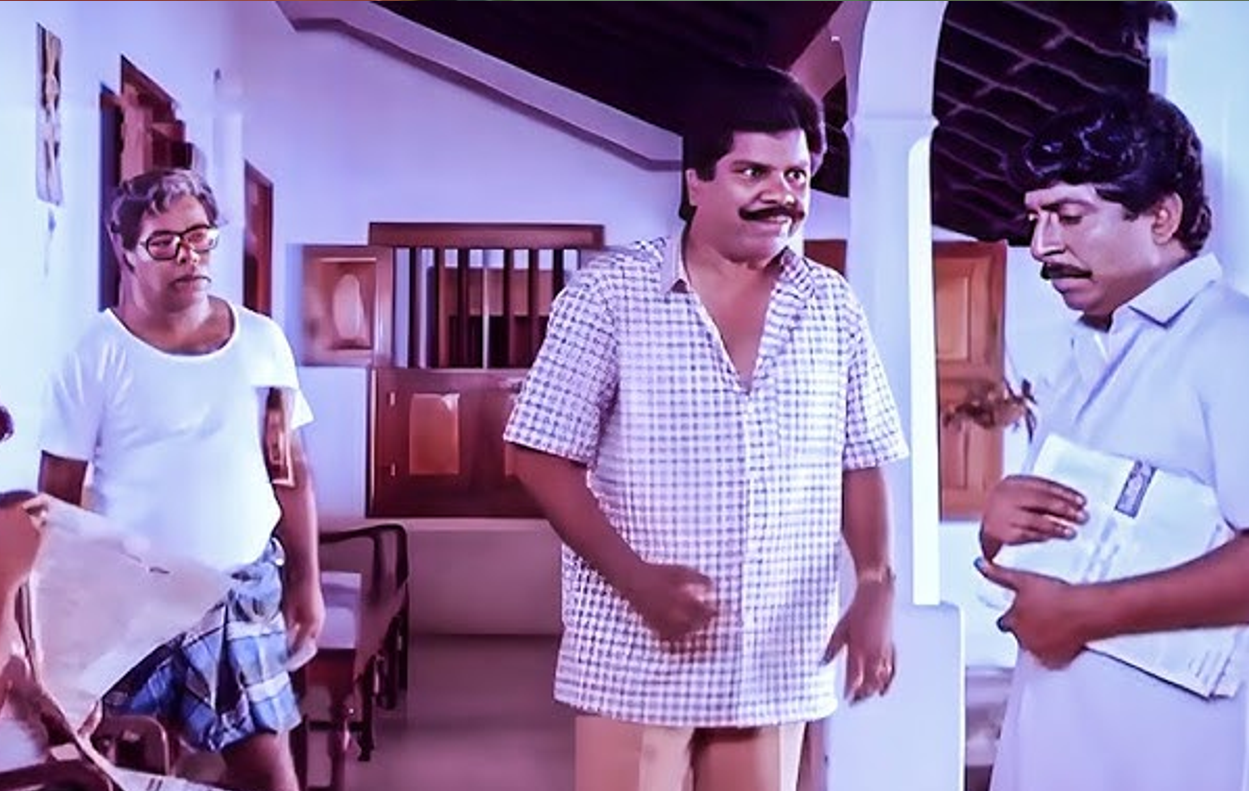
Another lasting contribution was his redefinition of the cinematic hero. Sreenivasan’s protagonists were not revolutionaries or leaders. They were clerks, teachers, writers, job seekers, and frustrated citizens. They were flawed, contradictory, sometimes cowardly--but deeply human. By focusing on “common man,” Sreenivasan aligned Malayalam cinema with a more realistic and ethical vision of social change.
His collaborations with directors like Sathyan Anthikad, Priyadarshan, Kamal, and actors such as Mohanlal and Mammootty helped mainstream politically conscious storytelling. Importantly, these films were commercially successful, proving that audiences were willing to engage with critical ideas when presented with sincerity and craft.
This success altered the malayalm film industry assumptions for good. Political awareness was no longer seen as a risk, but as a strength when rooted in storytelling.
In an industry often tempted by spectacle or sentimentality, Sreenivasan insisted on truth--sometimes uncomfortable, often ironic, always humane.
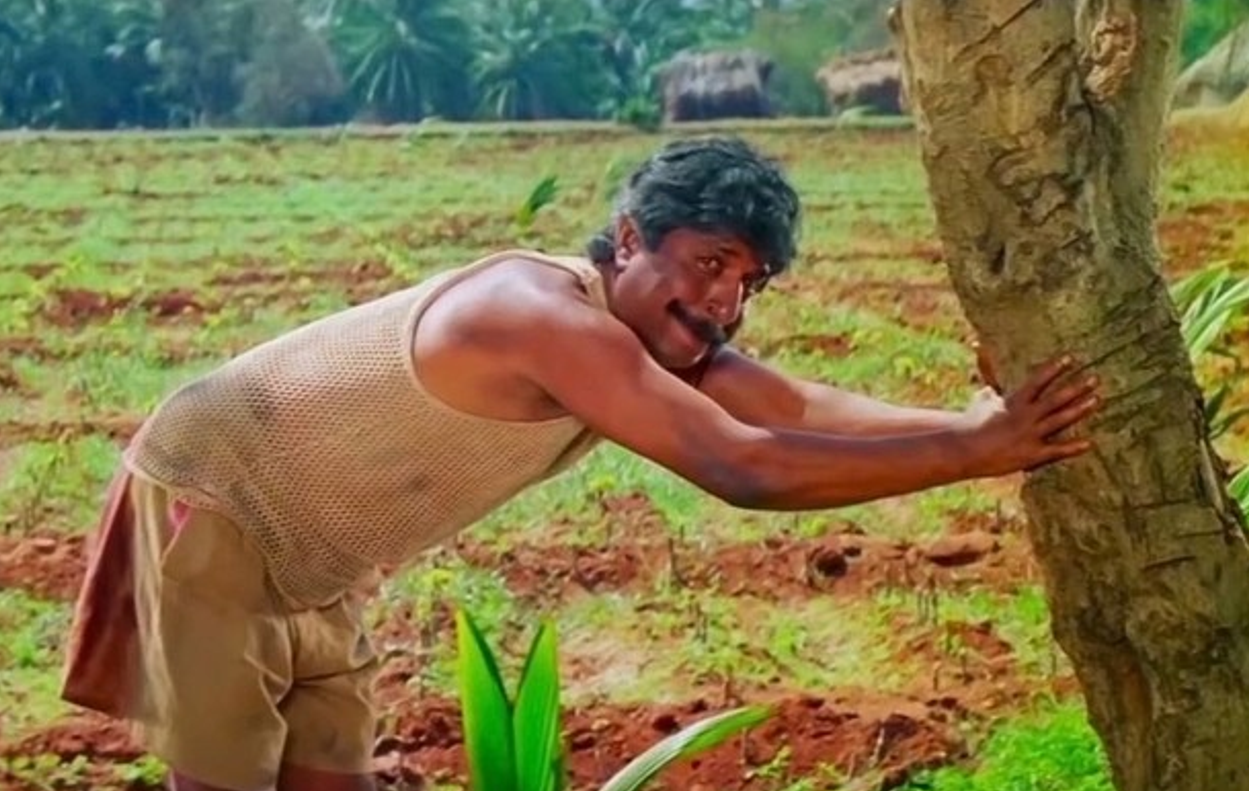
Sreenivasan did not merely write political films, he politicized the act of watching cinema. He taught audiences to laugh at power, question ideology, and recognize their own complicity in social systems. By grounding politics in everyday life, he transformed Malayalam cinema into a space of ethical inquiry.
Tags



Related News
Dont Miss it







0 comments