
The Congress Cover-Up: Inside Kerala’s Disaster Relief Scandal

Web desk
Published on Aug 01, 2025, 11:31 AM | 6 min read
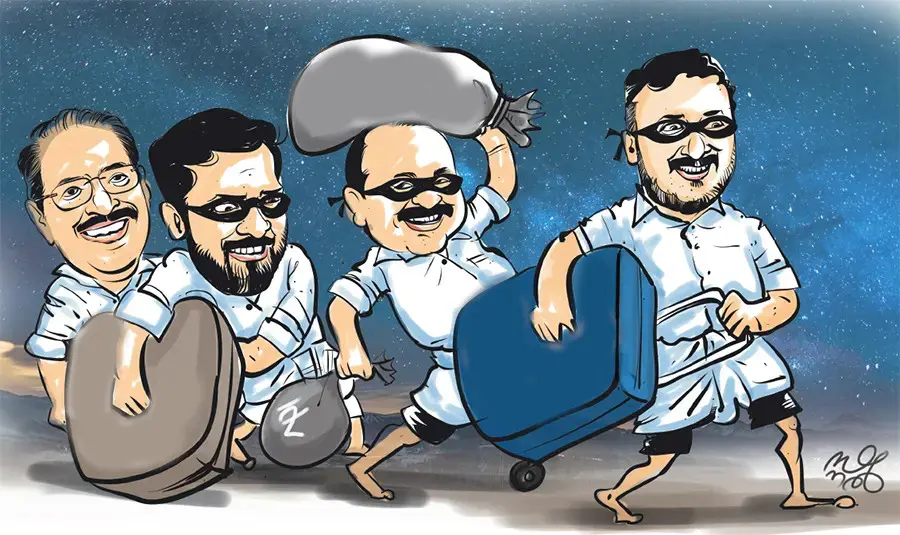
Thiruvananthapuram: In a time that called for unity and compassion, Kerala witnessed a disturbing episode of political apathy, financial misappropriation, and betrayal of public trust by the Kerala Pradesh Congress Committee (KPCC) and Youth Congress.
The Mundakkai landslide disaster, which devastated hundreds of lives, brought out the best in ordinary people and the worst in some of the state’s political leadership and organisations. While thousands volunteered selflessly, disturbing revelations have surfaced about how opposition parties and affiliated bodies exploited the disaster for political gain and financial fraud.
When the calamity struck, the government and left -aligned organisations, including DYFI, acted with urgency and coordination. Rescue efforts were swift, with volunteers and locals working shoulder to shoulder.
Amidst these efforts, a malicious campaign emerged, alleging that mouldy bread was being distributed in relief camps. This narrative, fuelled by Youth League activists and amplified by sympathetic media, was later debunked by Revenue Minister K Rajan, who clarified that the government had not distributed any bread in the camps. Still, the damage was done, the slander attempted to tarnish coordinated relief efforts at a crucial time.
Initially, the opposition United Democratic Front (UDF), including Congress and the Indian Union Muslim League, did not oppose the government's collection drive for the Chief Minister’s Disaster Relief Fund. But this stance soon shifted. In online spaces, Youth Congress and Youth League activists began discrediting the fund, spreading misinformation through fake social media accounts that contributions would not benefit the victims.
Neither Congress nor the League distanced themselves from this campaign. Instead, their silence, and later, their policy stances, suggested tacit approval. Eventually, the UDF formally declared they would not cooperate with the government’s plan to build a township for the victims. This withdrawal of support marked a turning point, reflecting a prioritisation of political calculations over human suffering.
The betrayal didn't end with rhetoric. Congress and Rahul Gandhi personally promised to build 100 houses for the disaster victims. Youth Congress added another 30 homes to the pledge. But a year later, there was no progress. Allegations surfaced that the Congress’s 100 houses, Rahul Gandhi’s 100 houses, and Youth Congress’s 30 homes were all the same promise, repeated under different banners. Not even a cent had been spent, nor had land been acquired. Meanwhile, the Muslim League’s involvement in land purchases turned into a scandal after they allegedly bought plots at four times the market rate, raising suspicions of profiteering from disaster relief.
A parallel controversy involved Opposition Leader V D Satheesan’s "Punarjani' project, announced during the 2018 floods. The initiative promised to rebuild homes for flood victims in Paravur. But it too devolved into scandal. Satheesan was accused of raising funds abroad without proper permission and later denying it in the Legislative Assembly. However, video footage surfaced of him soliciting donations at a public meeting in Birmingham on October 28, 2018, and again in a press conference in Paravur in May 2020, contradicting his statements.
Though a foundation stone was laid in Elanthikkara for a flat construction project under Punarjani, the work never began. Satheesan claimed that 217 houses had been built under the initiative. But it was revealed that those homes had actually been constructed and sponsored by various NGOs. The only contribution from Punarjani was the installation of name boards in front of these homes. A preliminary vigilance inquiry confirmed that despite collecting money, the project had not been implemented as promised.
The scandal spread further in Kannur district, where 11 Youth Congress block committees collected funds for the Mundakkai relief but only two, Irikkur and Payyannur, handed over the mandated 2.5 lakh rupees each to the state committee. The whereabouts of the funds collected by the remaining nine blocks, amounting to approximately 22.5 lakh rupees, remain unknown. Allegations also arose that several leaders collected money individually, bypassing official channels.
DCC General Secretary K C Vijayan's refusal to disclose how much was raised in Irikkur only deepened suspicions. Discussions around the Payyannur fund saw criticism levelled against a prominent woman leader accused of direct, unaccounted fundraising.
In Kozhikode, the magnitude of mismanagement became even clearer. Congress and Youth Congress leaders were unable to provide any clarity on the crores collected for the Mundakkai victims. Eleven months after the disaster, grassroots workers began openly questioning their leadership. At a Youth Congress study camp in Alappuzha and subsequent meetings in Wayanad, discontent erupted. A Kolanchery woman filed a police complaint against Youth Congress state president Rahul Mamkoottathil and others, accusing them of raising 88 lakh rupees but failing to deliver on any promises. While leaders claimed the money was secure and even produced partial documentation, no external verification was allowed. Their excuse, that the government had not provided land, quickly collapsed under scrutiny.
At the state level, Congress had collected 2.80 crore rupees and claimed it would build 30 homes, assigning each mandalam committee a 2.5 lakh rupees quota. Many of these local committees now demand answers: where did the money go? What happened to the contributions from abroad? The leadership remains evasive.
Even the party’s technological fundraising tools are now under suspicion. The mobile app “Stand with Wayanad, Indian National Congress Distress Fund” was launched to streamline donations. Party leaders initially claimed 3.14 crore rupees was raised through it. But the app functioned for just two months and has since vanished. When questioned, Satheesan claimed it had been deactivated, while KPCC Working President A P Anilkumar insisted all details were still available in the app, exposing a clear divide within the party.
The litany of scandals doesn’t end there. In Kasaragod, DCC General Secretary M C Prabhakaran issued a 4 lakh rupees cheque to the KPCC disaster relief fund at his son’s wedding. It bounced due to insufficient funds. This is the same leader who had earlier promised 1 lakh rupees for the 2018 flood relief fund but never delivered. Despite public announcements in media and at party events, the money was never transferred. The party gave Prabhakaran until August 15 to resolve the issue.
In sum, the Mundakkai disaster has not only revealed the resilience and solidarity of Kerala’s people but also exposed the shameful opportunism of some political figures. While ordinary citizens rallied to rescue and rebuild, prominent opposition leaders and their organisations stand accused of deception, corruption, and dereliction of duty. History will remember those who helped, and expose those who chose self-interest over humanity.
Tags



Related News
Dont Miss it





0 comments