
10th Congress: Post- Emergency

Research Desk
Published on Mar 26, 2025, 05:51 PM | 3 min read
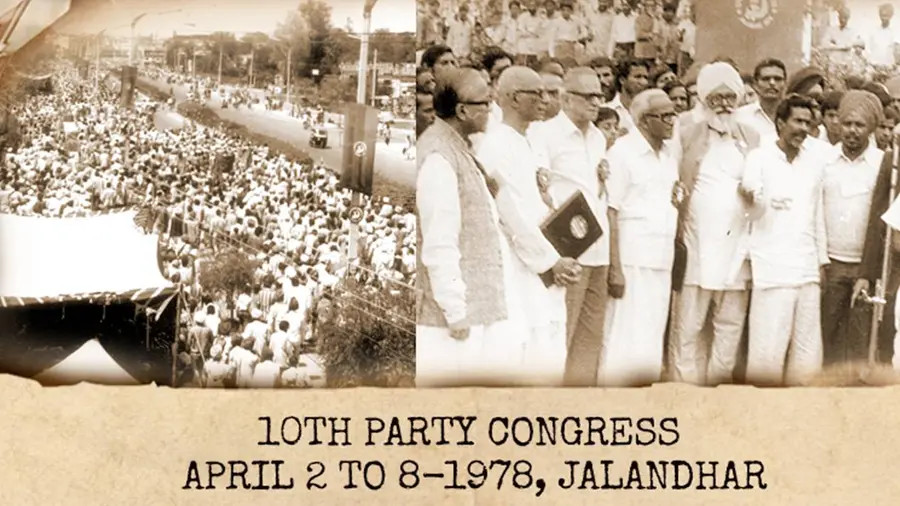
The 10th CPI(M) Party Congress was held after six years, from April 2 to 8, 1978, in Jalandhar, Punjab, following the 9th Party Congress in Madurai. The delay in convening the Congress was due to the prevailing political situation in the country. During this period, the autocratic tendencies of the Congress-led central government had intensified, leading to Prime Minister Indira Gandhi's proclamation of Emergency on June 25, 1975. The Emergency was eventually lifted in 1977. In the parliamentary elections held in March of that year, the Congress was ousted from power, and the Janata Party, led by Morarji Desai, formed the government at the center.
It was in this critical political climate that the Party Congress was convened. M Basavapunnaiah presented the review report, outlining the political policy to be adopted during this period. The report evaluated the end of Congress’s single- party rule in the post- Emergency elections as a significant political shift.
The party’s political approach remained fundamentally strong. Discussions focused on coordinated action, the unity of left-democratic forces, the rise of authoritarian tendencies, alliances, conflicts, contradictions, and the party’s role in the resistance movement. Additionally, the March 1977 elections and the party’s political stance were thoroughly examined.
The political resolution assessed the victory of the people in Vietnam, Laos, and Cambodia against American forces as the greatest achievement of the era. It also highlighted the overthrow of the Allende government in Chile by imperialist forces through their agents, leading to the establishment of fascism, the assassination of Sheikh Mujibur Rahman in Bangladesh, and the continuous military coup attempts in Thailand as key political developments.
The people's outrage against the atrocities committed during the Emergency was reflected in the end of three decades of Congress dominance. Despite the suppression of all civil rights, the people resisted with great sacrifice. As part of this resistance, the party organised numerous protests at the state and district levels. The resolution addressed several critical issues, including ongoing conflicts, the formation of broad-based platforms, the interconnection of class forces, economic crises, attacks on the people, the increasing influence of the World Bank, emerging threats, the economic policies of the Janata Party, self-governance for states, the role of the left and democratic forces in forming a Left Democratic Front, mass interventions, trade union unity, the farmers' movement, political parties, and the party’s contributions to these matters.
EMS presented a special resolution on the Party Plenum. The Politburo and the Central Committee were tasked with convening a special plenum before the end of 1978 to discuss strategies for strengthening the party’s organizational structure. The Party Congress elected a 44-member Central Committee and appointed EMS as Secretary. The Politburo (PB) consisted of 11 members.
Related News



Related News
Dont Miss it




0 comments