
The 14th Party Congress: A Turning Point in Socialist Struggles

Research Desk
Published on Mar 28, 2025, 02:11 PM | 2 min read
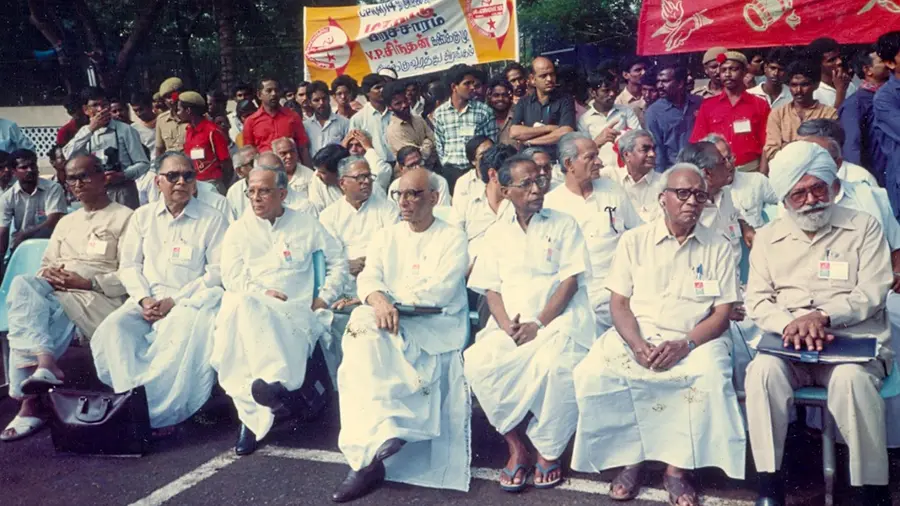
The Fourteenth Party Congress was held in Madras during a time when the global socialist camp faced significant setbacks following the collapse of the Soviet Union. The Congress took place from January 3 to 9, 1992, a period marked by India's adoption of economic liberalization and globalization. This era also saw the end of Congress's one-party rule in India.
It was a challenging period for socialist forces, national liberation movements, and class struggles worldwide. Nelson Mandela's release and the subsequent legalization of the African National Congress and the Communist Party were significant developments. The fall of Pinochet's dictatorship in Chile brought new hope. These global events were thoroughly discussed in the political resolution at the Party Congress.
The political resolution also addressed the national situation, focusing on the elections in which Congress failed to secure a majority for single-party rule, as well as the ongoing deterioration of the Babri Masjid issue. The resolution highlighted threats to national unity, the rising communal dangers, the BJP’s electoral gains, the struggles for the rights of tribals, the pervasive corruption, and the need to strengthen Left unity.
The Congress also presented the political review report, resolutions on ideological issues, and reports on organizational matters and responsibilities. In the resolution titled 'On Certain Ideological Issues', which addressed the collapse of the Soviet Union, the Party reaffirmed its unwavering commitment to Marxism-Leninism. The resolution also explored the issue of proletarian hegemony and the global ramifications of these events.
To reform the Party’s functioning, the Central Committee was tasked with establishing a Commission. It was also recommended that this report be discussed at a special convention. The proposed amendment to Article 18 of the Party Constitution, regarding the Control Commission at both central and state levels, was approved. The Central Committee was composed of 62 members. Harkishan Singh Surjeet was elected General Secretary, and the Polit Bureau consisted of 17 members.
Related News



Related News
Dont Miss it




0 comments