
UDF Open to Talks with Welfare Party Ahead of Kerala Polls

Web desk
Published on Oct 05, 2025, 09:09 PM | 3 min read
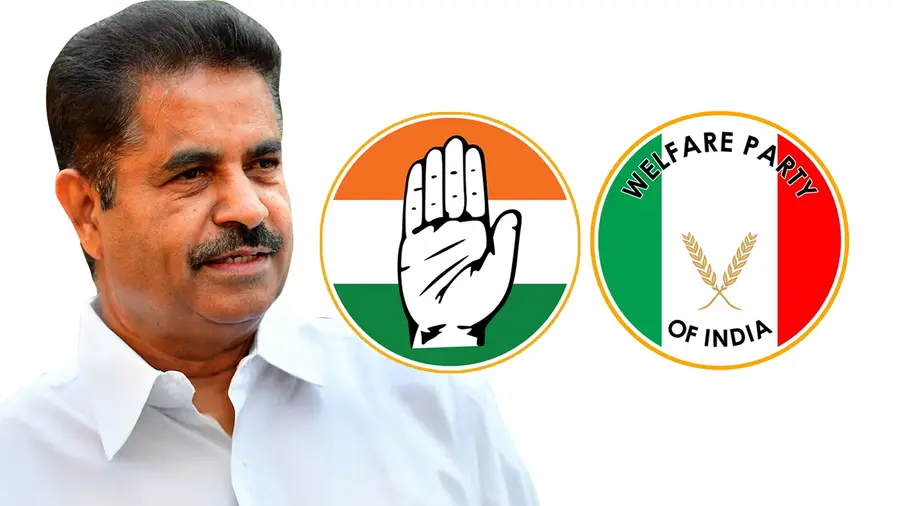
Kozhikode: UDF Convenor Adoor Prakash has stopped short of denying that talks are under way to bring the Welfare Party, the political front of the Jamaat-e-Islami, a group long associated with religious nationalism, into the alliance.
Speaking to the media, Prakash said that ahead of the local body and Assembly elections, the UDF would seek understanding with every organisation willing to cooperate. “The local polls are nearing, and the Assembly elections will follow. We will work with all parties open to dialogue,” he remarked.
When asked about Opposition Leader V D Satheesan’s claim that Jamaat -e -Islami had moved away from its old ideological moorings, Prakash said such matters would be discussed at the appropriate time.
The UDF’s preparation for the elections has again revealed its willingness to align openly with religious fundamentalist organisations, including the Jamaat-e-Islami. The Indian Union Muslim League (IUML), which often echoes the Jamaat’s concerns, faces growing criticism for creating conditions in which hardline tendencies can deepen among Muslim voters. Several religious organisations close to the League, such as the Samastha Kerala Jamiyyathul Ulama (E K faction), have repeatedly spoken out against such collaborations.
The CPI M had earlier warned that any overt alliance between the UDF and the Jamaat-e-Islami strikes at the roots of secular politics. The party maintained that both the RSS and the Jamaat are driven by the same sectarian impulse, each opposed to the constitutional principles of secularism, federalism, and democracy. “To defeat the communal nationalism of the Sangh Parivar, one must also confront the Islamic nationalism championed by the Jamaat-e-Islami,” CPI M state secretary M V Govindan told reporters recently.
Within the UDF itself, unease has surfaced over the activities of Solidarity, the Jamaat’s youth wing, which has begun publicly reviving the ideology of its founder, Abul A’la Maududi. The controversy erupted even as discussions on the Jamaat’s formal inclusion in the UDF continued. The Solidarity Malappuram district committee held a closed- door discussion titled ‘Syed Maududi and Sheikh Qaradawi: Islamic Political Thought and Its Evolution’, which has since drawn sharp scrutiny. Images of the event were withheld, and neither Jamaat leaders nor their publication Madhyamam have offered any response.
Sheikh Qaradawi, a leading thinker of Egypt’s Muslim Brotherhood, was known for his extreme religious views. The Jamaat-e-Islami, inspired by Maududi’s political theology, has historically mirrored the Brotherhood’s ideological line. For years, the organisation refused to recognise the Indian Constitution, contest elections, or accept state employment. Only recently did it begin to adjust its stance, contesting polls and striking electoral understandings. In both the last parliamentary and assembly elections, the Jamaat functioned practically as an ally of the UDF, a pattern repeated once again during the Nilambur by-election.



Related News
Dont Miss it










0 comments