
Centre’s New Employment Scheme to Burden Kerala With 16,00 Crore Rupees Annually: MB Rajesh

Web desk
Published on Dec 15, 2025, 11:26 PM | 4 min read
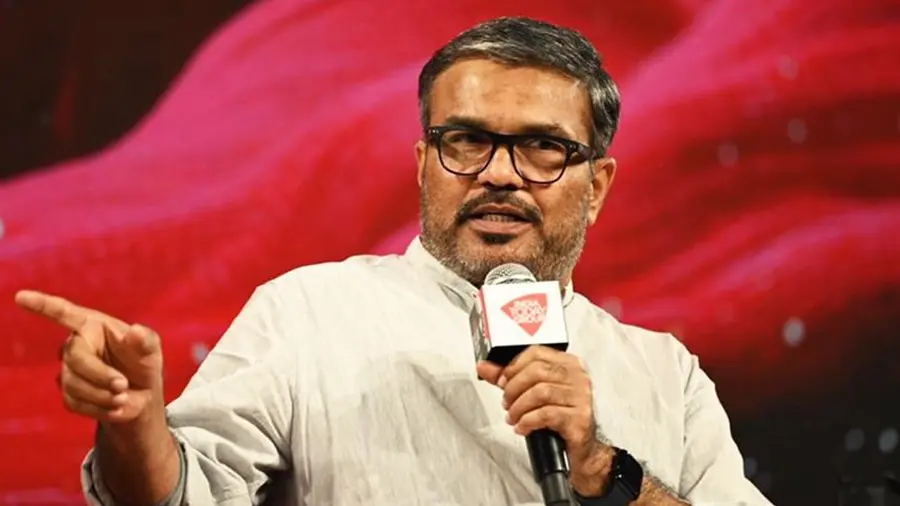
Thiruvananthapuram: Kerala LSGD Minister MB Rajesh has accused the central government of attempting to dismantle the Mahatma Gandhi National Rural Employment Guarantee Scheme (MGNREGS) through a series of deliberate, step -by- step measures. He said the new bill introduced by the Centre seeks to completely erase the core principles of the scheme and withdraw entirely from the responsibility of providing employment. The Minister highlighted that by shifting 40% of the cost to the states, Kerala alone would face an annual loss of 16,00 crore rupees. He said the state is demanding that the central government withdraw the bill.
Rajesh said the employment guarantee scheme was conceptualised when the first UPA government, under pressure from the Left, launched a public minimum employment programme. He claimed that attempts to dilute the scheme began during the second UPA government, in which Left was not a part of. Large-scale cuts in allocations reportedly started then. According to him, with the BJP government in power, deliberate efforts to abolish the scheme fully began, and the current bill represents the culmination of a decade -long plan. Over the past ten years, he said, the BJP government attempted to dismantle the scheme by delaying wages, creating arrears, and reducing the number of employment days, anticipating that workers would lose interest and stop coming to work.
Rajesh emphasised that the employment guarantee scheme is meant to provide a minimum of 100 workdays to eligible families and establish employment as a legal right. He noted that the new bill removes this core idea, diluting the scheme into one that provides employment only according to the targets and labour budget set by the central government. He said the demand- driven nature of the scheme has been subverted, and employment will now only be provided if it fits the government-prescribed budget and conditions, effectively withdrawing the Centre’s responsibility to provide work.
Highlighting the financial implications, Rajesh said changes in the funding pattern will impact states like Kerala the most. The new law imposes 40% of the costs on the state, while giving states no role in decision- making. He said Kerala currently bears only 25% of the material component of the scheme, but under Section 22(2) of the bill, the cost-sharing ratio will change to 60:40, increasing the state’s liability by 16,00 crore rupees annually.
Rajesh further explained that the central government determines state allocations based on “Normative Allocation” under Section 22(4), and any expenditure beyond this allocation must be borne by the state under Section 22(5). He noted that Kerala’s employment days have been gradually reduced by the Centre over the years, despite the state exceeding its targets. He said that for 2021-22, 7.5 crore workdays were allocated; 6 crore for 2022-23 to 2024-25; and 5 crore for 2025-26. However, Kerala had delivered higher days than allocated in previous years, but the new bill limits the state’s ability to provide additional work without bearing the costs.
Rajesh called the announcement to increase employment days from 100 to 125 “a hollow promise.” He said Section 5(1) of the bill provides 125 days of work only for those willing to work in notified rural areas, which will not cover all panchayats. He also flagged provisions that could exclude millions of rural families, including restrictions during sowing and harvesting periods, which he said would push workers back into dependence on landowners.
The Minister raised concerns about Aadhaar -based verification, citing technical issues in remote work sites, tribal areas, and low technical literacy among workers. He said Kerala had implemented the scheme with full social auditing, serving as a national model, and the new bill undermines this auditing mechanism.
Rajesh criticised the renaming of the scheme, saying the central government has removed Mahatma Gandhi from the title. He said the new bill is named “G. Ram G” or “Developed Bharat – Guarantee for Wage and Livelihood Mission (Rural) 2025.” He reminded that during the COVID-19 pandemic, the scheme played a crucial role in preventing starvation deaths and securing livelihoods for returning migrant workers, noting that demand for MGNREGS work had risen significantly during that period. Rajesh said the central government is now attempting to extinguish this vital programme.



Related News
Dont Miss it










0 comments