
Kerala
Lottery Revenue Constitutes Only Half a Percent of Kerala’s State Budget: FM Clarifies
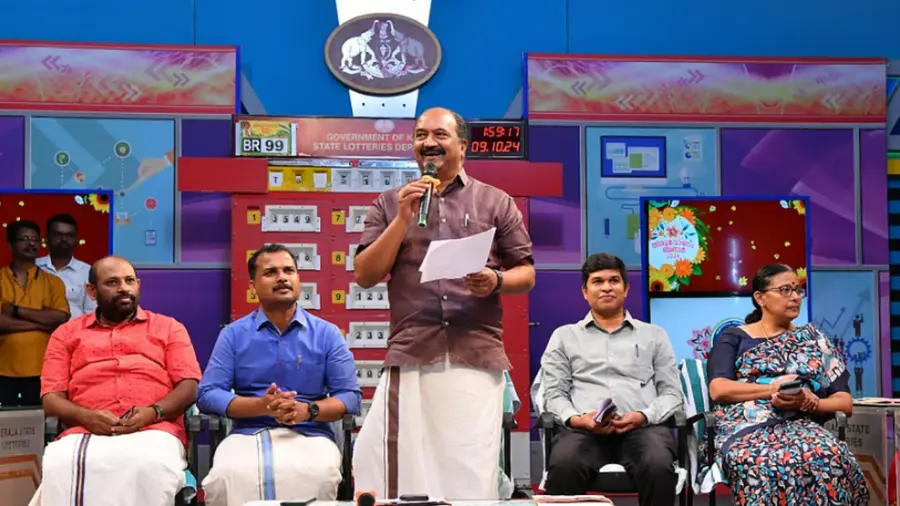
Image courtesy: Facebook, KN Balagopal

Web desk
Published on Jul 21, 2025, 02:17 PM | 4 min read
For years, a widespread belief has circulated in Kerala that lottery revenue is a major source of income for the state government. This perception, often echoed by media reports and public discourse, has created an impression that the Lottery Department is a significant financial pillar supporting the state’s budget. However, recent clarifications from Kerala’s Finance Minister K.N. Balagopal have brought much-needed clarity, exposing this as a misconception and revealing the true financial role of lottery revenue in the state’s economy.
The minister pointed out that the misunderstanding largely arises because lottery sales figures are often quoted in gross terms, without highlighting the substantial costs involved in running the lottery system.
“There is a misconception that lottery sales bring in huge revenue for the government, but the truth is the net earnings are quite modest after expenses. The lottery is not a major source of income for the state, and it’s important the public understands this clearly,” Balagopal said.
Kerala holds the distinction of being the first Indian state to launch a government-run lottery. The Kerala State Lottery was introduced in 1967 with the dual aim of generating additional revenue for the government and providing employment opportunities to those in need. Since its inception, the lottery has grown into one of the largest and most organized lottery systems in India.
The initiative was initially met with skepticism but quickly gained popularity, partly due to its transparent prize distribution and strict regulation. Over the decades, Kerala’s lottery has expanded to include various weekly and special draws, including the well-known Karunya Lottery, which supports health-related social welfare schemes.
Despite its success in creating jobs and funding social programs, the lottery has never been a dominant contributor to the state’s finances. Rather, it has served as a supplementary source of income alongside other tax and non-tax revenues.
According to the state budget for the financial year 2024–25, the total revenue generated from lottery ticket sales is expected to be Rs. 13,244 crore. Yet, this number only represents the gross sales, not the net profit. The Lottery Department’s expenses—including prize money payouts, commissions to a wide network of sellers and agents, advertising, and staff salaries—amount to around Rs. 12,222 crore. Once these costs are deducted, the government’s net profit from the lottery stands at just Rs. 1,022 crore.
This net profit makes up less than 1% of Kerala’s own revenue and approximately 0.5% of the total state budget. The minister emphasised that these figures decisively debunk the myth of lottery revenue being a substantial financial contributor to the state’s coffers.
Balagopal also clarified that the Lottery Department is not an autonomous public sector undertaking but a government department. This means that both its income and expenditure are accounted for within the state budget, ensuring transparency in how lottery finances are managed.
Beyond the financials, the minister highlighted the vital social impact of the lottery system. Nearly one lakh people, many of them elderly, people with disabilities or suffering from chronic health conditions such as heart disease, rely on selling lottery tickets as a dignified means of livelihood. For many, this source of income is essential, providing them with financial independence despite physical limitations.
Moreover, the Lottery Department administers the Karunya Benevolent Fund, in partnership with the State Health Agency. This initiative channels proceeds from the Karunya Lottery to offer free medical treatment to economically disadvantaged patients battling serious illnesses such as cancer, kidney disease, heart conditions, and hemophilia. Between 2020 and 2025, the scheme has facilitated over 2.37 lakh dialysis treatments, more than 83,000 chemotherapy sessions, and over 16,500 angioplasty surgeries free of cost, distributing medical aid worth over Rs. 236 crore.
While the lotteries generate significant gross revenue, their net contribution to the state’s finances is relatively modest. Simultaneously, the system supports vulnerable populations by providing livelihoods and funding critical healthcare services.
As Kerala continues its lottery operations, officials stress the importance of transparency and responsible gaming to ensure the lottery remains a balanced instrument for both modest revenue generation and social welfare.
Tags



Related News
Dont Miss it










0 comments