
US and Iran Fail to Reach Peace Deal After 21 Hours of Talks in Islamabad: JD Vance
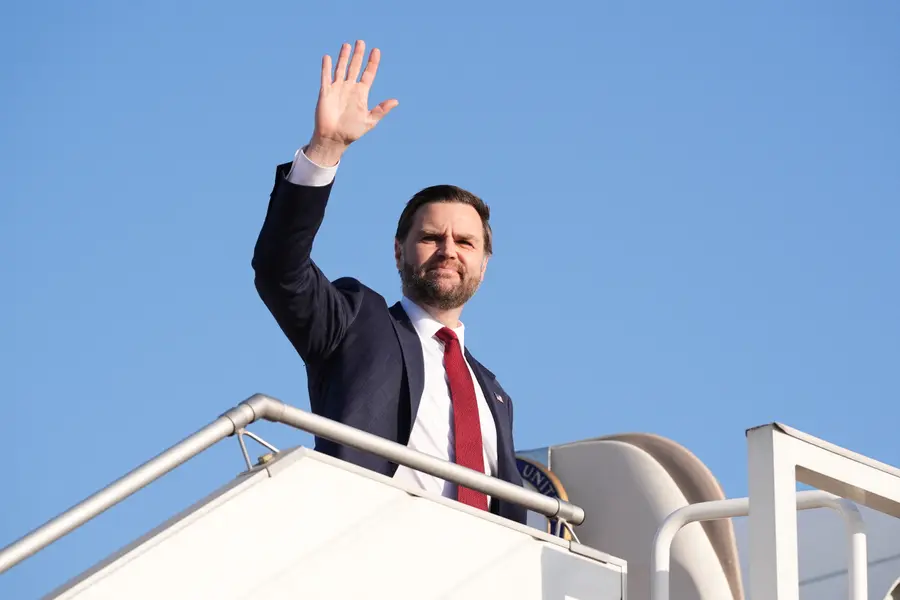
US Vice President JD Vance boards Air Force Two after failing to reach a deal with Iran in Islamabad on April 12, 2026. (Photo | AFP)
Islamabad: Marathon peace negotiations between the United States and Iran collapsed in the early hours of Sunday in Islamabad, Pakistan, after 21 hours of talks failed to bridge fundamental differences between the two sides.
US Vice President JD Vance, who led the American delegation, said the talks had ended without agreement. "The bad news is that we have not reached an agreement," he told reporters. "And I think that's bad news for Iran much more than it's bad news for the United States of America."
The high-stakes talks ended after 21 hours, with Vance remaining in constant communication with US President Donald Trump and other senior administration officials throughout. Vance told media that the core American demand — that Iran make an unambiguous, long-term commitment to forgo nuclear weapons — was not accepted by Iran.
Although Vance noted that Iran's enrichment facilities had been destroyed in the course of the war, Washington still did not see what it considered a binding long-term commitment from Tehran to abandon its nuclear ambitions. "The simple fact is we need to see an affirmative commitment that they will not seek a nuclear weapon and they will not seek the tools that would enable them to quickly achieve a nuclear weapon," Vance told reporters. "That is the core goal of the President of the United States."
Vance described the American approach as flexible and accommodating, saying the two sides held "substantive discussions" across the 21 hours.
Meanwhile, the Iranian state media reported that the talks failed over "unreasonable demands" by US. According to AFP, the Iranian state broadcaster IRIB has reported that the “Unreasonable demands” by the US scuppered talks in Islamabad to end the war in West Asia.
Saturday's talks in Islamabad were the first direct US-Iranian meeting in more than a decade and the highest-level face-to-face discussions between the two countries since Iran's 1979 Islamic Revolution — a reflection of just how dire the situation had become after seven weeks of war.
The US delegation included special envoy Steve Witkoff and Jared Kushner, the president's son-in-law, alongside Vance. The Iranian side was led by Parliament Speaker Mohammad Bagher Qalibaf, a former commander with Iran's powerful Revolutionary Guard. Vance said he spoke with Trump "a half dozen times, a dozen times" across the 21-hour period, and also consulted Secretary of State Marco Rubio, Treasury Secretary Scott Bessent, and CENTCOM commander Admiral Brad Cooper.
The two sides entered the talks with sharply divergent positions on almost every major issue. The Trump administration's 15-point proposal, which has not been disclosed in full, is said to include Iran committing to forgo nuclear weapons, handing over its highly enriched uranium, limiting its defence capabilities, and reopening the Strait of Hormuz.
President Trump, for his part, struck a characteristically detached tone. Speaking to reporters before departing for Miami, Trump said he did not "care" about the outcome of the negotiations. "Whether we make a deal or not makes no difference to me," he said, adding that the United States would "win regardless."



Related News
Dont Miss it









0 comments