
Trump Warns Iran of Military Action if Nuclear Negotiations Fail
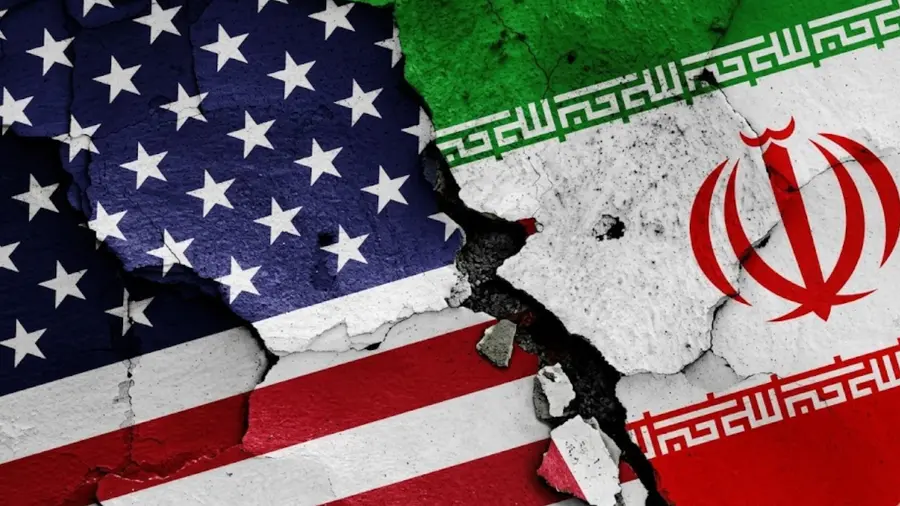
Image used for representation
Washington DC: US President Donald Trump has issued a fresh warning to Iran, saying the United States would pursue either a final negotiated agreement or take military action if diplomacy fails, raising concerns over renewed tensions in West Asia.
Trump's remarks came shortly after the funeral procession of Iran's Supreme Leader, Ayatollah Ali Khamenei, which drew large crowds. He said that if a comprehensive peace agreement could not be reached, the United States have the capability to destroy key Iranian infrastructure, including bridges and major energy facilities, through military action.
The US President argued that Iran is facing severe economic challenges due to sanctions and previous military operations, which he said had weakened the country's economy. However, Trump maintained that he preferred reaching a negotiated settlement rather than resorting to force. He said the objective was to avoid harming Iran's population of about 91 million people, while insisting that the United States would not allow Iran to acquire nuclear weapons. According to Trump, Iran would also be required to surrender its stockpile of enriched nuclear material under any final agreement.
Trump added that he was not seeking regime change in Iran but hoped the new Iranian leadership would adopt what he described as a more pragmatic approach.
According to the report, tensions escalated after airstrikes carried out by the United States and Israel against Iran on February 28, leading to a broader regional conflict. A 60-day temporary ceasefire was subsequently announced to facilitate diplomatic negotiations aimed at reaching an agreement on Iran's nuclear programme. However, indirect talks held last week reportedly ended without any breakthrough. While the United States has insisted that Iran completely abandon uranium enrichment, Tehran has maintained that such a demand infringes on its national sovereignty.
Iran strongly rejected Trump's remarks. Mohammad Baqer Zolqadr, Secretary of Iran's Supreme National Security Council, described the statements as "delusional." Iranian officials warned that the language of threats was unacceptable and said the United States would receive a different response if it failed to engage with respect.
Iran has also maintained that the joint US-Israeli airstrikes failed to weaken the country and instead strengthened national unity. Despite suffering significant losses during the conflict, Iranian leaders have asserted that the country remains resilient and determined to rebuild.
The continuing standoff has also intensified international concerns over the security of the Strait of Hormuz, through which roughly one-fifth of the world's oil and liquefied natural gas (LNG) supplies pass. Global energy markets and investors are closely monitoring developments for any potential disruption to shipping through the strategic waterway.



Related News
Dont Miss it









0 comments