
Tarique Rahman Sworn in as Bangladesh’s 11th Prime Minister
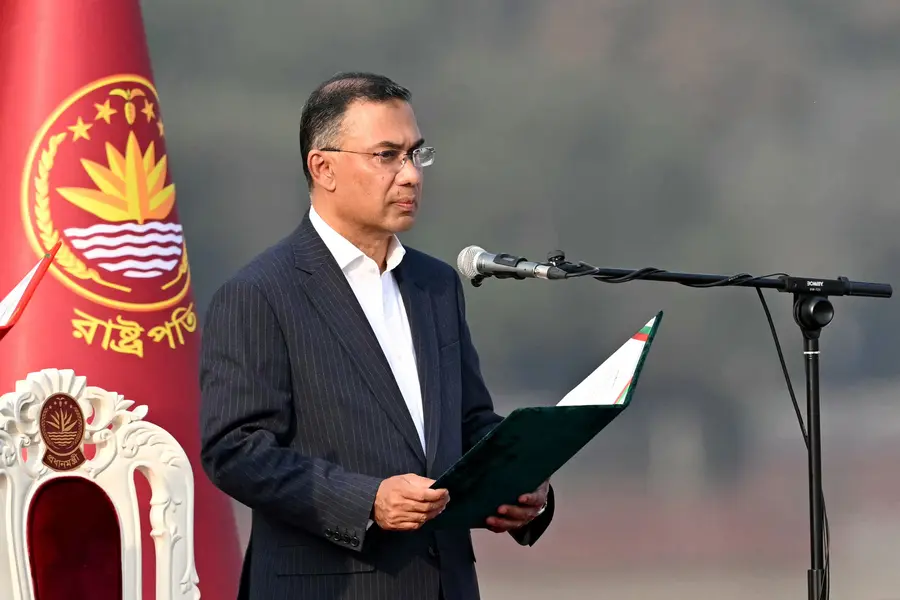
Bangladesh Nationalist Party (BNP) chairman Tarique Rahman takes oath as prime minister during a swearing-in ceremony at the National Parliament building in Dhaka on February 17, 2026. (Photo | AFP)
Dhaka: Tarique Rahman took the oath of office on Tuesday as the 11th Prime Minister of Bangladesh, formally marking the start of his government following a sweeping victory in last week’s parliamentary elections. The ceremony took place at the South Plaza of the Jatiya Sangsad Bhaban, departing from tradition by being held outdoors rather than at the presidential residence.
President Mohammed Shahabuddin administered the oath to Rahman — who leads the Bangladesh Nationalist Party (BNP) — and members of his cabinet in a ceremony attended by senior figures from Bangladesh and abroad, including foreign dignitaries and diplomats.
Rahman’s ascension caps a dramatic political shift in Bangladesh. His party secured a commanding two-thirds majority in the 13th National Parliamentary elections held on February 12, ending years of political domination by the Awami League and ushering in a new era after mass demonstrations and political upheaval over the past two years.
Returning to power roughly two decades after long strife with rival political forces, Rahman, 60, also becomes the country’s first male prime minister in over three decades — a departure from a political landscape previously dominated by female leaders including his mother, former prime minister Khaleda Zia, and former premier Sheikh Hasina.
In his first address after the ceremony, Rahman emphasised the need for national unity, peace and economic revival, acknowledging the challenges that lie ahead in stabilising institutions, boosting investor confidence and supporting key industries like the garment sector. Analysts say his early decisions will be closely watched as Bangladesh navigates recovery after years of political turbulence.
Rahman returned from 17 years in self-imposed exile in London late last year and was quickly elected leader of the BNP’s parliamentary party before the general elections. His government includes members from a broad coalition that now holds a clear mandate to govern for the next five years.



Related News
Dont Miss it





0 comments