
A Quarter- Century Among the Stars: 25 Years of Human Life Afloat in Orbit

Web desk
Published on Oct 30, 2025, 10:17 PM | 4 min read
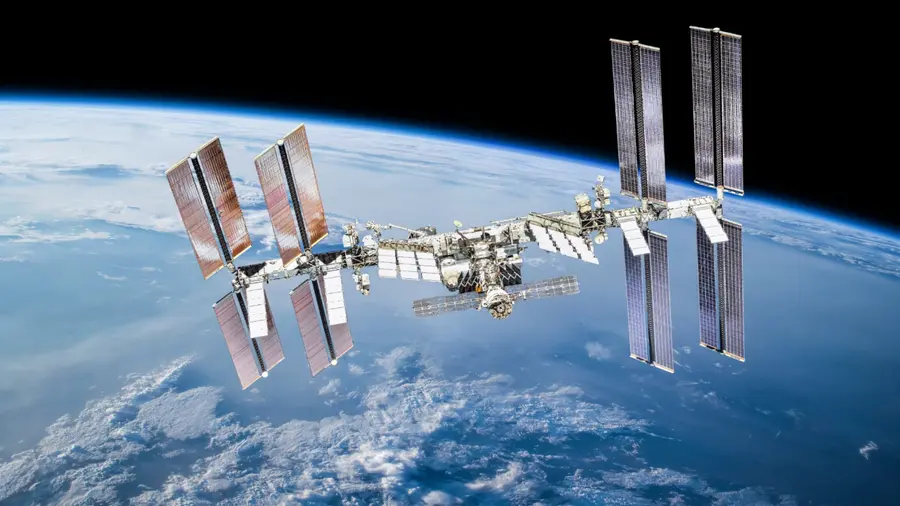
Cape Canaveral: Twenty- five years. That’s how long human beings have called space home, without pause, without a single empty night in orbit. As the International Space Station (ISS) marks a quarter-century of continuous human presence this weekend, it stands as both a marvel of cooperation and a testament to endurance, a vast, glittering symbol of what’s possible when nations look up rather than in.
When NASA’s Bill Shepherd and Russia’s Sergei Krikalev and Yuri Gidzenko first floated through the hatch on November 2, 2000, they found a dark, damp, three-room shell. It smelled of metal and machinery, not yet of life. Their Soyuz had launched from Kazakhstan two days earlier, carrying not just supplies but the fragile hope that humans could live, not just visit, beyond Earth. Five months later, the trio had turned that shell into a home, kicking off what would become humanity’s longest-running address off the planet.
Since then, 290 people from 26 nations have followed in their footsteps. Astronauts, cosmonauts, scientists, even tourists, all have looked down on Earth from the station’s glass-domed cupola. The first space tourist, American businessman Dennis Tito, paid his own way in 2001, defying NASA’s early reluctance. Russia’s cash-strapped space agency welcomed him, and later even flew a film crew in 2021. Today, NASA itself opens the door to private missions, welcoming short-stay visitors and commercial partners as space turns from frontier to marketplace.
The ISS has become more than a lab, it’s a village in orbit, where science and humanity coexist in a constant state of wonder. Astronauts have celebrated birthdays, marriages, even fatherhood up there. Some have endured heartbreak too, news of deaths, illnesses, political crises, all while circling Earth every 90 minutes. “Space brings people together,” said Peggy Whitson, the station’s first female commander, echoing a truth that feels almost naïve yet deeply necessary in divided times.
The journey hasn’t been without peril. There have been close calls, a near-drowning during a spacewalk, a wild spin caused by a botched docking, cracks and air leaks that sent shivers through mission control. Yet, the ISS continues to hum above us, long past its intended design life. “The fact that it’s still going is remarkable,” admitted Shepherd, the first commander, now a space elder of sorts.
And what a transformation it’s seen. From spartan beginnings, the ISS now spans the length of a football field, with laboratories, exercise gear, and even a makeshift espresso machine. There’s still no shower, sponge baths remain the rule, but astronauts can make internet calls home and grow zinnias and chilli peppers to brighten their orbiting habitat. Canadian astronaut Chris Hadfield once strummed David Bowie’s “Space Oddity” in zero gravity, a surreal moment that turned science into song.
Thousands of experiments have been run, many on the astronauts themselves. The twin study of Scott and Mark Kelly remains a landmark in space medicine, showing how the human body bends, and nearly breaks, under the weightlessness of time. And every so often, space reminds them of its fragility: one astronaut discovered a blood clot in orbit, treated remotely by doctors 400 kilometres below.
But the ISS’s time is drawing to a close. In 2031, NASA plans to retire the station with a controlled descent, a fiery farewell over the Pacific Ocean. SpaceX will guide the final journey, steering the ageing structure safely back to Earth. Yet, endings in space are rarely final. Private firms, including Axiom Space, are already preparing their own orbital outposts, modular, sleek, and built for a wider clientele.
NASA hopes the transition will be seamless, ensuring humanity’s uninterrupted foothold in orbit. After all, for 25 years, not a single night has passed without someone watching over Earth from above. The ISS began as an experiment in cooperation, survived as a sanctuary for science, and endures as a reminder, that even in the cold silence of space, humanity has managed to make itself at home.



Related News
Dont Miss it









0 comments