
Europe’s Anger Over Education, Housing and Prices Spills Onto the Streets
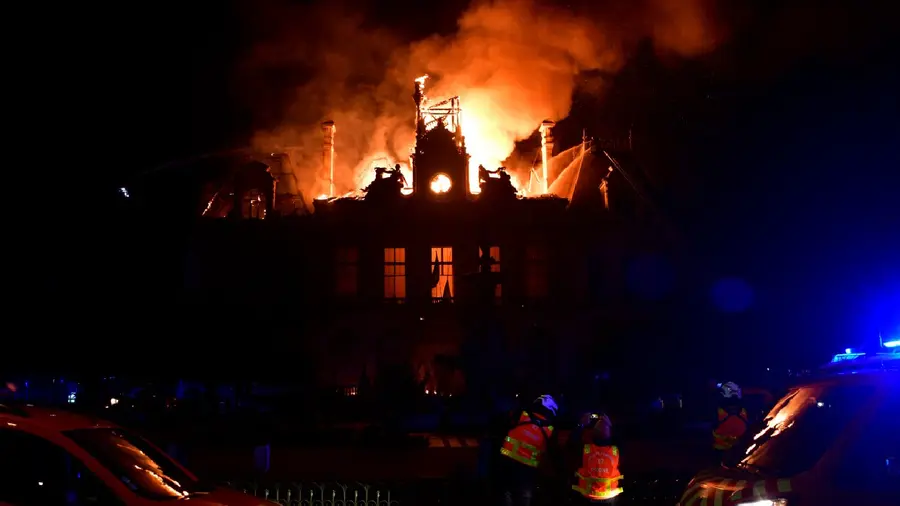
This photograph shows a fire burning and destroying the city hall after a group of individuals forced entry into the building during ongoing protest action against the "high cost of living", in Limoges, central France on October 17. (Photo | AFP)

Rahna Mariyam
Published on Oct 18, 2026, 01:20 PM | 9 min read
Paris: Anger over housing, fuel and food costs and other issues boiled over across Europe this weekend. Hundreds of thousands marched on Saturday in separate, uncoordinated demonstrations in Spain, Belgium, France, Italy and Portugal. The protests are a warning to the European governments heading into a long election season and the European Union as a whole.
France: the biggest turnout
Protests over housing had long simmered in Spain and Portugal, but the student protests in France helped tip the scale across Europe, and they produced the largest mobilisation.
The protests in France began in mid-september when students in Paris, particularly from Creteil, started a protest over the poor conditions of schools and staff shortages over other issues. The movement soon spread nationwide. In the following weeks, over 200 schools were either closed or classes were interrupted as protesters, who are mostly teenagers, increased the pressure on the government to fulfill their demands for better educational facilities. University students, teachers and union leaders later joined the marches.
The pressure peaked on October 13. The Interior Ministry counted 161,500 marchers nationwide, more than double the 71,500 it recorded the previous Thursday. Greta Thunberg joined students outside the Paul Eluard school in Saint-Denis, saying young people were being left out of the conversation about their own futures.
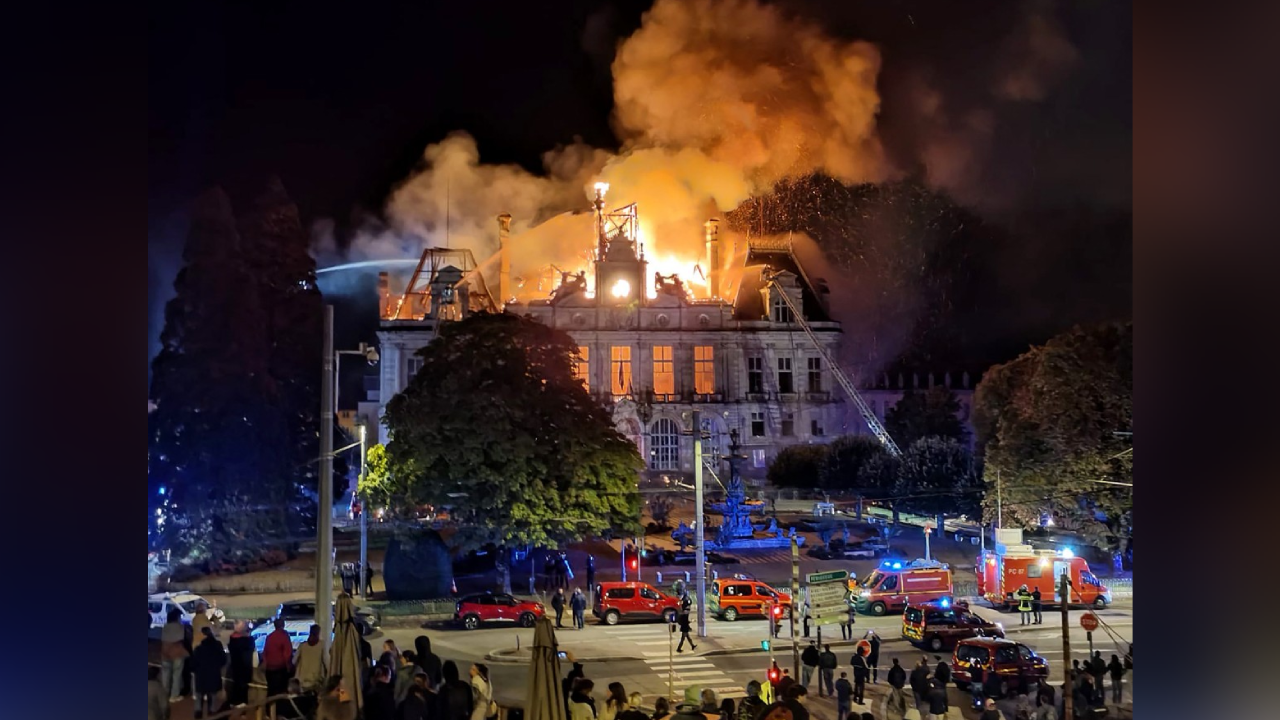 This photograph shows a fire burning and destroying the city hall after a group of individuals forced entry into the building during ongoing protest action against the "high cost of living", in Limoges, central France on October 17, 2026. (Photo | AFP)
While the student movement drew global attention, the police response towards the demonstrations and the students drew wide criticism as the protesters, who are mostly teenagers, sustained serious injuries. A 15-year-old lost his hand and part of his lower arm after picking up a police dispersal grenade that detonated during a protest in Lens. The government then suspended the use of stun grenades. Another young protester lost the use of an eye, and a third lost many teeth to a tear gas canister fired at close range.
More than 200 teenagers, 100 school staff and 700 police officers have been injured. The Interior Ministry said 6,100 people had been arrested since the protests began. The Justice Ministry said more than 1,800 were being prosecuted, 1,483 of them minors.
On Saturday, pushing the protests to an edge, Unions and activists calling themselves “yellow vests” marched against rising costs, with fuel prices pushed up by the US-Israeli war on Iran. They were joined by school students, who have blockaded schools for weeks over classroom conditions. The CGT, one of France’s biggest labour unions, has also backed the protests, calling for “higher wages and pensions, lower prices and the protection of public services that meet people’s needs”.
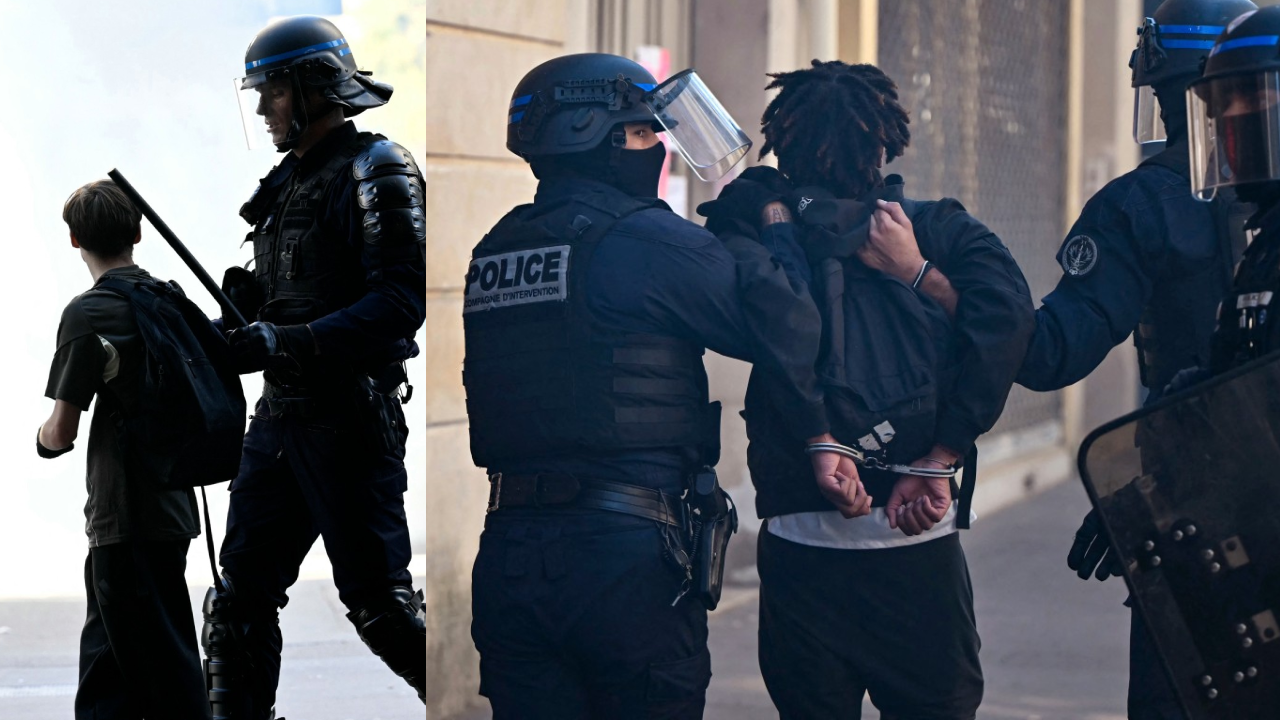 Police arresting teenage students during student protests in France (Photo | AFP)
The Interior Ministry said about 550,000 people took part, including roughly 110,000 in Paris. More than 1200 people were arrested and violence, fires and looting marred the day. Buildings in several cities were set alight, including the town hall in Limoges, causing the roof to collapse.
Spain: housing at the centre
In Spain, the grievance is mainly housing. Tens of thousand have taken to the streets since September over the growing housing crisis in the country. Their main demand was government help for renters.
The protests grew out of a squeeze that had been building for years. In the last decade alone, the average rent has almost doubled, and tens of thousands regularly march against real estate speculators and tourist-apartment platforms.
The Bank of Spain estimates a shortfall of 750,000 homes accumulated between 2021 and 2025. The government says 26 percent of renters spend an average of 40 percent of their income on rent and utilities, against 18 percent across the EU.
Tension grew on September 23 as teh televised eviction of 87-year-old Maria del Carmen Abascal, known across Spain as Maricarmen, set off protests and a camp-in at Madrid’s Puerta del Sol.
Following the incident, Prime Minister Pedro Sanchez introduced two decrees in the parliament. One decree aimed to stop evictions of vulnerable people, curb speculation and tighten short-term leases. The other would have made leases renew automatically. Parliament voted both down on October 2, since Sanchez’s left-wing coalition governs in a minority.
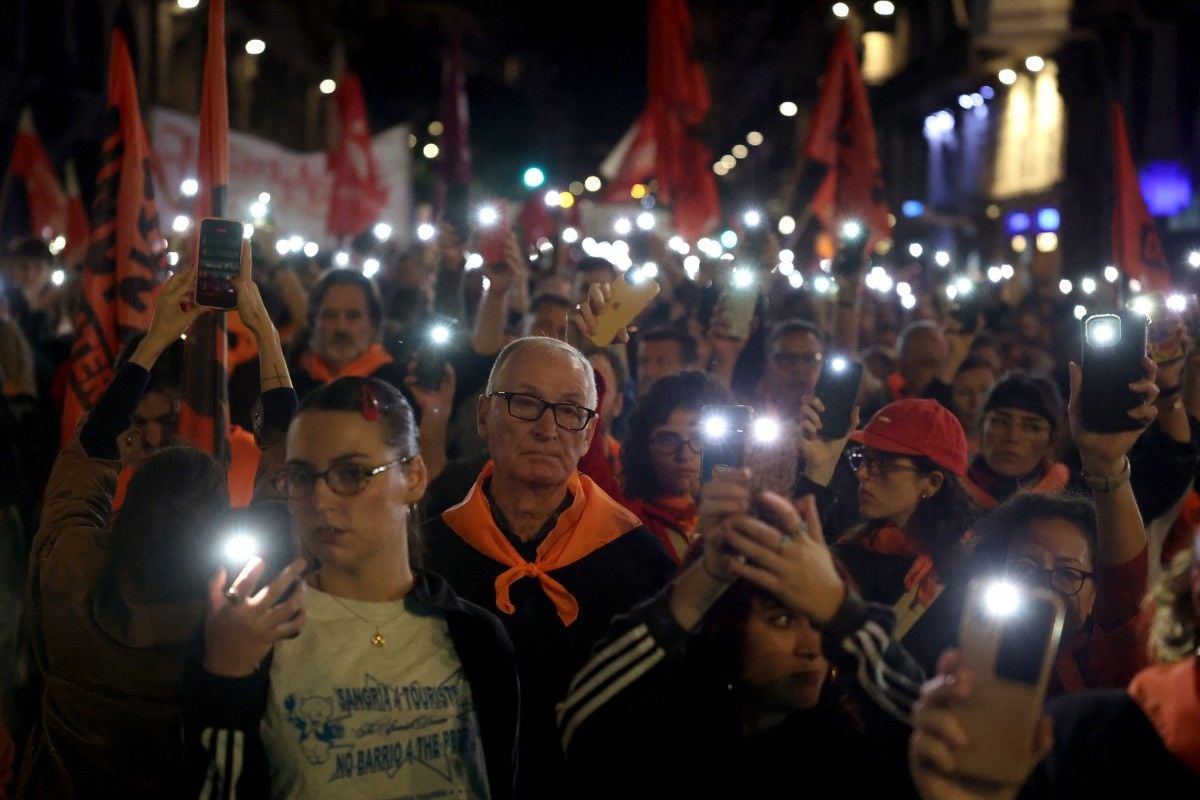 Demonstrators gather to pay tribute to Maricarmen Abascal, the 87-year-old pensioner whose eviction triggered nationwide protests over Spain's chronic housing crisis and a political debate that culminated in early elections, during a demonstration in Barcelona on October 9, 2026.(Photo | AFP)
Tens of thousands rallied across the country after parliament struck down two affordable-housing decrees. Protests spread to more than 50 cities on October 3. On October 5, after failing to get the support of the parliament to resolve crisis, Prime Minister Sanchez announced snap elections for November 29, and clashes broke out in Barcelona that same day.
On October 7, Maricarmen died after she was moved to a hospital following her eviction. Following her death, unions announced a nationwide general strike for November 11, which AFP reported would target housing and wages.
Italy: an “autumn of discontent”
Italy’s unrest built more slowly and tied more directly to prices. AFP reported that the country was bracing for an “autumn of discontent” after an energy-driven spike in inflation, with students, truck drivers and farmers taking to the streets ahead of next year’s election. Economist Veronica De Romanis told AFP that fear of the future, fuelled by geopolitical tension and economic pressures, is pushing Italians to protest.
According to reports, that living costs had become unbearable, and demonstrators also cite stagnant wages. Young people are especially frustrated because pay progression depends on seniority, not merit.
The first sign came from classrooms. On October 16, students joined a “No Meloni Day” of marches across Italy, inspired by protests in France and Spain. They protested the cost of living, a school decree and crumbling school buildings. Schools were occupied in several cities, and students pitched tents in Rome, Milan and Bologna. In Turin, high school students demanded money for schools rather than war.
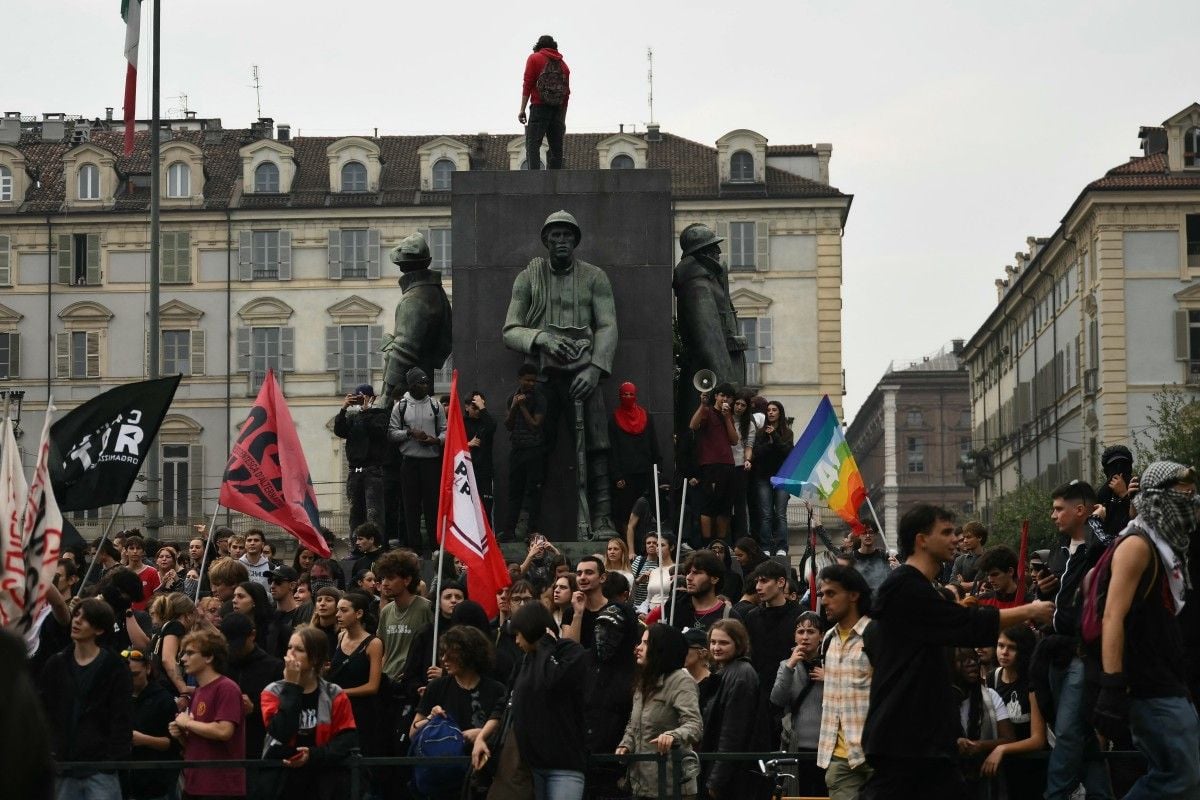 Students stand at Piazza Castello in the center of Turin during the 'No Meloni Day', a national day of marches across Italy inspired by what is happening in France and Spain, to protest against the cost of living, the School Decree, the condition of school buildings and demanding increased funding, on October 16, 2026. (Photo | AFP)
On Saturday, the unrest moved to the streets. Demonstrations organised by the “Italy in the Square” committee turned violent. In Milan, police fired tear gas after protesters allegedly threw stones in the cathedral square. At least two officers were injured, and about 50 demonstrators, many of them minors, were detained. In Bologna, police used a water cannon and made seven arrests. Meloni said Bologna’s railway station was closed as a precaution. She condemned the violence, with an election due next year, while Milan’s centre-left mayor, Giuseppe Sala, said the reasons for the protests were understandable.
Her fuel relief measures appear to be doing little to stem the unrest, according to Italian media.
Portugal
In Lisbon, tens of thousands marched, adding pressure on Portugal’s centre-right government. House prices there have more than doubled since 2017, and rents for new leases have risen nearly as much. Eurostat data show Portuguese house prices rose 16 percent year on year in the second quarter, the fastest in the EU. Inflation hit 3.6 percent in September.
Protesters pitched tents on Lisbon’s Rossio square to highlight the housing shortage.
Belgium: austerity and student anger
Belgium’s unrest has two strands. Brussels had already seen weeks of student protests over university registration fees, and on Saturday police fired tear gas and water cannon at protesters they accused of throwing missiles and setting fires. Interior Minister Bernard Quintin described the unrest as organised violence rather than protest, and about 400 people were arrested.
In Liege, students had earlier protested over rising education costs. Days before, unions staged a national demonstration in Brussels on October 9 against the government’s budget plans. Critics accuse the government of balancing the budget by cutting public services, and point to proposals including a VAT rise and changes to wage indexation.
Why now: a global shock on top of old problems
The immediate trigger is global. After the US-Israeli attack on Iran on February 28 and the closure of the Strait of Hormuz, oil and gas prices surged. The strategic waterway carries roughly a fifth of the world’s oil supply.
Diesel prices across Europe rose more than 30 percent within weeks, and Europe’s benchmark gas price jumped 60 percent. The EU has warned that prices will not return to normal soon, even if the war ends. By now, fuel, energy and food prices have all spiked in recent months.
Despite the global issues, it cannot be solely blamed for the current crisis across Europe. Older problems sit underneath. Spain has less than 2 percent public rental housing, against an OECD average of 7 percent, and tourist lets have pushed rents up. France carries debt of about 119 percent of GDP, with borrowing costs near 5 percent, leaving little room to spend. The result is a squeeze, with wages lagging, rents rising and treasuries short of cash.
Critics say the right-led governments in Italy, Portugal and Belgium failed less through one decision than through a shared approach. They leaned on markets, tax relief and tight budgets to fix problems that need public investment and structural change. Energy dependence, a shortage of affordable homes and weak wages were all known weaknesses.
In Italy, real wages remain 6.1 percent below their early-2021 level, the widest gap among major OECD economies, and gas supplies almost half of its electricity. Portuguese house prices have more than doubled since 2017, yet the government’s main housing reform speeds evictions and ends rent controls on new leases, which tenants’ groups call “savagery.” When the energy shock hit, the response was mostly temporary measures, with only four European countries targeting households specifically. Belgium, meanwhile, pledged to cut its deficit without raising taxes, leaving little cushion.
Politics made this worse. Coalitions that depended on fragile majorities or on far-right votes, as in Portugal, tended to favour short-term deals and electoral giveaways over long, costly reforms. Italy’s road tax holiday was criticised by the left as an election giveaway.
A political warning
Analysts see no single, coordinated movement. Alberto Alemanno of HEC Paris said the protests reflect separate campaigns driven by overlapping frustrations over living costs, education funding and job prospects. He also said early stages of similar movements are emerging in Greece, Germany and Austria.
The timing is sensitive. National elections are due in Spain, France, Italy and Poland over the next 12 months, which could put the cost of living at the centre of debate. For now, governments face growing crowds demanding affordable homes and lower prices.



Related News
Dont Miss it





0 comments