
International
An Emerging Titan: China on the World Map

K J Thomas
Published on Sep 10, 2025, 11:29 AM | 6 min read
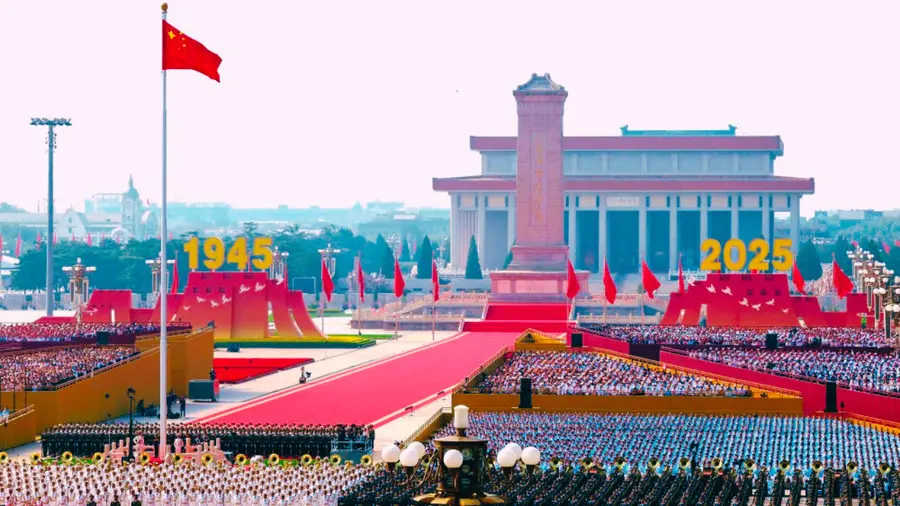
China’s unprecedented progress and the might of its military were showcased to the world on the 3rd of this month through a grand military parade held at Tiananmen Square in Beijing. The speech delivered by President Xi Jinping on the occasion also gained global attention. The military parade was organised as part of the 80th anniversary celebrations of the victory over Japan at the end of the Second World War. For the first time, China publicly displayed road-bound missiles and other military equipment. The world witnessed China’s latest weaponry, its military prowess, and the use of cutting-edge technologies.
The military display and Xi’s speech were seen as a strong response to President Donald J Trump, who tries to keep the world under the thumb of the United States. The ceremony was attended by 27 world leaders, including Russian President Vladimir Putin and North Korean Supreme Leader Kim Jong-un. President Xi delivered a strong anti-imperialist message during the event.
“The people of the world are now at a crossroads. The question is whether we choose war or peace, dialogue or conflict, unity and shared success or total destruction. Only by treating nations as equals, living in unity, and supporting one another can global security become a reality. The world must not regress into a primitive legal order, losing its sense of humanity,” said Xi.
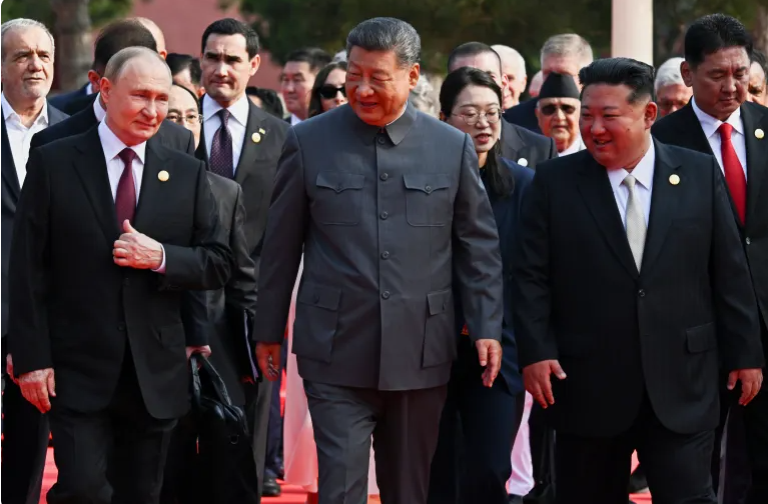 Image Courtesy: AFP
He further asserted, “Development must be based on fairness and justice. China will not yield to any threats. We will stand on the side of what is right. Under the strong leadership of the Communist Party of China, every section of the nation must unite with one heart for the progress of the country.” The military exercise and the President’s speech left the United States, which creates a world order filled with conflicts, confrontations, and uncertainties, with no proper reply.
President Xi reiterated that peaceful development under Communist rule is China’s ultimate goal. After Russian President Vladimir Putin declared that colonial-era coercive tactics used to subjugate other countries would no longer be tolerated, Xi reinforced his stance. Putin’s remarks came at a time when the U.S. imposed a 50% tariff on Indian imports of Russian oil. Trump had earlier imposed a 145% tariff on Chinese goods, which was later forced to be reduced to 30%.
The proposal by BRICS countries to introduce a common currency as an alternative to the U.S. dollar had also caused a severe headache for the United States. The fear that the dollar could lose its dominance is now haunting Trump.
China continues to astonish the world — a country ranking second in population and third in landmass. With a rich heritage of civilisation, China’s contributions to the world are invaluable. Even when Communist regimes collapsed in several countries, China progressed further without altering its ideology. By adopting a socialist market economy model, China has emerged as a major economic power. It is one of the five permanent members of the United Nations Security Council with veto power.
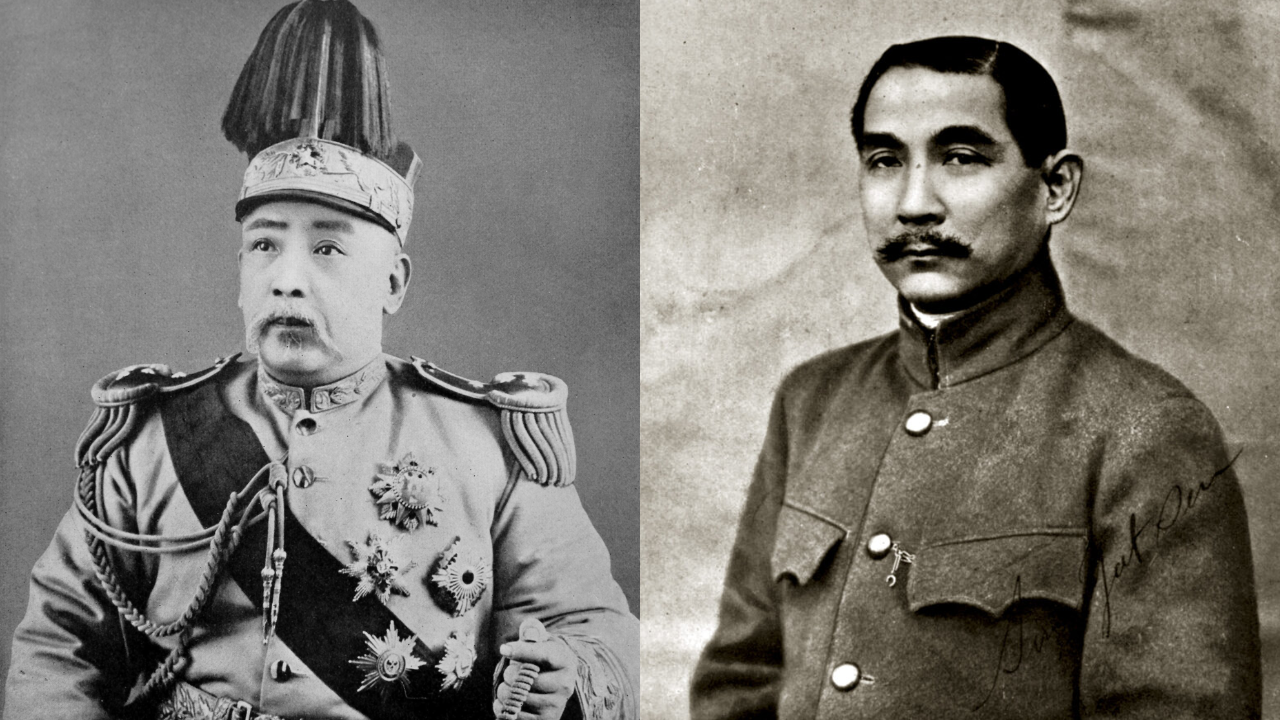 Left: Yuan Shikai (Image Courtesy: Wikipedia) Right: Dr. Sun Yat-sen (Image Courtesy: Victoria's Chinatown)
In 1912, the monarchy in China came to an end with a people’s revolution. Yuan Shikai became the president of the newly formed republic, while Dr. Sun Yat-sen led the Kuomintang political party. On May 4, 1919, a major student uprising took place, with thousands of students and people participating. This movement, known as the May Fourth Movement, played a significant role in accelerating the growth of the Communist revolutionary movement in China. Mao Zedong tried to spread its message among students in Hunan. After the protest failed, Mao had to flee. He returned to his hometown in 1920 and worked as a schoolteacher. To spread Marxist ideology, he opened a bookstore called the Cultural Bookstore.
In 1921, the Communist Party of China was founded in Shanghai. At that time, Britain and Japan were attacking China. To fight the common enemy, the Communists and Kuomintang came together. However, after Sun Yat-sen’s death in 1925, Chiang Kai-shek became the leader, and the two parties split. From 1930 to 1934, the Communist purge intensified. In 1934, under Mao’s leadership, the Communist Party began the Long March.
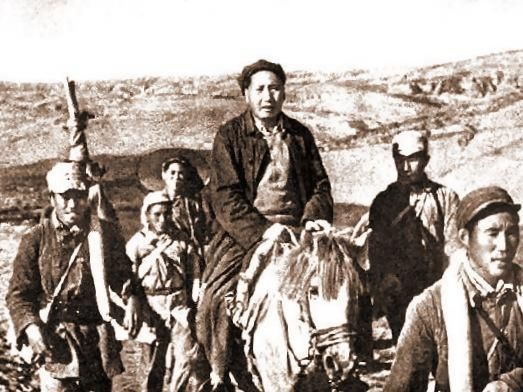 Mao during the Long March (Image courtesy: Wiki media)
To escape the attacks from Kuomintang and landlords, poor peasants and workers joined Mao. The revolutionary Red Army covered over 10,000 kilo meters, marching from Jiangxi to Shaanxi, with nearly 100,000 people participating in this extraordinary journey. This march firmly established Mao’s leadership within the Communist Party. After a popular revolution, in 1949, Chiang Kai-shek was forced to step down. The remaining Kuomintang forces fled to Taiwan. With the victory of the revolution, on October 1, China was declared the People’s Republic at Tiananmen Square, marking the transformation of China into a Communist state.
The Communist Party had to take on the enormous responsibility of rebuilding a devastated nation. Mao Zedong launched radical measures to uplift the impoverished and crumbling Chinese society and to preserve national integrity. He implemented an economic system modelled on the Soviet Union. The government's initiatives to eradicate poverty gained widespread public support. The Party’s control was strengthened in all sectors. Landmark reforms included redistributing land seized from landlords to poor farmers.
In 1943, Mao became the General Secretary of the Communist Party and remained in that position until his death. After Lenin, Mao is considered the most influential Marxist theorist. He continues to be an inspiration to Communists worldwide.
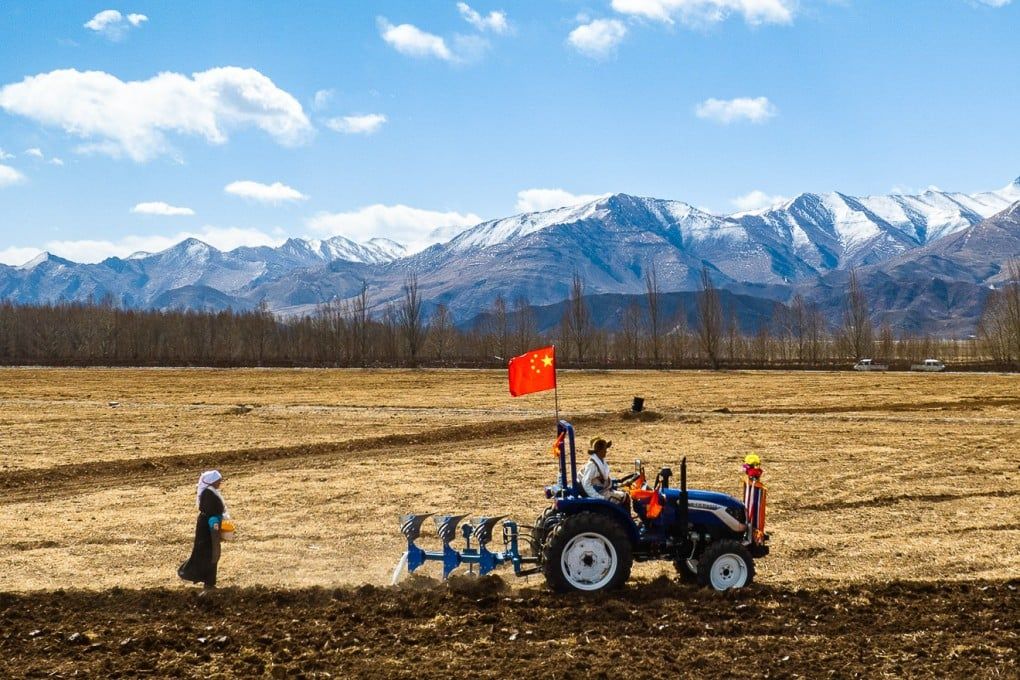 Image courtesy: Xinhua
After Mao, Deng Xiaoping came to power in 1979 as the head of both the Party and the government. He steered China toward economic reforms and transformed it into a global power. Living standards in China rose rapidly during the 1980s. However, Deng faced significant criticism. Supported by the United States, a major protest erupted at Tiananmen Square, which ultimately failed. Following this, imperialist media and their allies intensified their propaganda campaigns to destabilise China. Despite Western threats, China’s status as a global power became firmly established.
It was during Deng’s era that China’s current trajectory of growth began. His successor, Jiang Zemin, strengthened these policies further. Diplomatic relations with neighbouring countries improved during Jiang’s time. In sectors such as agriculture, industry, IT, and artificial intelligence, China is achieving significant victories and forging ahead.



Related News
Dont Miss it









0 comments