
I Write Only What I Can Visually Translate to Screen: Bahul Ramesh During KLIBF 2026
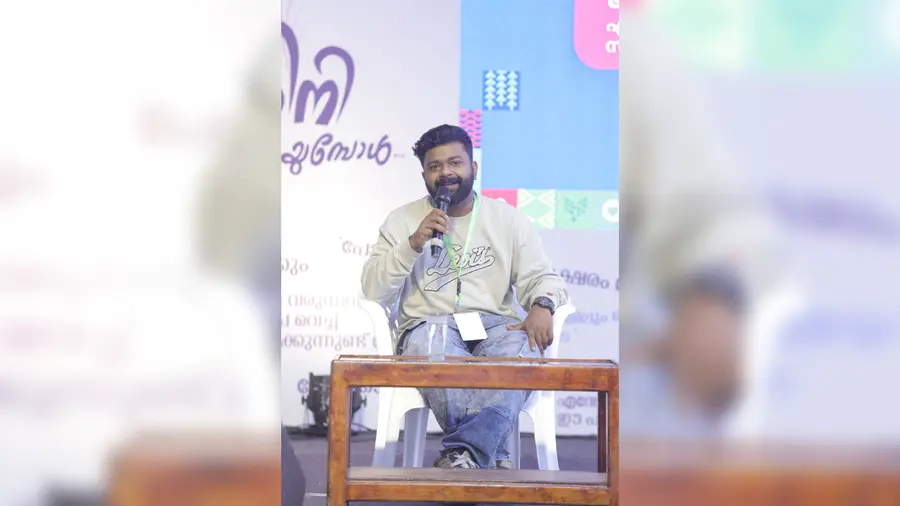
Thiruvananthapuram: Filmmaker, screenwriter, and cinematographer Bahul Ramesh has said that he only writes stories that he is fully confident can be translated onto the screen.
“That was a conscious decision I made while thinking as a cinematographer. Even while writing the story for 'Eko', this thought was always at the back of my mind. Every shot has to feel real. While writing, I wanted viewers to feel as though they are travelling through those shots themselves,” Bahul said.
He was speaking at a KLIBF Talk titled ‘My Cinematic Journeys’, held as part of the Kerala Legislative Assembly International Book Festival.
Bahul stressed that every scene should unfold organically and that each line of dialogue must contribute something new to the narrative. “There should never be a sense that something is artificially staged,” he said.
He also spoke about his habit of reading behind-the-scenes accounts of films. “Many of the struggles involved in making films are documented in such writings. Padmarajan’s novel Nakshatrangale Kaaval had a significant influence on my writing,” he noted.
Talking about his work 'Kishkindha Kandam', Bahul said the presence of monkeys in the story emerged naturally during the writing process. “That eventually led to the ‘animal trilogy’. Knowing that audiences embraced it gives me immense happiness,” he said.
Bahul said cinema had been close to his heart since childhood. Numerous films he watched while growing up had a lasting impact on his cinematic sensibilities. “My family are ardent film lovers, especially my father. He had a remarkable memory for dialogues from films and would often recite them. That influenced me deeply,” he recalled.
He added that this influence shaped his writing process. “When I write a film, I usually begin with the dialogues. As the conversations between characters progress, the story of the film gradually becomes clear to me,” Bahul explained.
Tags



Related News
Dont Miss it






0 comments