
CPI(M) Demands Recognition of Basic Needs as Fundamental Rights

Web desk
Published on Apr 05, 2025, 06:46 PM | 3 min read
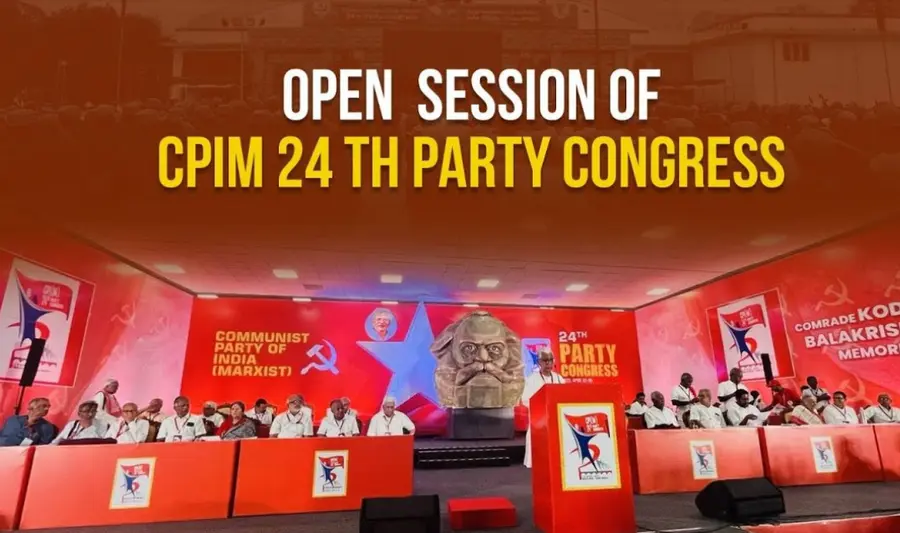
Madurai: The 24th Party Congress of the Communist Party of India (Marxist), held in Madurai, has passed a resolution demanding that access to food, shelter, employment, pension, education, and healthcare be recognised as fundamental rights of every citizen. The resolution asserts that welfare schemes offering essential public goods and services are not acts of generosity but the constitutional entitlement of all people.
Stating that these rights form the foundation of justice and equality in society, the CPI(M) emphasised that economic rights are pivotal to national progress. Welfare programmes, the resolution noted, are investments in human capital, contributing to long-term economic development and a more productive workforce.
The resolution sharply criticised the trajectory of neoliberal policies, which it said have attacked the social sector ideologically and practically. Under such policies, there has been a push for governments to withdraw from sectors like education and healthcare, handing over public services to private corporate interests.
The resolution accused the BJP-led central government under Prime Minister Narendra Modi of intensifying efforts to dismantle existing welfare schemes and slash subsidies. The branding of social welfare initiatives as “revdis” (freebies) by the Prime Minister was denounced as an attempt to delegitimise programmes that protect the most vulnerable from the fallout of market-driven reforms and privatisation.
The party warned that cash transfer schemes introduced by the Centre in lieu of subsidies are paving the way for the eventual dilution and dismantling of social security programmes. Such measures leave economically weaker sections even more exposed to exploitation and insecurity.
Citing the Directive Principles of State Policy enshrined in the Constitution, the resolution noted that it is the State’s responsibility to ensure a dignified life for all, regardless of caste, creed, or socio-economic background. While these principles are not currently enforceable in a court of law, the CPI(M) called for their transformation into justiciable and legally binding rights.
The argument that financial constraints prevent such rights from being realised was dismissed as flawed and misleading. The resolution highlighted that the government has consistently slashed corporate taxes and failed to recover lawful dues from corporations. This fiscal policy, it claimed, reflects a clear choice to prioritise corporate profit over social welfare. A rationalised and progressive tax structure, the resolution stated, would make the delivery of essential services universally viable.
Calling upon people across the country to rise in defence of their rights, the CPI(M) urged mass mobilisation to secure constitutional guarantees for basic needs and to resist the Centre’s efforts to weaken or dismantle welfare programmes. The party reaffirmed its commitment to building a broad-based movement for economic justice, equality, and the protection of fundamental rights.



Related News
Dont Miss it









0 comments