
24th CPIM State Conference
Strike from the Shadows: The Rebellion of Kerala's Cashew Workers
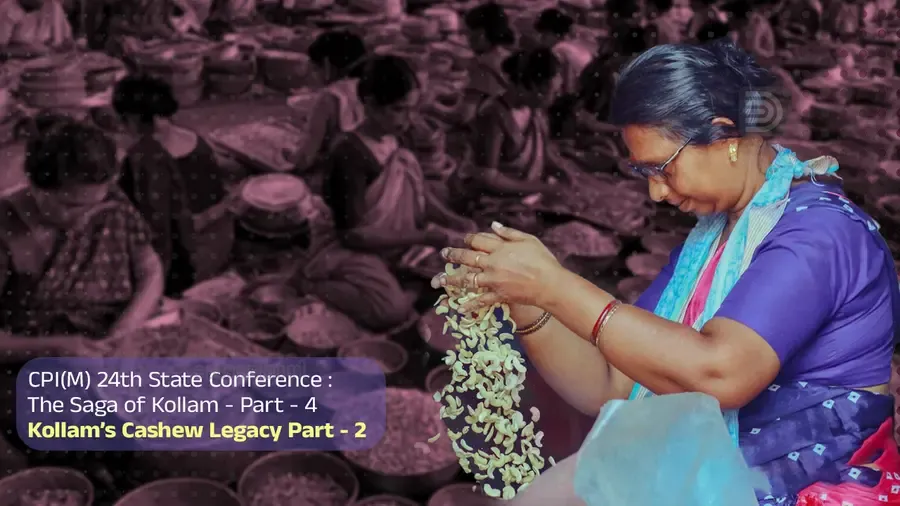
Mampuzha Cashew Worker

Anusha Paul
Published on Mar 03, 2025, 09:04 PM | 6 min read
In the early days of India’s independence in 1947, the country’s working class was met with harsh realities. Though August 15, 1947, marked the formal end of British colonial rule, the newly formed Indian state quickly revealed that it had no intention of standing up for workers. Instead, it aligned itself with the capitalists, and the promises of freedom seemed distant for those struggling to make a living.
In regions like Travancore, the divide between the state and workers became clear. The ruling class, now firmly in power, was not interested in empowering the labourers who had long fought for better conditions. Instead of liberation, workers found themselves facing the brunt of government repression as militant general strikes spread across the country. The system had changed, but the repression remained the same.
Around this time, two major trade unions emerged: the Indian National Trade Union Congress (INTUC) and the United Trade Union Congress (UTUC), both of which were closely tied to the capitalist class. Their primary role seemed to be defusing workers' movements and keeping labour unrest in check. They actively worked against the All-India Trade Union Congress (AITUC), which had been a stronghold for workers’ rights. The AITUC had its own vision for what a free India should look like—one where the rights of the working class were protected and respected.
But the government was not going to let this kind of challenge go unpunished. After the 1948 Calcutta Congress of the undivided Communist Party, where workers and party members showed growing revolutionary zeal, the ruling class took action. Fearing the rising power of the workers’ movement, the government banned the Communist Party and its trade unions. Those who had been leading the charge in organizing the workers were either thrown into prison or forced to go underground. It was not just a crackdown on political ideology; it was an all-out attempt to dismantle the growing strength of organized labour.
Rising from the Shadows: The Underground Resilience of the Labour Movement
After the All Travancore Cashewnut Workers Union was banned, factory owners seized the opportunity to tighten their control. With the leaders imprisoned, they slashed wages and worsened working conditions. Despite these restrictions, workers established contact with underground and jailed trade union leaders. They secretly organized a meeting, elected 11 new leaders to form a negotiating committee, and on December 11, 1950, formed the Thiru-Kochi Cashewnut Workers’ Council. When they attempted to register the council, the government refused, citing the communist ties of the leadership. Despite this setback, the council continued to operate without official recognition.
The council drafted memorandums outlining how, under the pretext of the ban, the factory owners were exploiting the workers. These memorandums were submitted to both the factory owners and the government. Workers held various meetings—underground leaders held secret meetings, while those able to do so openly organized large gatherings.
The workers decided to go on an indefinite strike. Sensing this decision, the UTUC, despite lacking a strong base among the cashew workers, called for a strike on August 23, 1951. UTUC leaders TK Divakaran and Sreekandan Nair publicly attacked the communists, attempting to redirect the protest against them.
The AITUC, however, did not put an inch back. Leaders like M N Govindan Nair, along with other communist leaders, organized underground meetings to counter these attacks. They took a firm stand, militantly pushing the strike forward. Soon, the strikes in factories spread like wildfire. On August 30, 1951, in response to the escalating unrest, Chief Minister C. Keshavan called for a tri-party meeting.
In the meeting, it was agreed that a 4% bonus would be given, a minimum wages committee would be set up, and if other disputes were not resolved, they would be taken to court. This was the understanding reached. Representing the council, KS Anandan attended the meeting but was denied the right to sign the agreement because the council was not registered, with the strikes being deemed illegal. The government, however, accepted the demands, and the strikes were called off on September 1. Despite this, the factory owners soon broke the agreement. The workers’ leaders were laid off, and further repressive measures were taken against them.
Lifting of the Ban and the Rise of the Communist Party
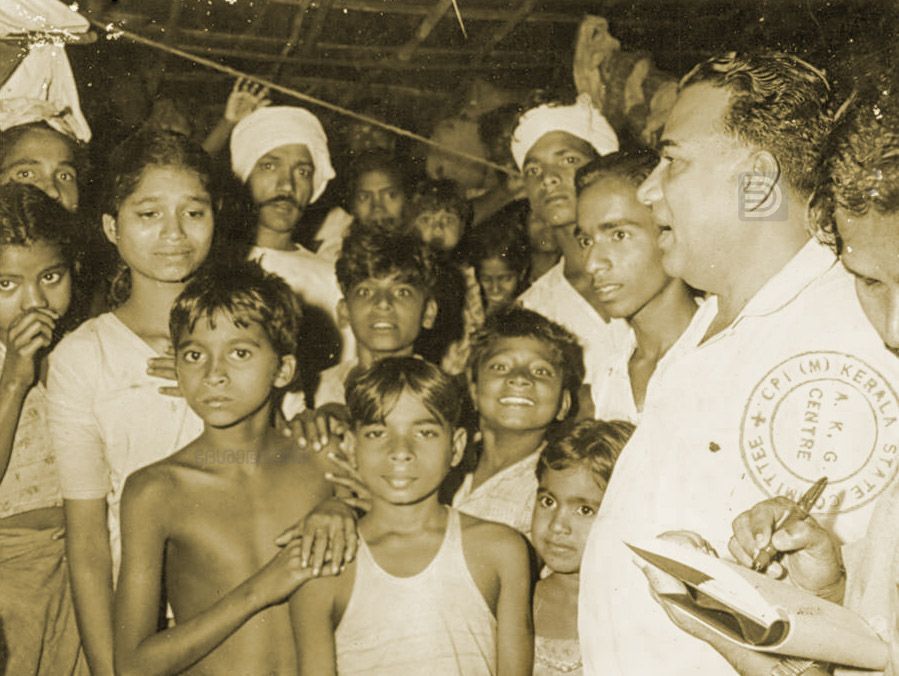
In the general election of 1952, prominent trade union leaders AK Gopalan, P T Punnoose, and N Sreekandan Nair were elected to the Lok Sabha, while AITUC leaders M N Govindan Nair, R Sugathan, and T V Thomas, still imprisoned, were elected to the Legislative Assembly. This political momentum, with workers electing their trade union leaders as representatives in both the parliament and the legislative assembly, led to the lifting of the ban on the All Thiruvithamcore Cashewnut Workers Union. However, during the ban, the police had raided and destroyed the union offices, and the documents proving the union's registration were lost. As a result, the Thiru-Kochi Workers Council was registered under the Trade Union Act. With the union’s legal status restored, the fight for a minimum wage began.
Following the general election, the presence of trade unions in positions of power led to the implementation of the minimum wage. A committee was formed, with MK Govindan of AITUC and other UTUC leaders visiting 21 factories to conduct a study. Based on the committee's report, the minimum wage for workers was declared on December 30, 1953. However, as with previous demands and negotiations, the factory owners refused to agree to it, and the workers went on a 27-day strike. Despite these efforts, no government took any real steps to implement the decision.
In 1955-56, the factory owners, seeking to punish the workers for their continued agitation, decided to close the factories, leading to widespread unemployment in the region. In response, workers organized a powerful parade to the Raj Bhawan, demanding the reopening of the factories.
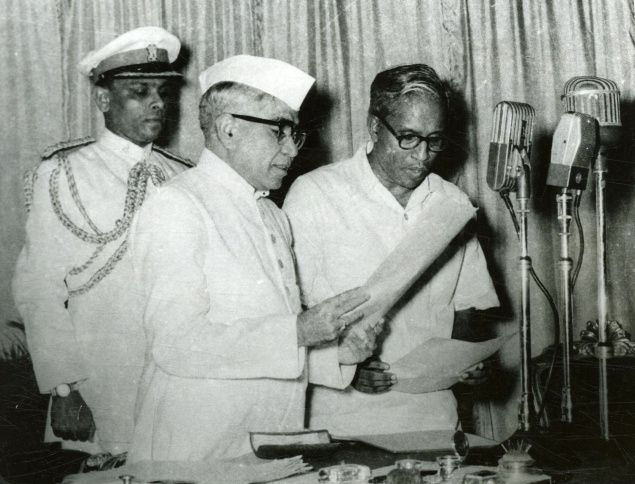
Following the formation of Kerala as a state on November 1, 1956, the Communist Party, which had the backing of the cashew workers, women, and peasants, came into power on April 5, 1957. Just seven days after being democratically elected, the party declared that there would be no evictions. They introduced the Kerala Stay of Eviction Proceedings Act of 1957, which protected tenants from eviction by the factory owners or feudal landlords. This move marked a turning point in the cashew workers’ evolution, forming an umbilical bond with the Communist Party through their shared struggles and growing unity.
The government took a progressive stance, refraining from repressing workers' protests, reopening the closed factories, and implementing minimum wages along with maternity benefits for women workers. It was a time of celebration for the workers. However, this period was short-lived. Under Communist rule, protesting workers were fired and even killed, leading to the fall of Kerala's first Communist government.
To know more about what happened in the coming years, stay tuned to Deshabhimani. This is the second part of the Cashew series and the fourth part of the CPI (M) 24th Kerala State Conference: The saga of Kollam.



Related News
Dont Miss it





0 comments